
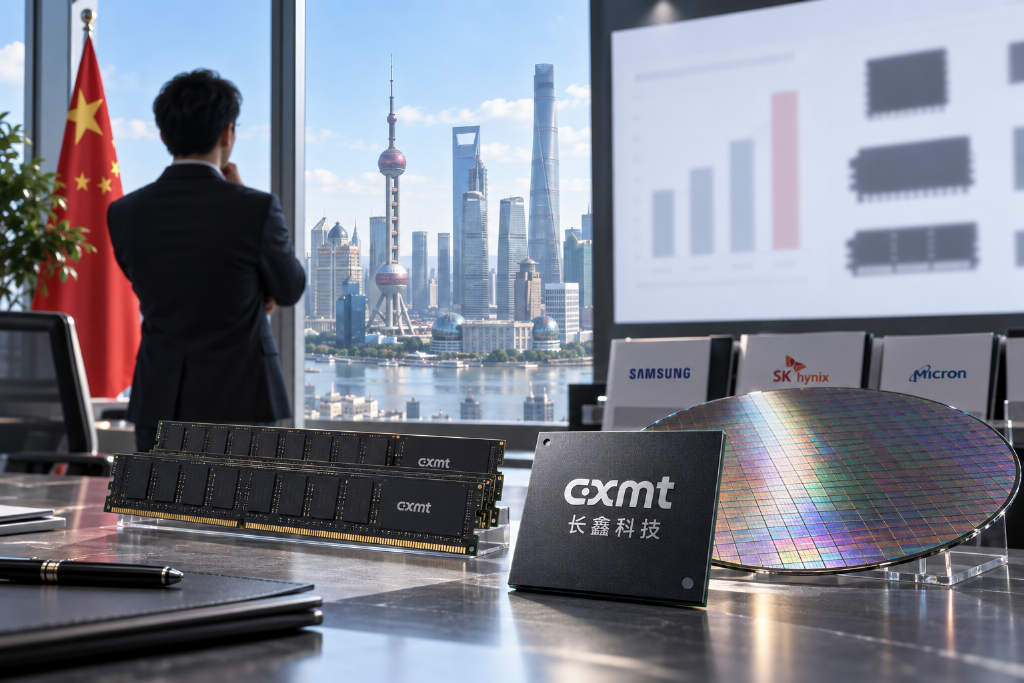
China-based ChangXin Memory Technologies Group, or CXMT, posted an operating margin of 82% for April through June, the highest among the major memory chip companies compared by Nikkei, according to a report published by Nikkei Chinese. The article said rising demand for memory chips tied to artificial intelligence is helping Chinese companies catch up quickly, putting pressure on a market that had largely been led by South Korean, US and Japanese players.
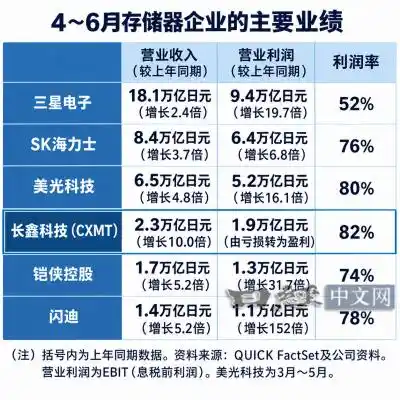
Nikkei compared results from six memory chip companies
The comparison covered Samsung Electronics, SK Hynix, Micron Technology for March to May, Kioxia Holdings, SanDisk, and CXMT for April to June. Nikkei said it used EBIT, or earnings before interest and taxes, as a measure comparable to operating profit, based on data from QUICK FactSet and company disclosures.
CXMT is active in DRAM, which is used for short-term storage. Its customers include Alibaba Group, ByteDance and Tencent Holdings. The report said CXMT’s operating profit, converted into yen, jumped to about JPY 1.9 trillion, versus a loss of about JPY 29 billion in the same period a year earlier.
Margin topped SK Hynix and Samsung’s chip business
In absolute profit, CXMT still trailed the South Korean companies and Micron, but it moved ahead of Kioxia and SanDisk, which focus on NAND flash memory for long-term storage. Its revenue reached about JPY 2.3 trillion, roughly 10 times the level a year earlier and the fastest growth rate among the six companies in the comparison.
The margin stood out even more. Nikkei said CXMT’s 82% operating margin exceeded SK Hynix at 76% and Samsung’s semiconductor business at 70%.
The report said SK Hynix, Samsung and Micron are concentrating on high-bandwidth memory, or HBM, which is made by stacking DRAM chips. HBM is a core component for AI servers.
DDR5 price gains lifted CXMT
CXMT’s main products include general-purpose DRAM such as DDR5, which is used not only in data centers but also widely in consumer devices including personal computers and game consoles.
Nikkei said SK Hynix and Samsung gave priority to AI server supply, reducing availability of general-purpose products used in PCs and similar devices. That pushed DDR5 prices sharply higher, and CXMT was the biggest beneficiary.
The report also drew a distinction between HBM and DDR5 contract structures. HBM is usually sold under annual supply agreements with hyperscale cloud service providers, making it less sensitive to short-term market swings. DDR5 is more exposed to spot market changes, and trading prices rose sharply.
Taiwan-based research firm Trend Force said, 「Since January-March, HBM profitability has started to fall below DDR5.」
Free cash flow improved, market value surpassed Tencent
As profitability improved, CXMT’s investment capacity also increased. For January through June, free cash flow, defined in the report as the combined result of cash flow from operations and cash flow from investing activities, reached about JPY 2.2 trillion. That marked an improvement of roughly JPY 2.8 trillion from a year earlier.
Nikkei said CXMT plans to expand production aggressively with funds raised through its initial public offering and with government support.
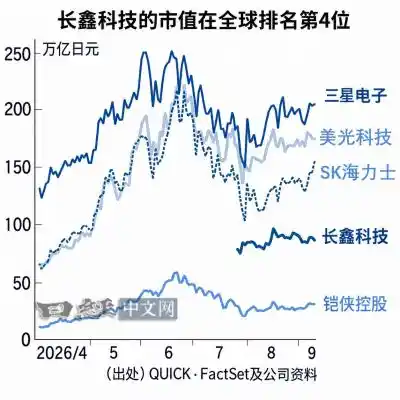
QUICK FactSet data cited by the report showed that CXMT’s market capitalization, excluding treasury shares, reached JPY 87 trillion. That put it above Tencent and made it the largest company by market value in China’s market. The figure was nearly three times Kioxia’s JPY 31 trillion.
Valuation reflects growth expectations
The article said memory chip companies often struggle to sustain high valuation multiples because earnings are heavily influenced by market cycles. SK Hynix, Samsung and Kioxia all trade at single-digit forward price-to-earnings ratios, while CXMT is close to 20 times, reflecting strong investor expectations for growth.
Nikkei also pointed to earlier cases in Chinese manufacturing where companies expanded market share through lower-priced mass-market products and then improved competitiveness over time. It cited Contemporary Amperex Technology, or CATL, as having risen to the top position in global market share in vehicle batteries, an area where Japanese and South Korean companies had been strong. The report also said globally influential Chinese companies have emerged in home appliances and smartphones.
Among Chinese memory chip companies, Yangtze Memory Technologies Co., or YMTC, and its parent company Yangtze Memory Holdings, or CCSH, were also mentioned. The article said CCSH has filed for a listing and could become a rival to Kioxia in NAND.
The piece was published via the WeChat account Nikkei Chinese (ID: rijingzhongwenwang) and credited to Nikkei Chinese. It said that if Chinese manufacturers raise capacity and launch low-price competition, they could disrupt the market and reshape the current balance of power.