
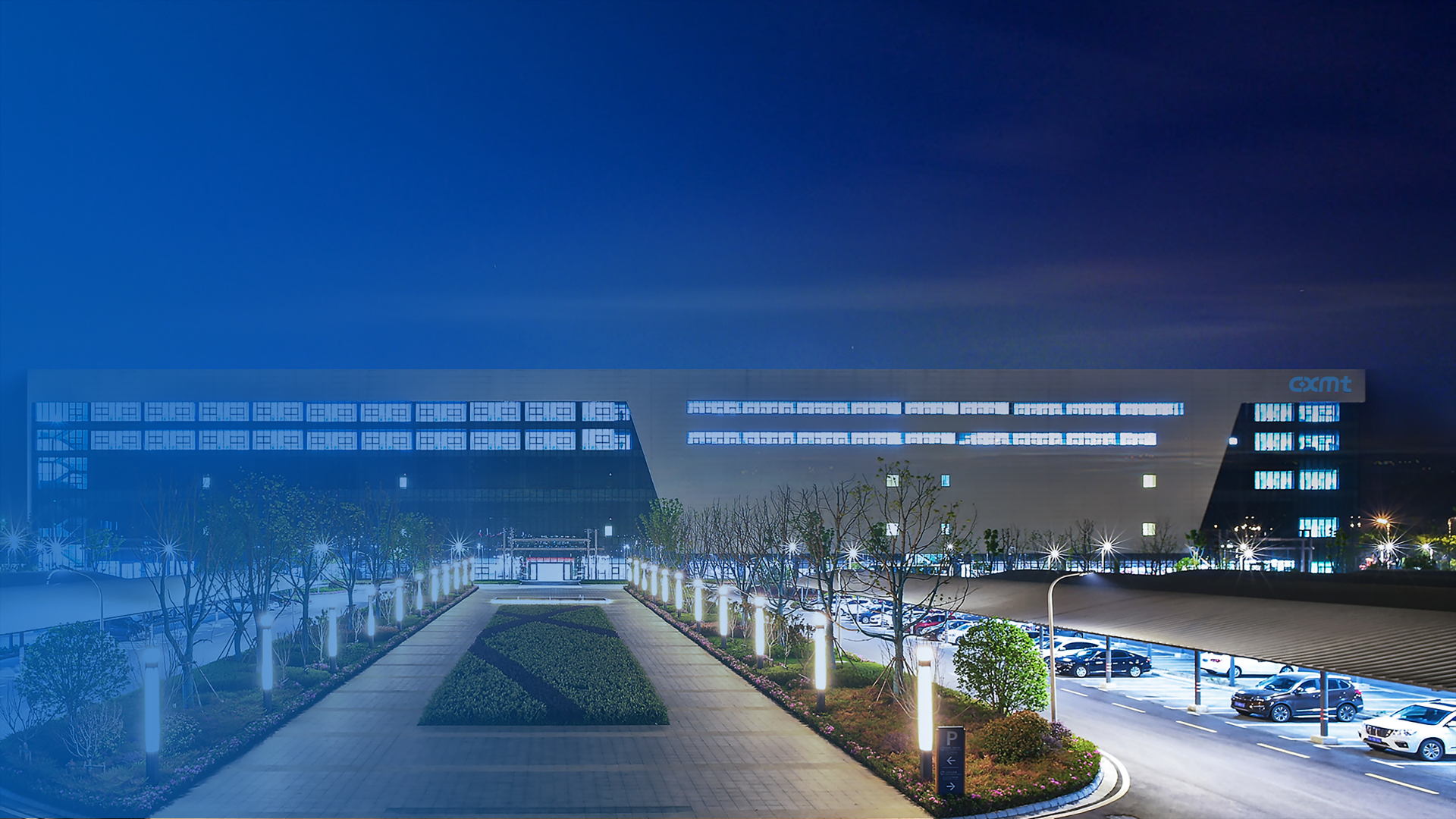
CXMT kicks off STAR Market listing plan
ChangXin Memory Technologies disclosed its IPO prospectus on July 9, formally launching its listing process on Shanghai’s STAR Market. Pricing inquiries are set for July 13, subscriptions for July 16, and the stock code is 688825.
The company plans to issue 6.688 billion new shares, equal to 10% of its post-offering share capital, with no old-share sale included. If the over-allotment option is fully exercised, the deal could expand to 7.691 billion shares. Half of the initial offering has been reserved for strategic investors. Management and core employees’ asset-management plan will take 10%, while CICC Wealth and CSC Investment will each subscribe for 2%. The company is seeking to raise RMB 29.5 billion, making it the second-largest IPO in STAR Market history after SMIC.
Financials show a sharp turn in the DRAM cycle
The filing lays out a striking reversal. Attributable net profit was negative RMB 16.34 billion in 2023 and negative RMB 7.145 billion in 2024. By the end of 2025, cumulative uncovered losses stood at RMB 36.65 billion.
Then came a strong first quarter of 2026. Revenue reached RMB 50.8 billion, up 719% from a year earlier. Net profit was RMB 33 billion, and net operating cash flow came in at RMB 42.57 billion for the quarter.
Industry ranking and utilization improved
DRAM remains a highly concentrated market. According to data cited in the prospectus, SK hynix held a 34.48% share of 2025 sales, edging past Samsung at 33.96%. CXMT ranked fourth globally and first in China with a 7.67% share.
The company operates three 12-inch wafer fabs in Hefei and Beijing. Capacity utilization rose from 87.06% to 95.73%.
The filing, citing Omdia, says DRAM prices ranged from a high of $7.89 per GB during 2015-2025 to a low of $1.78 per GB in the first half of 2023.
Rising prices and falling costs lifted margins
The downcycle was severe. In 2023, the average selling price of CXMT’s DDR products fell 46.61%, and the company booked RMB 11.5 billion in inventory write-down losses, more than its full-year revenue of RMB 9.1 billion.
Conditions reversed in 2025. DDR prices rose 61%, LPDDR prices increased 24.46%, and unit costs for the two main product lines dropped 26.26% and 22.85%, respectively. On the purchasing side, the silicon wafer price index fell from a base of 100 to 69.99, while chemicals declined to 73.72. Gross margin improved from negative 112.71% on a pre-reversal basis to 37.81%.
On a consolidated basis, CXMT’s 2025 gross margin reached 40.99%, higher than Samsung’s 39.38% and Micron’s 39.79%, with only SK hynix ahead.
Two product signals stand out: DDR4 exit and no HBM mention
The prospectus says CXMT has stopped producing its own DDR4 products since the end of 2024. The company is now focused on DDR5 and LPDDR5/5X.
That shift showed up in sales. Revenue from the DDR line climbed from RMB 3.17 billion in 2024 to RMB 19.53 billion in 2025, up 6.2 times in one year. Its share of total revenue rose from 13.26% to 31.87%. The filing says the main driver was rapid volume growth in higher-priced, higher-margin DDR5.
LPDDR for smartphones still accounted for 66.43% of revenue. The top five customers contributed 68% of sales, and end customers included Alibaba Cloud, ByteDance, Tencent, Lenovo, Xiaomi, OPPO and vivo.
HBM, however, does not appear anywhere in the filing. While the market has circulated reports that CXMT is advancing HBM research, the prospectus makes no such claim. A RMB 9 billion forward-looking technology fundraising project is described only as research for future advanced DRAM, with a construction period running from 2026 to 2028.
The company is also restrained in how it describes AI exposure, stating that revenue from AI-related fields accounted for a relatively low proportion during the reporting period.
Ownership structure affects attributable earnings
The filing shows that two of CXMT’s three wafer fabs are not majority-owned directly by the listed group.
CXMT holds a direct 30.68% stake in ChangXin Xinqiao, which runs the Xinqiao fab, and 31.72% in ChangXin Jidian, which operates the Beijing fab. Both are consolidated through concerted action arrangements that bring voting rights to 73% and 75%, respectively. The second phase of the National Integrated Circuit Industry Investment Fund holds direct stakes of 26.99% and 24.67% in the two subsidiaries.
This helps explain the gap between net profit and profit attributable to the parent. In 2025, net profit was RMB 7.14 billion, but attributable net profit was RMB 1.875 billion. In the first quarter of 2026, net profit was RMB 33 billion and attributable net profit was RMB 24.76 billion.
Pricing anchor points to about RMB 4.4 per share
The prospectus itself offers a rough pricing anchor through simple arithmetic. Dividing the planned RMB 29.5 billion fundraising target by 6.688 billion new shares implies an issue price of about RMB 4.4 per share.
A cross-check leads to a similar result. Excluding the employee asset-management plan and sponsor-related investment, other strategic investors were initially allocated about 2.408 billion shares with a subscription cap of RMB 10.844 billion, implying about RMB 4.5 per share.
Using RMB 4.4 and a total share count of 66.88 billion after the offering, implied market capitalization would be around RMB 300 billion.
The private-market timeline provides another reference point. In June 2025, Alibaba Cloud subscribed for a capital increase of RMB 6.1 billion at RMB 2.6302 per share, around 13 months before the listing. Chairman Zhu Yiming was granted 1.536 billion incentive shares at RMB 0.108 per unit of registered capital and pledged to distribute half of them to employees within 10 years after listing. His own shares will be locked up for 120 months from the listing date.
The largest shareholder, Qinghui Jidian, also committed to automatically extend its lock-up year by year if adjusted attributable net profit excluding non-recurring items falls by more than 50% compared with the year before listing.
Depreciation and sell-through remain key risks
By the end of 2025, fixed assets stood at RMB 183 billion, accounting for 54% of total assets. Depreciation expense for 2025 alone was RMB 24.68 billion, 2.3 times the 2023 level. That burden could rise again after the fundraising projects are completed.
Another figure in the filing is the production-to-sales ratio. While capacity utilization kept rising, the sell-through rate fell from 99.45% to 90.67%, meaning nearly 10% of 2025 output was not sold and became inventory.
The risk section states directly that the sharp earnings growth seen in the first half of 2026 may not be sustainable.