
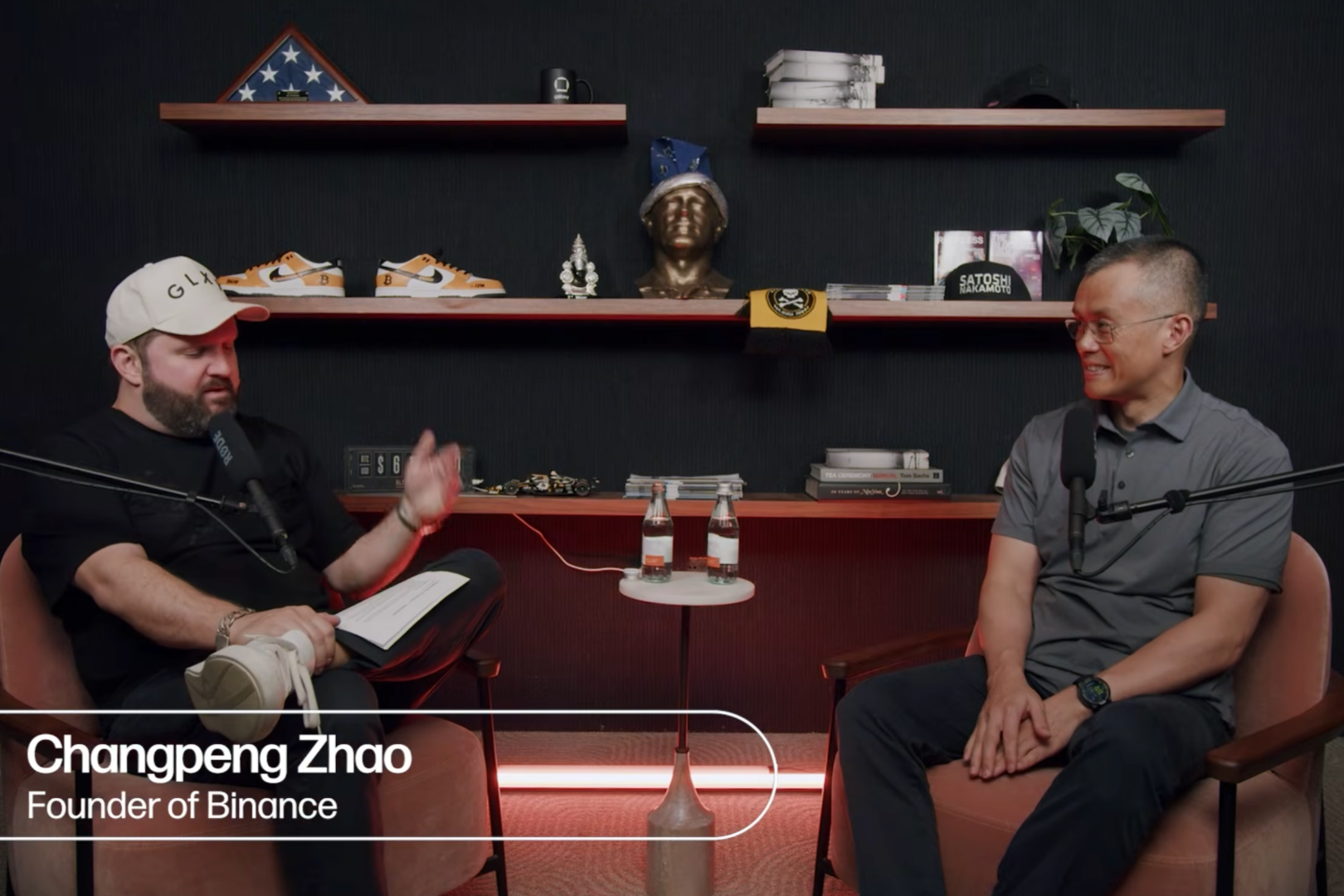
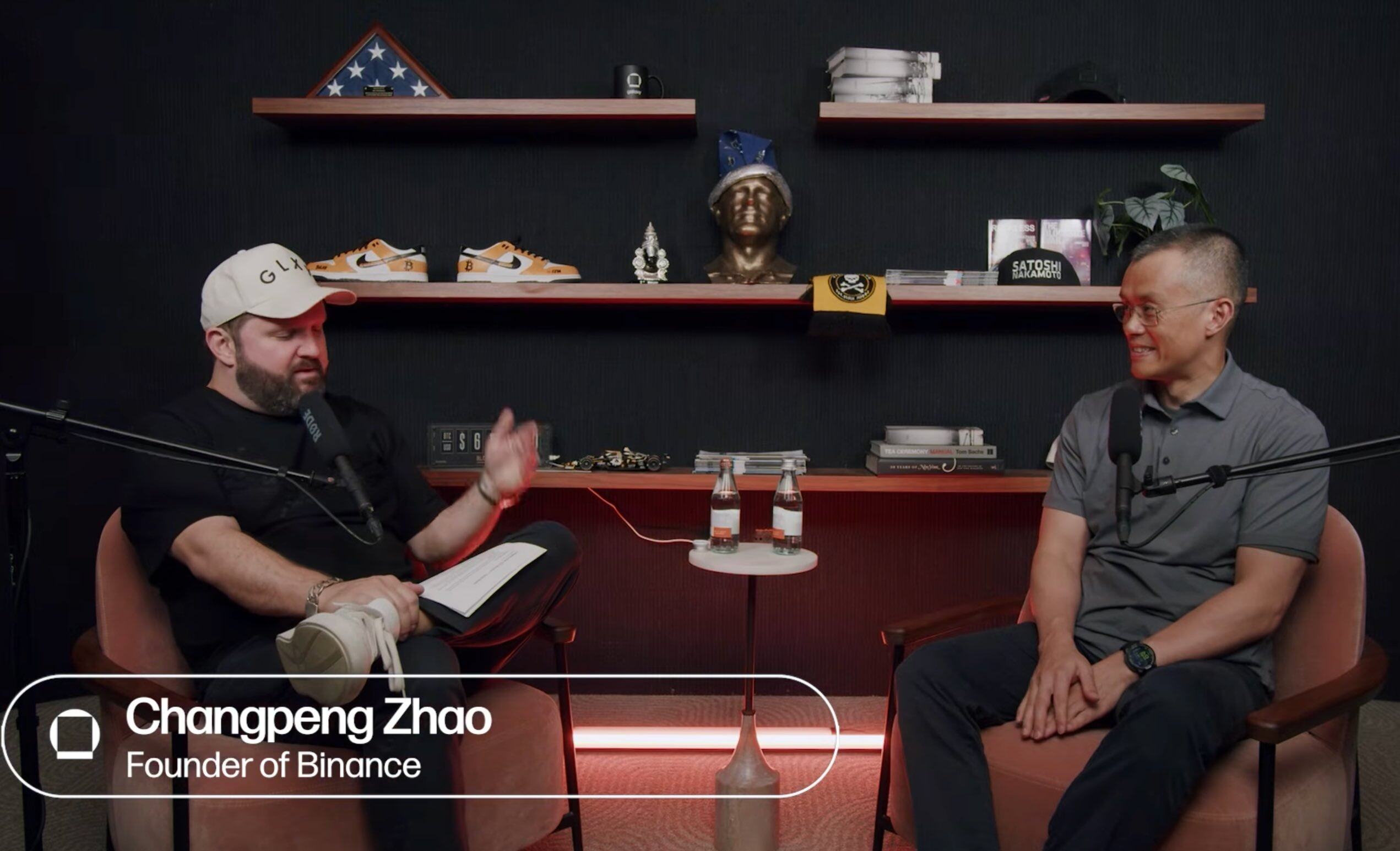
In a recent wide-ranging interview with Galaxy, Binance founder Changpeng Zhao (CZ) shared his insights on the current market cycle, blockchain upgrade strategies, the convergence of traditional finance and crypto, decentralization, derivatives and prediction markets, his personal investment portfolio, and the future of AI. Despite the market pullback, CZ remains strongly bullish on the crypto industry and revealed that his investment allocation through Yzi Labs is roughly 70% crypto, 20% artificial intelligence, and 10% biotechnology, with notable bets on artificial womb technology and knee cartilage regeneration.
Market Cycle: Rising Bottoms, Historical Highs as Support
CZ maintains that the “four-year cycle” thesis remains valid. The current drawdown is about 50%, compared to previous cycles that saw 80% declines — for example, after the Luna crash and FTX collapse in 2022, Bitcoin bottomed around $16,000. Today’s price is four to five times that level, with each cycle’s highs and lows progressively higher. From a technical analysis perspective, the previous cycle’s all-time high often becomes support for the next cycle — such as $60,000, which was the high four to five years ago and now serves as important bottom support.
CZ emphasized that this cycle is different because sovereign states now support Bitcoin, regulatory discussions have gone global, institutions like BlackRock have launched crypto ETFs, and even a BNB ETF has been approved. Genuine development activity has increased significantly, with more developers returning to the U.S. and multiple countries issuing stablecoins. Real-world asset (RWA) tokenization now allows users to buy SPCX/preIPO tokens on exchanges. The cycle’s starting point is higher each time, forming a spiral upward trajectory.
Blockchain Upgrade Strategy: Bear Markets for Major Upgrades, L1 Renaissance
CZ advised blockchain projects to avoid major upgrades during bull markets and instead conduct them during calmer bear markets. BNB Chain is developing its next version, which will be faster, cheaper, and offer more privacy controls. He noted that Base pays more in licensing fees for OP technology than it actually pays in L1 fees. CZ observed that Vitalik seems to realize L2s do not help L1, and under price pressure, he has refocused on L1 development. CZ believes the future belongs to L1s; while L2s may remain useful, as L1s scale, demand will increase, eventually spawning new L2 solutions in a recurring L1-L2 cycle.
Traditional Finance and Crypto Convergence: An Irreversible Trend
According to CZ, traditional finance and crypto are essentially the same — fintech. Crypto is not a separate industry but a new technology enabling fast, low-cost, transparent transactions. Traditional financial companies can build their own blockchains (public or private), while crypto companies can offer lending, savings, stock trading, payments, and other conventional services. Convergence is inevitable. On the centralization vs. decentralization debate, CZ believes both will coexist: centralized platforms attract users through low cost and high security, creating network effects, while technology continually pushes toward decentralization. CZ himself is a strong proponent of decentralization.

Decentralization and Centralization Coexistence: Free Choice and Network Effects
CZ stressed that the true spirit of decentralization allows anyone to build their own blockchain without being forced onto ETH or BNB. Users ultimately choose platforms that are low-cost, secure, and easy to use, but increasingly they will demand more freedom. Many countries want their own national blockchains but need time to relinquish control over currency and finance. In large countries like the U.S., if Wall Street giants use one or two private blockchains, retail users might be excluded, but that is acceptable. Decentralization does not mean everyone must use the same open-source blockchain; forcing everyone to use Bitcoin would not be true decentralization either.
Futures, Prediction Markets, and Hyperliquid Innovation
On futures, CZ noted that perpetual futures were first introduced in crypto by BitMEX in 2014; Binance launched them in 2019. CME and other traditional exchanges now offer crypto futures, which CZ welcomes as they increase overall liquidity and reduce crash risks. He predicts that forex trading will eventually migrate on-chain.

CZ expressed admiration for Hyperliquid's innovative niche — no KYC, claiming decentralization, and occupying a segment Binance cannot compete in. The team is small but efficient. On prediction markets, CZ praised Polymarket and Kalshi for their price discovery function, despite regulatory friction. He expects hundreds of prediction market projects to emerge over time.
Investment Portfolio: 70% Crypto, 20% AI, 10% Biotech
CZ disclosed that Yzi Labs (formerly Binance Labs) invests roughly 70% in crypto, 20% in AI, and 10% in biotech. He prioritizes “impact” over financial returns — for example, investing in a company that develops a cure for a common disease at very low cost, even if it loses money. Publicly disclosed projects include an artificial womb company (tested on mice, human use 5-10 years away) and a knee cartilage regeneration technology using 3D-printed scaffolds to promote growth, about to enter human clinical trials. These are early-stage, high-failure bets, but CZ is most excited about biotech.
In AI, CZ uses almost every major mobile AI app for different purposes: OpenAI and Anthropic/Claude for coding; on trips, he switches to Deepseek or Kimi due to geographic restrictions. He considers U.S. large language models more precise, while Chinese models are good but less comprehensive. CZ believes the AI race could be dangerous and requires careful regulation — AI has the potential to destroy civilization, whereas crypto cannot destroy civilization and instead facilitates global trade and economic growth.

AI and Crypto: Competition or Synergy?
CZ is confident that crypto will not die; it will become stronger than ever. Hot money is flowing into AI, but people are already trading AI stocks using crypto, and AI is contributing to crypto trading volumes. He envisions AI agents that can integrate payment systems and enable crypto payments, as blockchain is API-driven and far more compatible with AI than traditional systems (which require credit cards, 2FA, and passport KYC). The current financial system needs an upgrade. CZ firmly believes that all money — whether flowing to AI or elsewhere — will ultimately settle on blockchain.