
Research Framework: Three Eras of VC Investing
Using real-time data from Harmonic—covering more than 30 million companies and 190 million individuals—Murph Capital analyzed the early-stage investment behavior of 20 mega-funds (each with over $10 billion in AUM) across three distinct periods: the SaaS era (roughly 2015–2019), the zero-interest-rate era (2020–2022), and the AI era (2023 to present). The fund sample includes a16z, Sequoia Capital, General Catalyst, Accel, Khosla Ventures, Lightspeed Venture Partners, Bessemer Venture Partners, Index Ventures, Lux Capital, Founders Fund, Greylock Partners, NEA, and others.
Mega-Funds Are Flooding Seed Rounds: Transaction Volume and Structural Shift
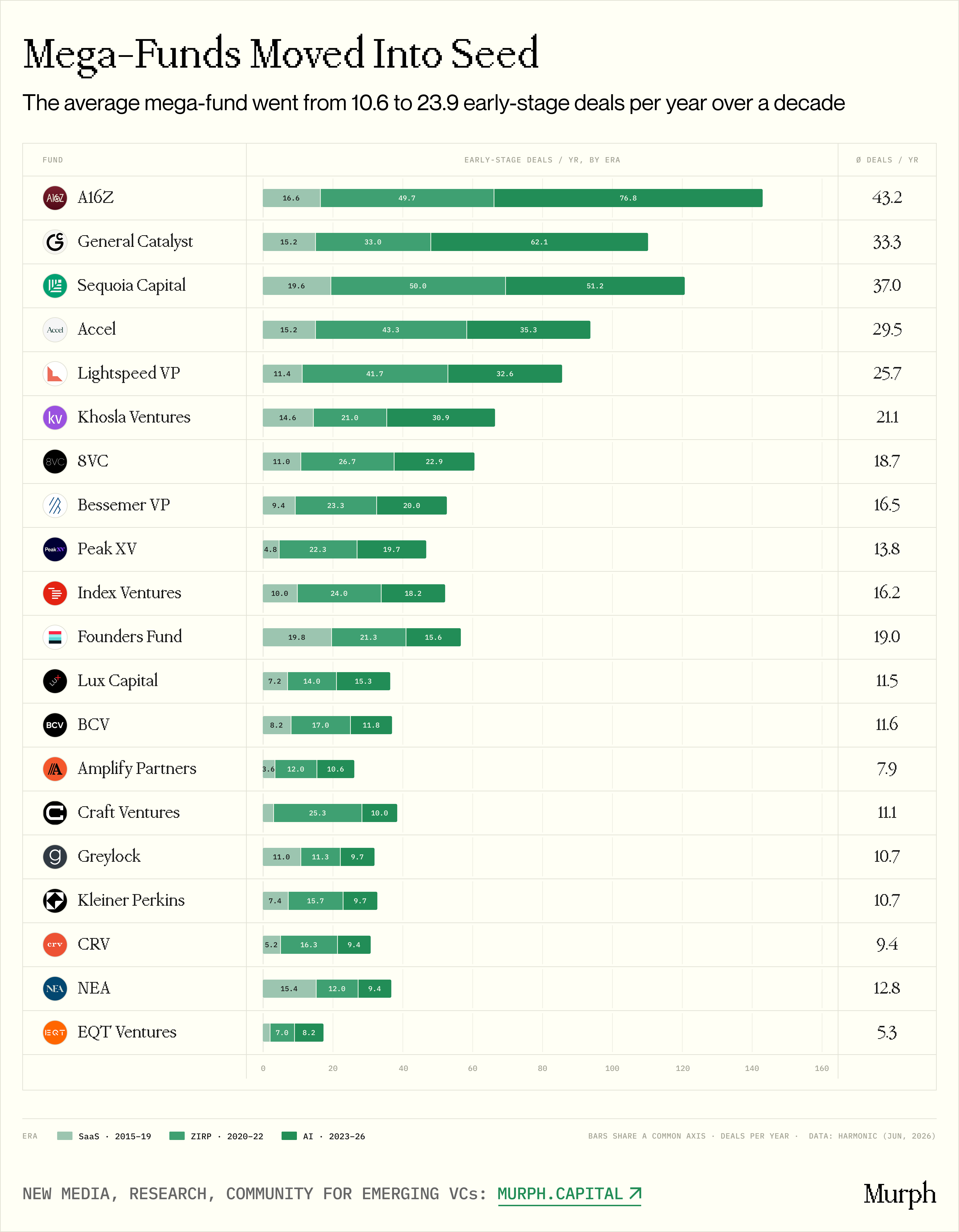
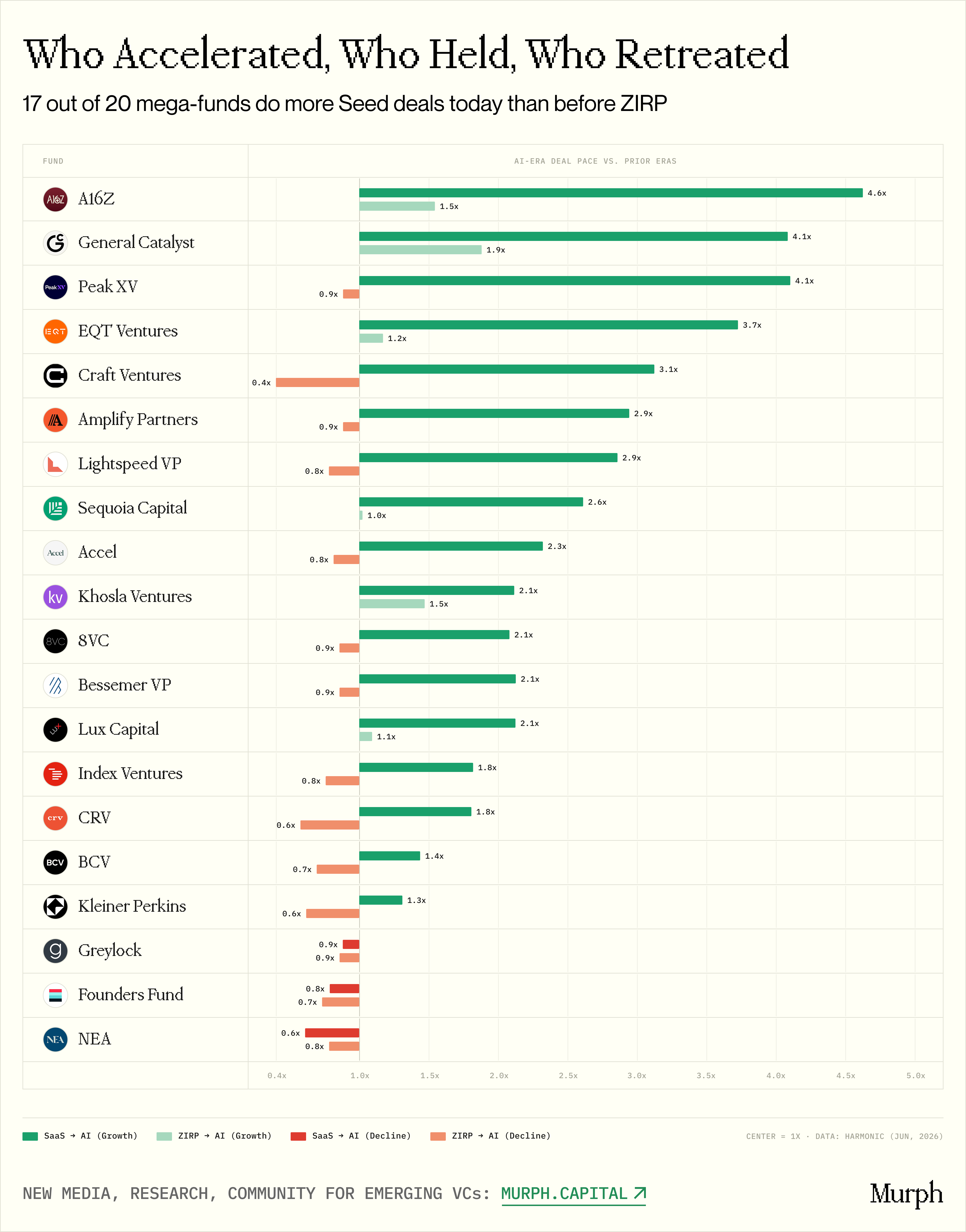
The data confirms what many have suspected: mega-funds appear far more frequently in seed rounds today. During the SaaS era, a typical mega-fund executed 10.6 early-stage deals per year. In the AI era, that figure jumped to 23.9—a 2.37x increase. Critically, the volume did not retreat after the zero-interest-rate period ended: the AI-era annual average (23.9) is nearly identical to the zero-rate era (24.3). Only 3 out of 20 funds reduced their early-stage pace, proving the shift is structural, not a byproduct of cheap money.
Three fundamental drivers explain this: Higher cost of AI-native companies—GPU infrastructure, data pipelines, and research scientists earning $300,000–$500,000 annually raise baseline capital needs from $500,000 (SaaS) to $2–5 million. Founder pricing power—top AI founders can choose among a16z, Sequoia, and Lightspeed at seed stage, pushing round sizes higher. Fund math—the top 5 funds in the cohort grew aggregate AUM from ~$34 billion to ~$249 billion (7x), while seed deal count only grew 2–4x. A $6 million seed check now represents just 0.01% of a16z's $90 billion AUM, eliminating any incentive to haggle over valuation.
Fund Stratification: Three Behavioral Routes
In the AI era, mega-funds have diverged into three clear paths. The AI accelerators (a16z: 75.3 deals/year, General Catalyst: 61.5, Khosla: 31.5) not only stayed in seed after cheap money vanished but doubled down, exceeding even their zero-rate peaks. The regression-to-baseline group (Lightspeed, Accel) saw AI-era volumes slightly below zero-rate peaks but still 2–3x above SaaS-era levels. The steady growers (Bessemer, Lux, Index) avoided both zero-rate spikes and AI explosions but permanently raised their baseline from ~10 deals/year to 15–21. The only exception is Founders Fund, which actively reduced early-stage activity in the AI era, pivoting to large concentrated late-stage bets (OpenAI, Databricks) in a contrarian move.
Seed Allocation Jumps from Side Hustle to Core Strategy
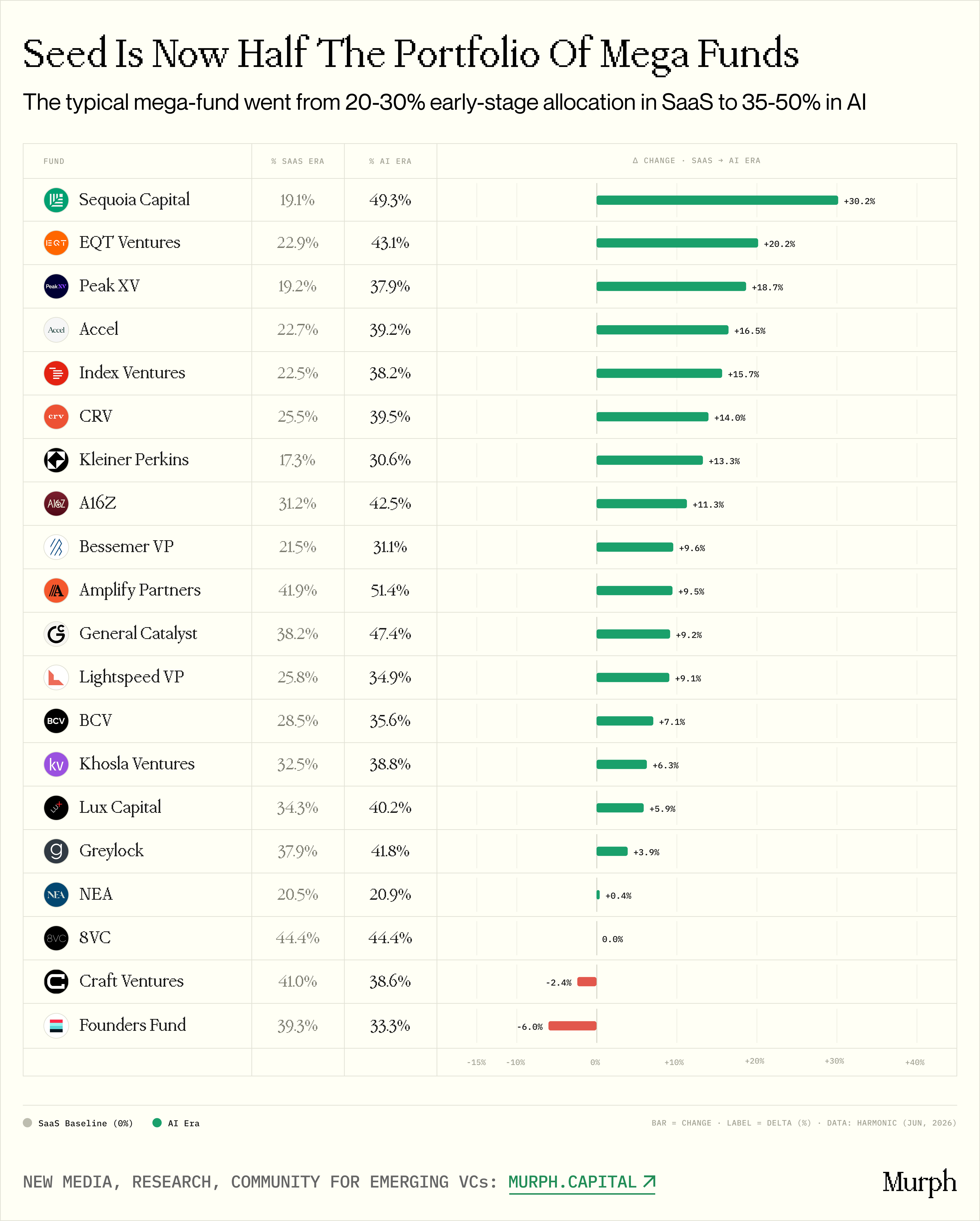
Absolute deal counts tell only part of the story. The percentage of total investment activity directed to early-stage reveals strategic commitment. In the SaaS era, a typical mega-fund allocated 20–30% of its deal flow to seed. In the AI era, that baseline rose to 35–50%, with 16 out of 20 funds hitting all-time highs. Three case studies stand out: Sequoia underwent the most dramatic transformation (from <20% early-stage share to nearly 50%); General Catalyst followed a V-shaped curve (38% in SaaS, 30% during zero-rate, 47% in AI); a16z held steady at 31.2% across SaaS and zero-rate, then leaped to 42.5% in AI. The narrative that mega-funds only 'occasionally write seed checks' is dead. These firms now deploy dedicated teams, proprietary pipelines, and accelerator programs (a16z Speedrun, Sequoia Arc) as weapons in seed-stage warfare.
Two-Track Strategy vs. Homogeneous Competition: The Median-Average Divide
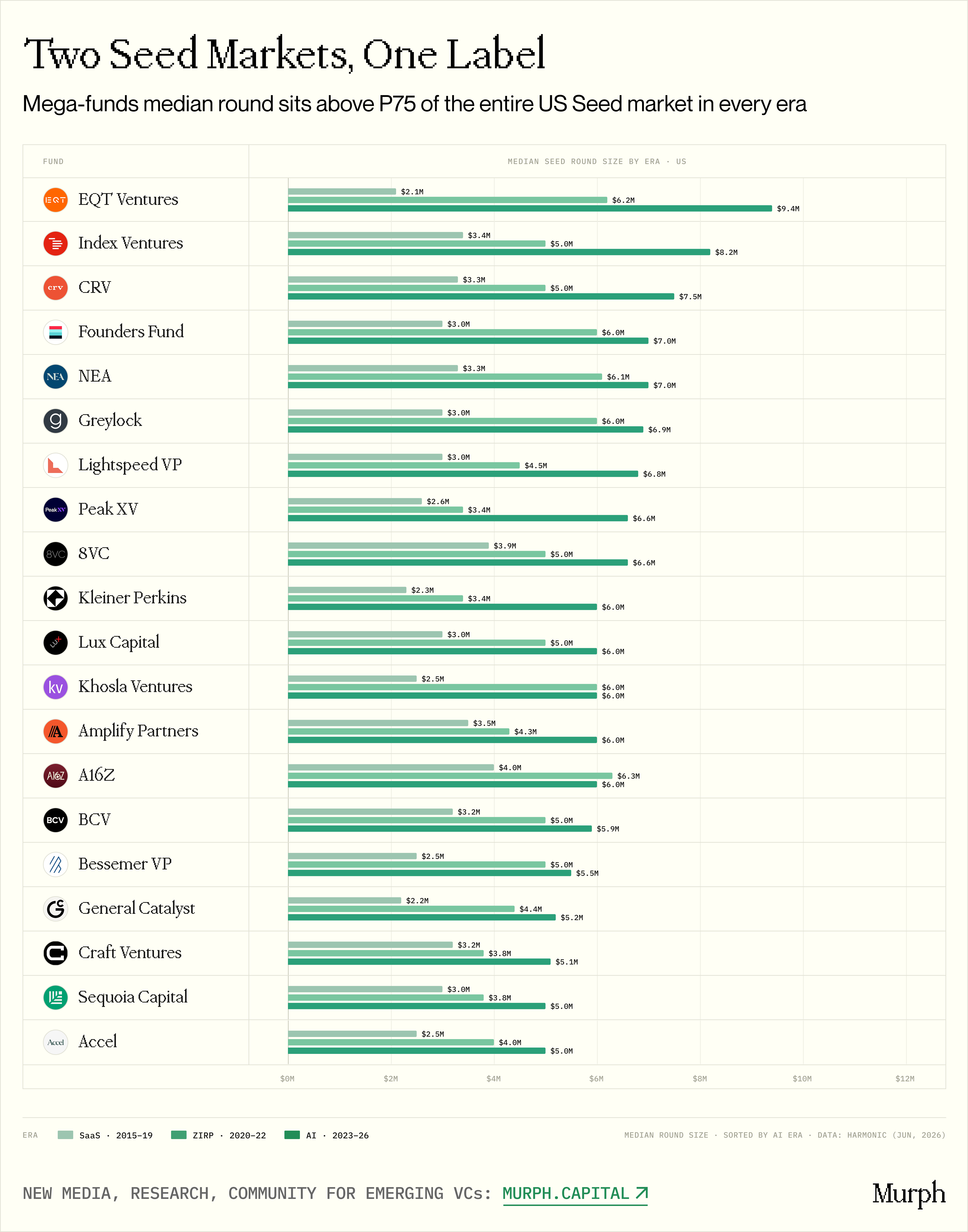
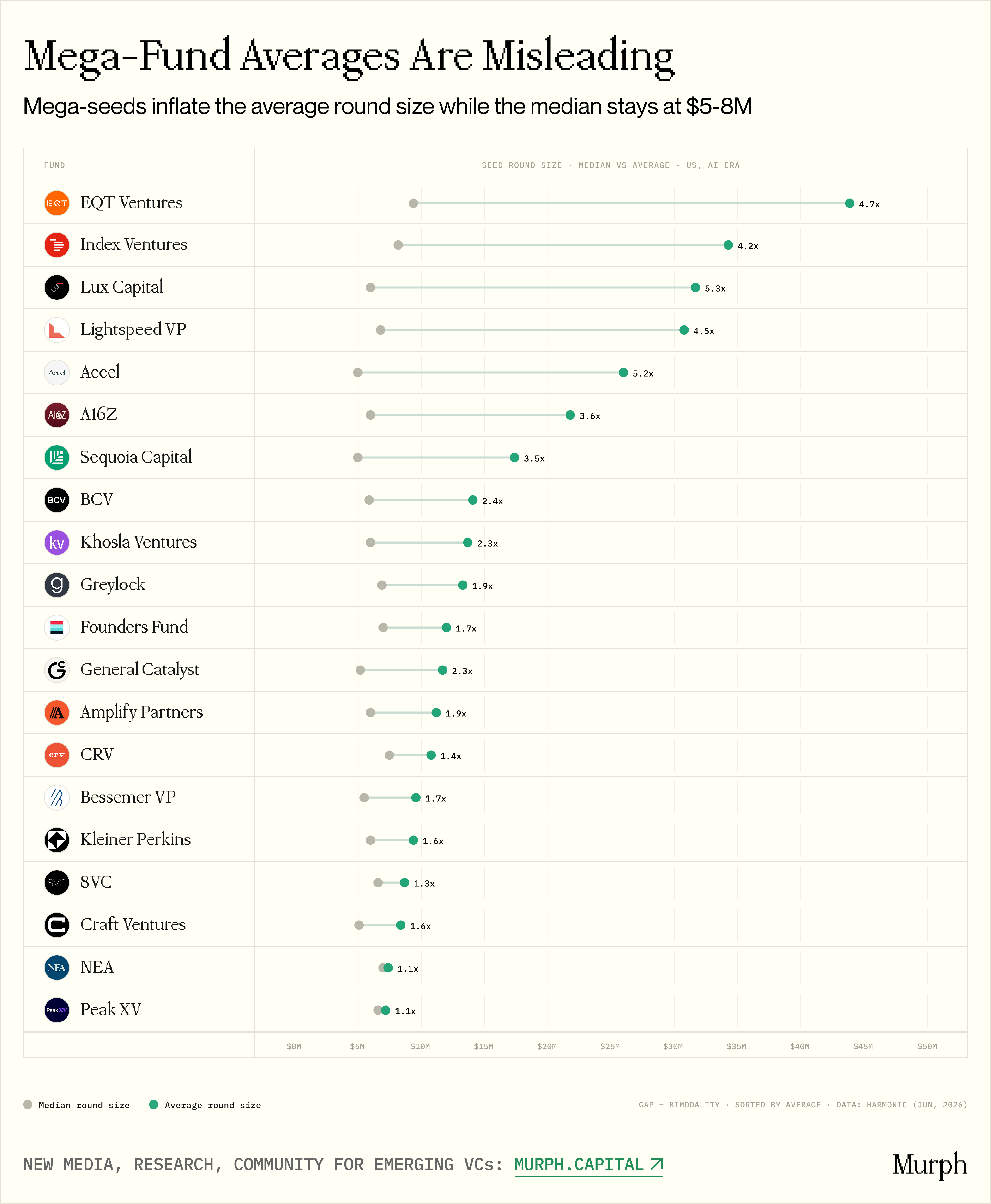
The median seed round size for mega-fund-backed deals ($6.2 million) is 4.3x the overall U.S. seed median in the AI era—and this multiple has remained stable across all three eras. However, the gap between median and average round size reveals two distinct fund types: two-track funds (Index, Lightspeed, a16z, Sequoia, Accel) simultaneously play in classic seed ($5–8 million) and super-seed ($50 million+), creating a wide median-average spread (3.5–5.3x). Homogeneous funds (GC, Khosla, Bessemer, Greylock) show tightly clustered medians and averages, deploying consistently in the $5–8 million range. For emerging managers, two-track funds’ super-seed outliers are less threatening; the real daily competition comes from homogeneous funds that live in the same price layer.
Lead Rates and Pricing Power: Who Truly Controls Early Markets
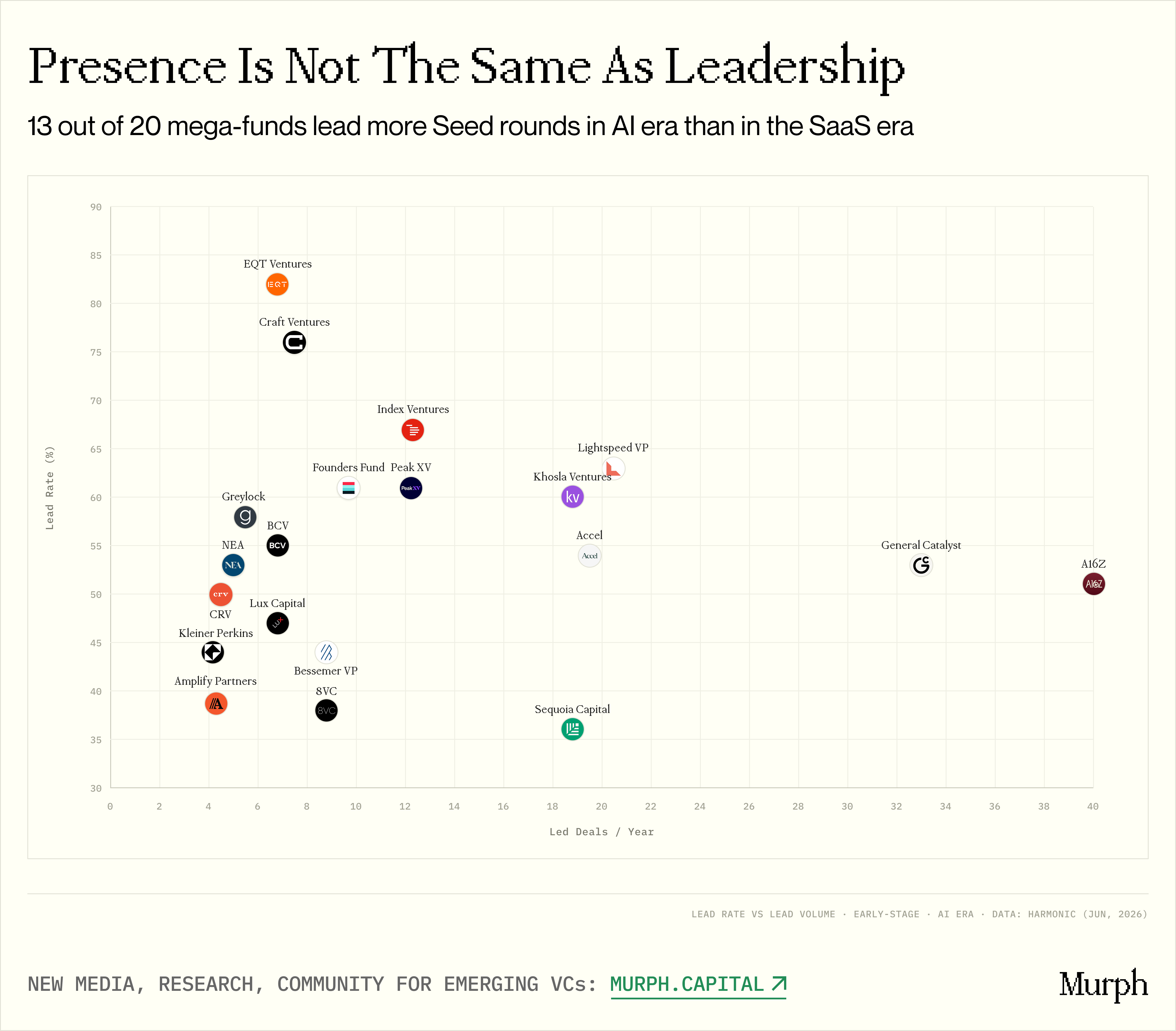
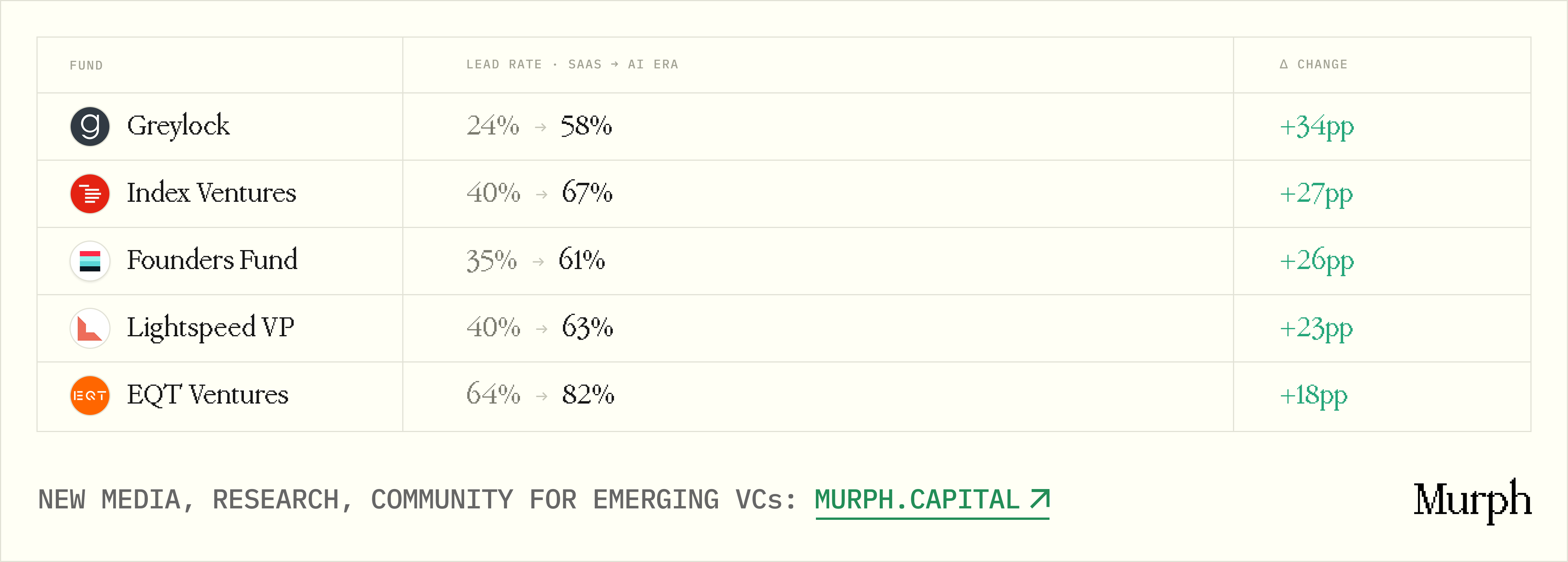
Participating in a round and leading it are fundamentally different. In the AI era, 13 of 20 mega-funds increased their lead rate compared to the SaaS era. The most dangerous group for emerging managers are conviction leaders—high lead-rate + high volume: Khosla (60% lead rate, 19 leads/year), Lightspeed (63%, 21 leads), Accel (54%, 20 leads). These funds systematically dictate pricing and terms. Interestingly, a16z and Sequoia have actually seen their lead rates fall (a16z from 67% to 51%; Sequoia from 52% to 36%) as their absolute deal volume exploded, forcing some participation as followers. But in absolute numbers, a16z still leads ~40 seed deals annually, more than the total early-stage activity of half the funds in the cohort. For emerging managers, the ability to lead rounds—and whether those leads are independent or co-leads with mega-funds—directly impacts fund math and LP appeal.
Sector Divergence: AI Dominates, but Cybersecurity and Defense Show High Lead Rates
Mega-fund activity is highly concentrated. Enterprise AI & automation, plus AI infrastructure & developer tools, together account for 42% of all early-stage deals in the dataset, with all 20 funds active. This concentration is driven by market size (enterprise AI spending surged from $1.7 billion in 2023 to $37 billion in 2025), velocity (AI-native companies follow a Q2T3 growth framework instead of SaaS's T2D3), and outlier performance (Lovable reached $100M ARR in 8 months, then doubled to $200M in 4 more months). Notably, cybersecurity (only 76 companies) commands a 62% lead rate—the highest among major sectors—with a $7 million median round. Defense & aerospace shows a 66% lead rate, but only 12 funds are active. Relatively uncrowded sectors include climate & energy (26 companies, 12 funds), logistics (24 companies, 13 funds), and traditional verticals like PropTech, EdTech, Legal, and HR. Emerging managers with deep domain expertise in these sectors can escape platform-level competition entirely.
Conversion Rate: 3.7x Advantage with a Volume-Quality Trade-Off
Mega-fund-backed startups progressed from seed to Series B at 3.7–4.2x the market average (data from SaaS and zero-rate eras), and this gap actually widened during the overheated zero-rate market. The advantage stems from strong signaling effects: brand validation, easier follow-on fundraising, network access, and operational support. However, when examining individual fund performance, a troubling pattern emerges: 14 out of 15 funds with sufficient sample size saw their conversion rates plummet 10–25 percentage points from the SaaS era to the zero-rate era. The correlation is direct—funds that scaled most aggressively suffered the greatest drops. Sequoia tripled its early-stage deal count (20 → ~50/year) and saw conversion collapse from 46% to 14%. Lightspeed quadrupled volume (12 → 42/year) and saw conversion fall from 31% to 11%. The sole exception was Greylock, which kept deal count constant (~11/year) and actually improved conversion from 29% to 44%. This proves that volume and quality are in constant tension. In the AI era, mega-funds are deploying at record volumes, and history warns that conversion will inevitably erode.
Danger Index: Which Mega-Funds Pose the Greatest Threat to Emerging Managers
Using three calibrated dimensions—deal volume, strategic commitment (early-stage share), and price overlap (median round size versus typical EM sweet spot)—each scored 0–10 for a maximum of 30, the Danger Index ranks the most threatening mega-funds for emerging managers. The highest threat tier (scores 27–30) consists of General Catalyst (30), a16z (29), Sequoia (28), and Accel (27). These four firms operate aggressively in the AI software space, in the $4–6 million round range—exactly where most EM deploy. If an EM's sector and price bracket overlap with these tigers, they must clearly articulate to LPs their specific edge. Conversely, EMs focusing on climate tech, logistics, or other spaces where first-tier funds have limited exposure face structurally lower competitive pressure, and deep domain expertise alone can form a defensible moat.
The Emerging Manager's Counter-Strategy
The mega-fund invasion of seed-stage investing is not a cyclical anomaly but a permanent recalibration of how venture capital operates. Trying to beat giants at their own game—matching their deal flow velocity and deep pockets—is a mathematical dead end. The data reveals a critical fracture in their armor: the unavoidable tension between massive deployment volume and portfolio quality. In the AI era, the true advantage for emerging managers lies not in replicating the large institutional machine, but in disciplined sector selection, patient underwriting of complex future unit economics that mega-funds often overlook, and forming deep founder bonds before multi-stage platforms even notice their existence. In a venture ecosystem that increasingly worships pure scale, the ultimate counter-strategy for the emerging manager is to own the premium on absolute discipline rather than trying to match the volume.