
Denmark is moving to tighten control over AI-assisted schoolwork after a 2024 survey by the Danish Evaluation Institute (EVA) found that nearly 9 in 10 high school students had used AI for homework. The government’s response is direct: written assignments completed at home will now require an oral defense.
The Danish Ministry of Education announced the rule on Thursday, Aug. 6. It will apply from the start of the next school week, with no transition period. Education Minister Magnus Heunicke said, “We do have a problem with students cheating with AI in our high schools, and action is needed now.”
Take-home assignments will no longer end with the written submission alone
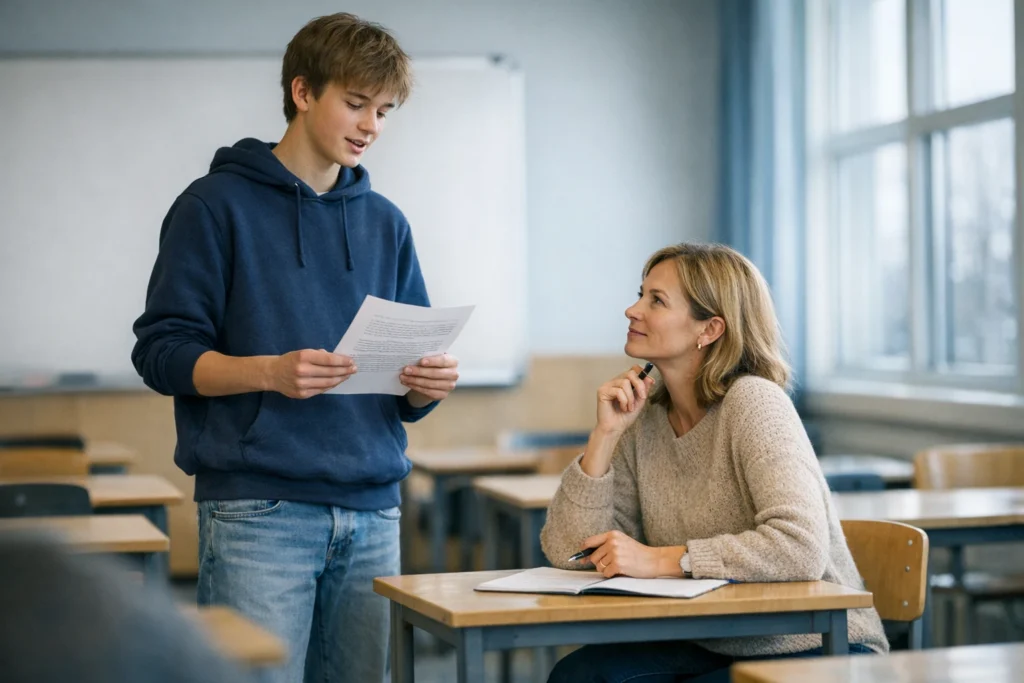
The rule applies to students in Denmark’s HF track, a two-year higher preparatory examination program. These students submit a substantial written assignment, known as the SSO, each year. Under the new arrangement, finishing the paper is no longer the final step. Students must also appear before a teacher and explain what they wrote and why they wrote it that way.
The issue, as described in the report, is that written work often reveals little about who actually produced it. A polished report with clear logic and precise wording may reflect several nights of student work, or it may be something generated by AI in seconds. Teachers grading the final text cannot see the process behind it.
The oral defense is meant to fill that gap. AI may help produce a clean argument on paper, but it cannot stand in front of a teacher and answer, on the spot, what a sentence means or why an argument was framed in a certain way.
Screen monitoring and firewalls are also part of the plan
The oral defense is only one of three measures announced by the ministry.
The second requires schools to introduce screen-monitoring tools during on-campus written exams. Those systems are intended to track whether students access unauthorized websites, messaging platforms, or AI services. The scope of monitoring includes screenshots, browsing history, and copied-and-pasted content.
The third measure calls for firewalls during classes and exams to restrict what online content students can reach. The ministry has also advised schools to move more assignments into supervised, on-campus settings.
Ministry says schools will be involved in implementation
The Ministry of Education said it will work closely with schools to identify the best way to put the changes into practice.
The report presents the policy shift as part of a wider anxiety across European education systems over AI entering classrooms. It also references cases elsewhere, including AI glasses used for cheating in Asia and disputes tied to AI-based exam monitoring.