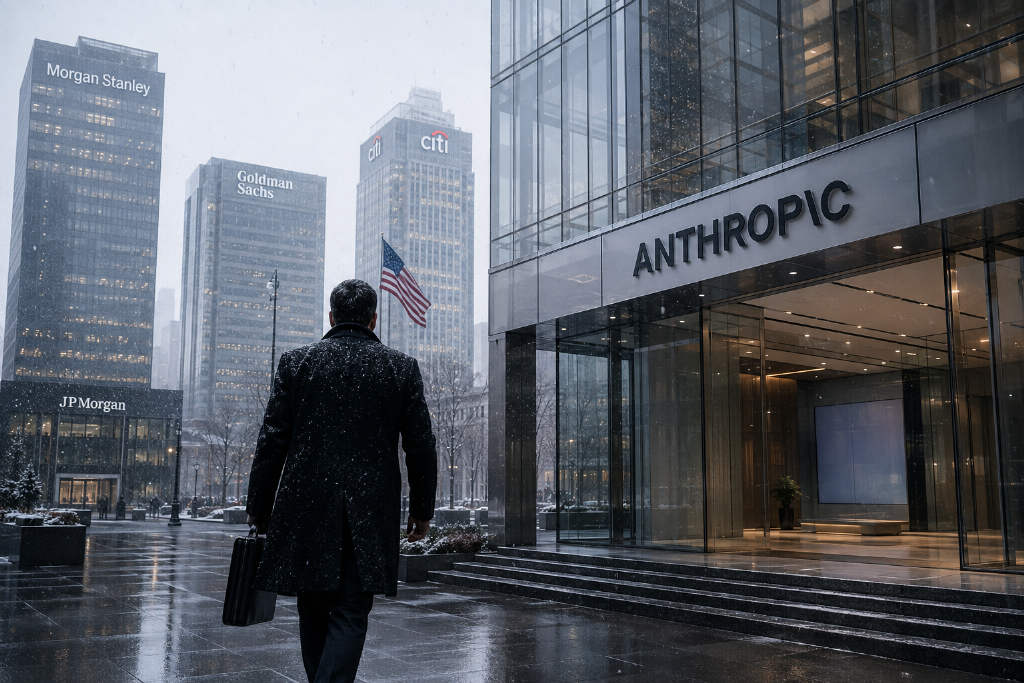
Anthropic is close to finalizing a $15 billion pre-IPO revolving credit facility, according to sources cited by Bloomberg, removing a key hurdle for its highly anticipated public filing. The facility is significantly larger than the company's earlier target of $10 billion and the $2.5 billion five-year revolving line obtained last year. Morgan Stanley is leading the arrangement, with Goldman Sachs, JPMorgan Chase, and Citigroup taking key roles; these four banks also serve as the lead underwriters for the IPO. Barclays and Wells Fargo are expected to play significant roles. The IPO proceeds could reach or exceed those of SpaceX, the sources said. Anthropic's annualized revenue has surpassed $65 billion. The specific size of the IPO and the credit facility details are still subject to change.
Anthropic is finalizing a $15 billion revolving credit facility ahead of its IPO, according to people familiar with the matter. The credit line, which is significantly larger than the company's earlier target of $10 billion, clears a major obstacle for the AI company's public filing. Last year, Anthropic secured a $2.5 billion five-year revolving credit facility.
Morgan Stanley will lead the credit arrangement, with Goldman Sachs, JPMorgan Chase, and Citigroup playing key roles. These four banks are also the primary underwriters for the IPO. Barclays and Wells Fargo are expected to take on significant roles. The IPO could raise as much as or more than SpaceX's fundraising, the sources said. Anthropic's annualized revenue has exceeded $65 billion. The final size of the IPO and the terms of the credit facility may still change.
This article was originally published by Bit.Fan. For more cryptocurrency news and market insights, visit www.bit.fan. Disclaimer:
The market information, project data, and third-party content displayed on this platform are for industry information sharing only and do not constitute any form of investment advice or return commitment.
Cryptocurrency trading carries high risks. Users should fully assess their risk tolerance and make independent decisions. All profits, losses, and legal responsibilities are borne by the users themselves.