

Deutsche Bank says two episodes that markets brushed aside last week should not be treated as random noise.
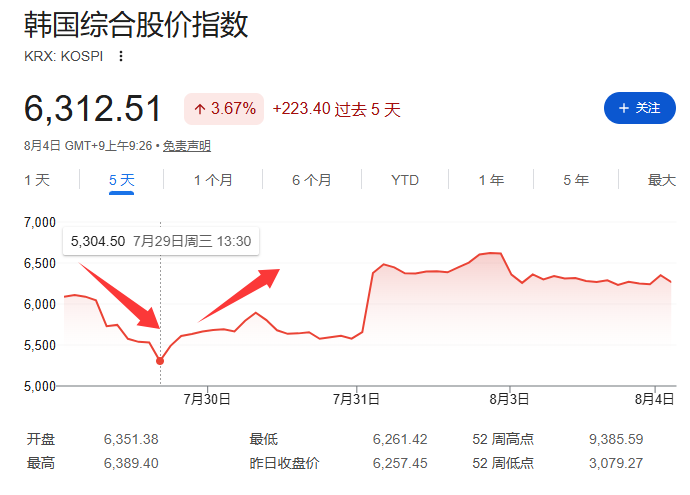
One was the collapse of a leveraged AI trade at Situational Awareness, the hedge fund associated with the so-called “AI stock guru,” which was forced to liquidate $16 billion in stock positions. The other was a violent move in South Korea’s KOSPI, which at one point dropped more than 20% in 48 hours, then bounced 25% from the lows and ended the week roughly unchanged. On the surface, neither episode triggered a systemic breakdown. Markets steadied quickly. Deutsche Bank argues that reading is at least incomplete.
According to Zhuifeng Trading Desk, Deutsche Bank Research analysts including Luke Templeman wrote in an Aug. 3 report that both events were symptoms of the same underlying condition: leverage in ETFs, margin accounts and hedge fund books, built up during more than a decade of low and stable interest rates.
The bank’s point is that a flat close can create a false sense of safety. In its view, that is the most dangerous illusion.
Why a V-shaped rebound in the KOSPI does not erase the damage
At the index level, the KOSPI’s weekly move nearly netted out to zero after a sharp selloff and rebound. Deutsche Bank said that figure is deeply misleading. An index that swings 45 percentage points in a matter of days is not economically equivalent to one that never moved.

The reason lies in how leverage works during a drawdown. When prices fall, leveraged and margin positions are often liquidated mechanically and irreversibly. A later rebound may offset losses on the index screen, but it does not restore wealth that has already been wiped out in individual accounts. Deutsche Bank said this matters especially for retail investors using leverage for the first time. Once they are forced out, they do not come back just because the benchmark rebounds.
The report cited media claims that more than 3% of South Korean adults received margin calls over the past two weeks. Deutsche Bank said that if true, the number is highly troubling. This, the bank wrote, is not just index volatility. It is a hit to household wealth.
Leveraged single-stock ETFs were identified as a trigger in Korea
Deutsche Bank tied the Korean episode to a specific trigger: the formal listing in April of leveraged single-stock ETFs linked to Samsung Electronics and SK Hynix.
Those names were already mega-cap stocks with a combined market value above $1 trillion, and retail ownership was already significant. Once the leveraged ETFs were introduced, retail investors’ leveraged exposure to the two stocks expanded sharply in a very short period. When the underlying shares fell, the structure of the products amplified the decline and helped set off a chain of forced selling.
The analysts said this is not a story unique to Korea. Similar products are also growing quickly in the U.S. and Europe. If something comparable were to happen in the U.S., Deutsche Bank said the transmission path would likely be far more damaging than a single hedge fund liquidation. It could hit consumer spending as households cut back after margin calls, pressure credit markets as brokers and lenders reassess collateral, and weaken market confidence if retail participation reverses.
The bank compared Korea’s episode with Silicon Valley Bank’s failure. What looked like an isolated event ended up forcing policymakers to come close to guaranteeing deposits across the entire U.S. banking system, an intervention far larger than the original problem.
Different markets, same root cause
Situational Awareness and the KOSPI selloff may look unrelated. Deutsche Bank said they are different expressions of the same disease.
The report traced that disease to more than a decade of low and stable rates, which encouraged leverage to build across ETFs, margin accounts and hedge fund balance sheets. The analysts compared it to a building foundation that sinks gradually over the years. The weakness stays hidden until a trigger makes the cracks visible all at once.
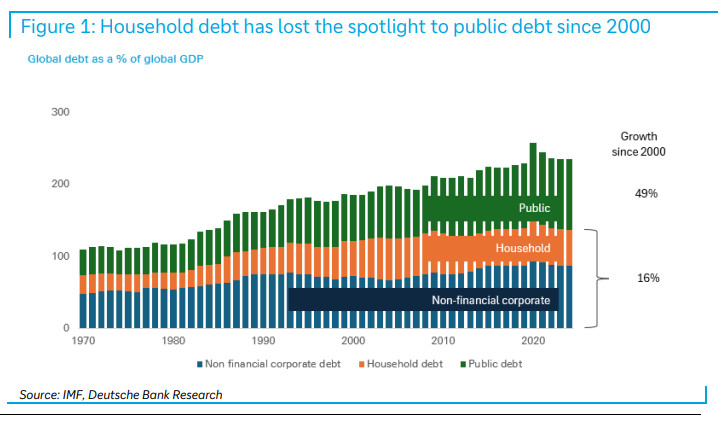
Deutsche Bank also said markets and policymakers have spent too much time focusing on sovereign debt and too little on household leverage. Growth in household leverage may have flattened, but the absolute level remains high. The analysts said that when they show clients a chart on the subject, attention usually goes to the rise in sovereign debt rather than the plateau in household leverage. In their view, that misplaced focus helps explain why household leverage risk is still being systematically underestimated.
More frequent volatility shocks since 2022
Deutsche Bank’s data shows that VIX spikes have appeared more often since 2022 than the average seen over the previous decade. The report linked that pattern directly to the normalization of global policy rates.
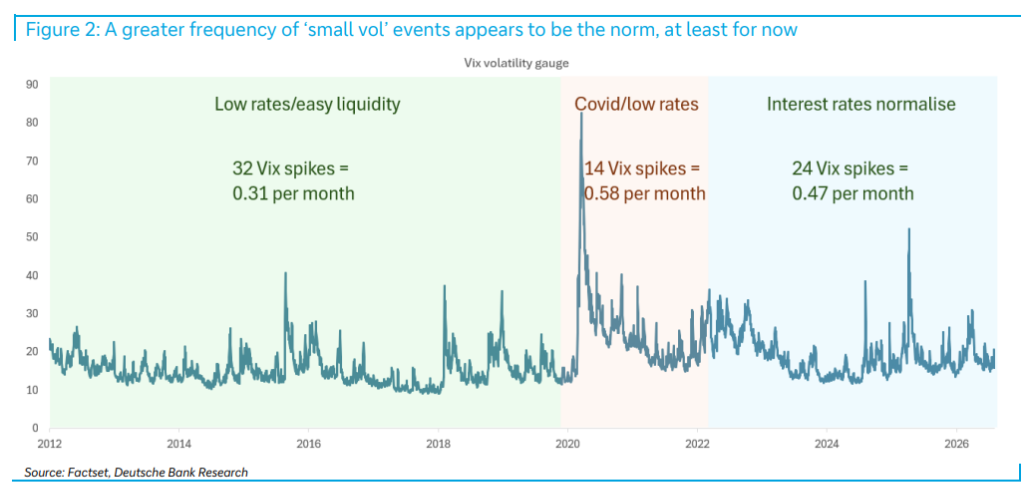
Its argument is straightforward. Low rates suppressed market volatility and allowed leverage to build. As rates returned to more normal levels, the force that had kept volatility contained faded, and the accumulated leverage started looking for a way out through repeated smaller shocks.
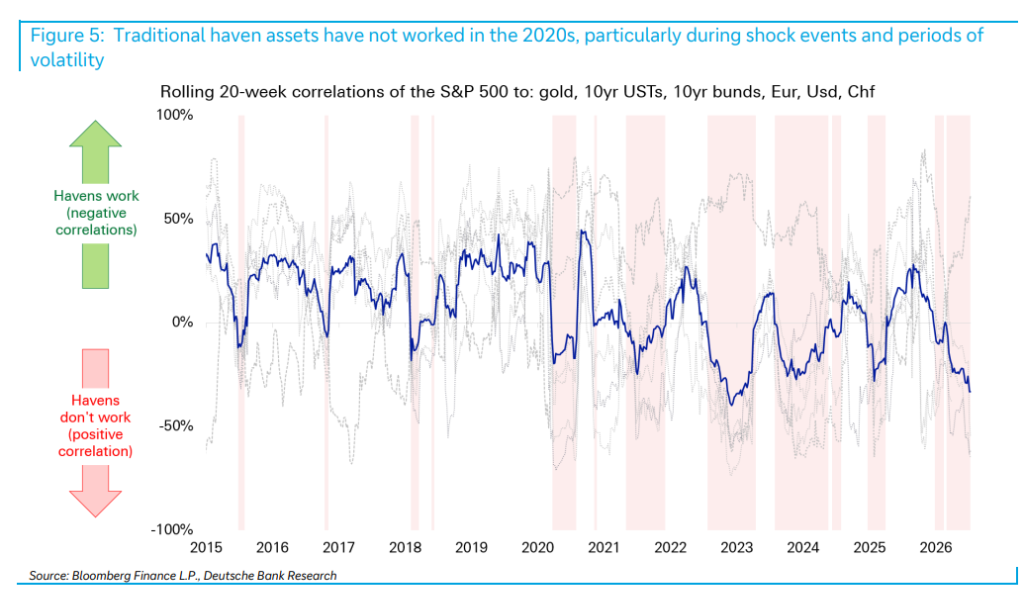
The report added that traditional safe-haven assets — gold, the U.S. dollar, the Swiss franc, the Japanese yen, U.S. Treasuries and German bunds — have failed to provide effective protection during several shocks since 2020, including the COVID pandemic, the 2022 rate hikes, the 2025 tariff shock and the 2026 Iran war.
As the analysts put it, if safe-haven assets keep failing when they are needed most, the buffer investors have quietly relied on is much thinner than it used to be. That raises the odds that a future “small volatility” event could grow into something larger.
A framework to watch: are policymakers reintroducing uncertainty on purpose?
The report also highlighted an idea attributed to analyst Rob Armstrong: the Federal Reserve may be deliberately allowing more uncertainty back into markets.
Deutsche Bank said Fed Chair Warsh’s withdrawal of forward guidance may not have been a mistake. It may have been a policy choice aimed at restoring an “uncertainty premium” to curb excessive leverage. Under that framework, forward guidance had damped day-to-day volatility, while stable prices and calm markets encouraged governments and investors to borrow beyond normal levels.
The report said Armstrong believes Warsh could not state that logic openly because it might spook markets, so he expressed it in vaguer language about being a “referee.” Still, in Armstrong’s reading, the policy direction points the same way.
If policymakers really do see more day-to-day volatility as healthy, Deutsche Bank said investors should expect more episodes like the Situational Awareness blowup and the KOSPI plunge, and stop treating each one as a sealed-off accident.
Two areas where risk may still be sitting below the surface
At the end of the report, Deutsche Bank pointed to two areas where hidden risk may still be stacked up.
- Private equity: many technology, media and telecom assets acquired during the near-zero rate era are still sitting on private equity balance sheets because exit markets have remained shut. Holding periods have stretched well beyond what firms expected. The report said the real moment of reckoning may still lie ahead.
- Listed companies: many public companies are still carrying inefficient assets acquired during the last debt-fueled M&A wave. Asset turnover remains weak, which Deutsche Bank described as a legacy of cheap financing that encouraged expansion focused on revenue more than profit.
The bank’s conclusion was blunt. Markets instinctively classify the Situational Awareness collapse and KOSPI volatility as noise because neither has yet turned into a systemic event. That instinct, Deutsche Bank said, may itself be dangerous, especially if policymakers are willing to tolerate more day-to-day volatility.