
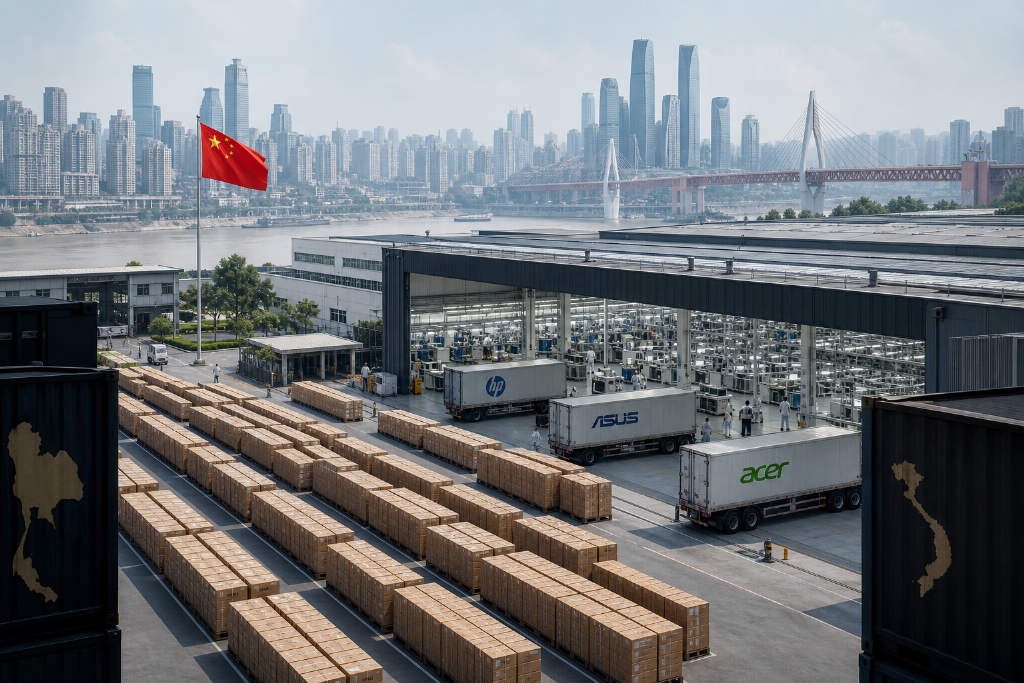
Notebook supply chains are seeing a sharp shift back toward China, according to a DIGITIMES report cited by ChainCatcher, with "returning production to China" emerging as a new trend among major brands.
HP, ASUS and Acer have recently scaled back capacity they had originally planned to move to Southeast Asia, the report said. Their manufacturing focus is now moving back to Chongqing and Kunshan in China, while orders and white-label production with Chinese original design manufacturers (ODM) and electronics manufacturing services (EMS) providers are increasing.
The change could affect production lines at Quanta and Inventec in Thailand, along with Compal and Wistron in Vietnam, as customers shift orders. Lenovo, Dell and Apple, by contrast, are said to be relatively unchanged for now.
Supply chain sources pointed to two factors. One is that the impact from replacement tariffs has been smaller after U.S. reciprocal tariffs were ruled unconstitutional by the federal Supreme Court. The other is cost: notebook production in Southeast Asia is said to be $9 higher per unit on average than in China.
That gap matters because gross margin on a single notebook usually runs from 3% to 10%, according to the report. For lower-priced models with an average selling price of about $300, a $9 cost difference comes close to, or even exceeds, profit per unit, leaving shipments unprofitable.
The report also said local governments in China, facing lower tax revenue, are pushing manufacturers to raise output or risk losing previously granted subsidies. That is adding another force behind the production shift.
An ODM source said manufacturers will respect customer decisions. If they cannot continue taking a single product line, they may switch local facilities to servers, networking equipment and other product categories.
By company, Lenovo is being more cautious because of its diversified footprint, so any move back is limited. Dell has not made a large-scale return because U.S. government orders account for a relatively high share of its business. Apple remains focused on the premium market and automation, and the report said MacBook production was moved away from Shanghai mainly because of supply chain disruptions during the pandemic. Its Vietnam plan has not changed so far.