
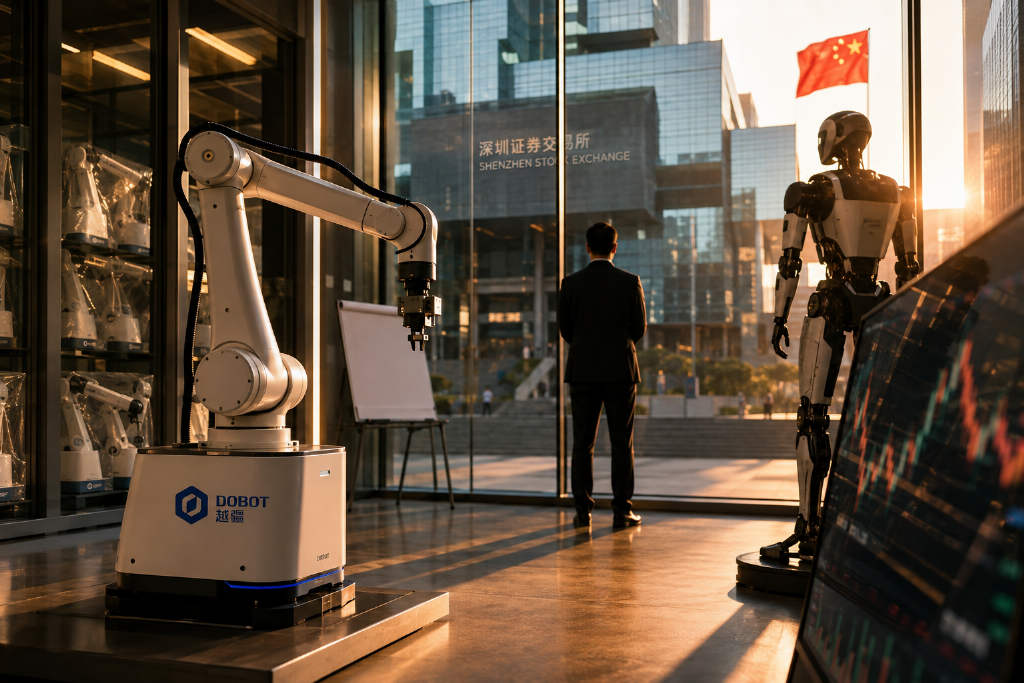
Dobot Technology is trying to sell investors on growth again, even as its latest numbers show a business still struggling to turn scale into profit.
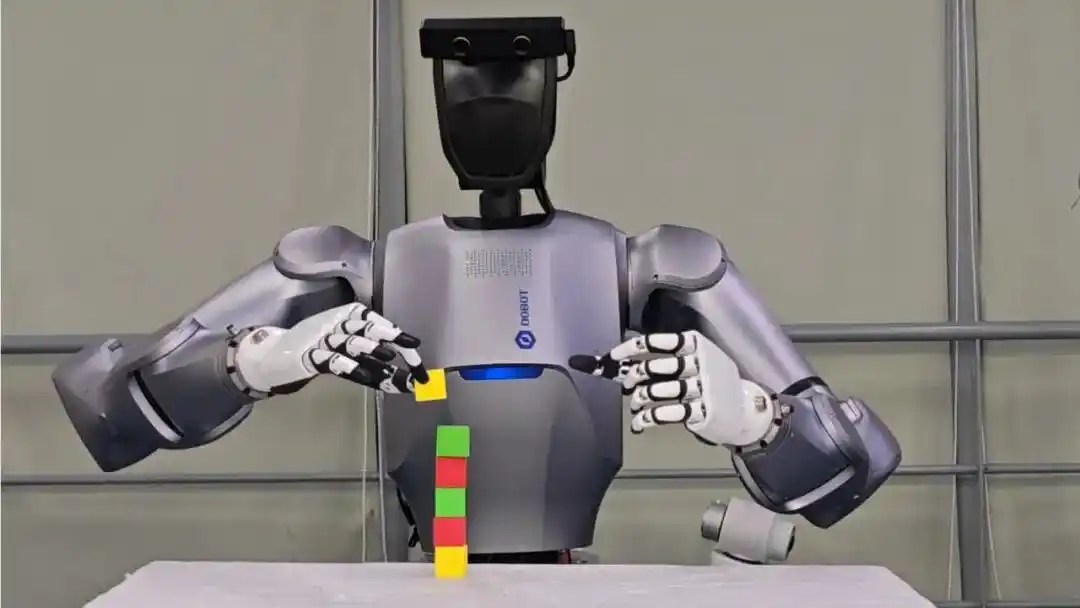
On Aug. 24, the company released its interim report for the first half of the year. Revenue came in at 316 million yuan, up 100% from a year earlier, while net loss widened to 108 million yuan, an increase of 163.8% year over year. The company, promoted in the market as the world’s No. 1 collaborative robot seller by unit volume, is also carrying a five-year cumulative loss of 376 million yuan, declining margins, lower average selling prices for its robotic arms, and selling expenses that the source article said were twice those of peers.
The market did not cheer the growth. After the earnings release, Dobot’s Hong Kong-listed shares fell for several days in a row, leaving the company with a market capitalization of about HK$9.7 billion. A little more than a year ago, the stock had climbed to HK$83.8, equal to a market value of HK$36.8 billion. From that peak, the decline now exceeds 73%.
The timing matters. Dobot is in a crucial window for a return from Hong Kong to the mainland A-share market. On July 22, it passed a review by the ChiNext listing committee of the Shenzhen Stock Exchange and said it plans to raise 1.2 billion yuan. Investors are now weighing two sets of facts at once: the company’s leading shipment position in collaborative robots and a financial profile that still shows persistent cash burn.
From a small Nanshan apartment to a global shipment lead
Dobot was founded in July 2015 by Liu Peichao, who had graduated with a master’s degree one year earlier. Together with several alumni from Shandong University, he started the company in an apartment of less than 40 square meters in Shenzhen’s Nanshan district. According to the source article, Liu worked in R&D at a medical device company during the day and spent nights with his team debugging robotic arm prototypes, often until 3 a.m. or 4 a.m. The company’s initial registered capital was 5 million yuan, with Liu holding 75% and the other founding partners holding 5% each.
In October 2015, Liu and his team launched their first desktop intelligent robotic arm on a crowdfunding platform and raised $620,000. A robotic arm that had previously cost hundreds of thousands of yuan was brought down to a price point of only several thousand yuan, helping Dobot enter the collaborative robot market.
Collaborative robots are robotic arms designed to work alongside humans on factory floors without fenced-off isolation zones. Dobot’s early focus was education. In 2021, revenue from education-related scenarios accounted for 73.5% of total revenue. As the education market showed limited room for repeat purchasing and expansion, the company shifted toward industrial use cases in autos, 3C electronics, and new energy. Its customer list later included more than 80 Fortune Global 500 companies such as BYD, BMW, and Geely.
Like many hardware startups, Dobot relied heavily on external funding in its early years. From 2015 to 2022, it completed multiple fundraising rounds, with investors including Qianhai Fund, Shenzhen Capital Group, Zhongtou Network, and Songhe Capital. Public reports cited in the source article said the company’s valuation had risen from 10 million yuan to about 3.531 billion yuan before 2022, roughly a 352-fold increase.
On Dec. 23, 2024, Dobot listed in Hong Kong at HK$18.8 per share and raised HK$681 million, earning media labels such as the “first collaborative robot stock.” Still, trading on debut was subdued. The shares slipped below the offer price intraday to HK$18.78 before closing at HK$18.94, up just 0.74%.
Its products, however, continued to move. According to a report by China Insights Consultancy, Dobot ranked first globally in collaborative robot shipments in 2025, with a 13.2% market share. Its cumulative installed base exceeded 100,000 units, and its products were sold in more than 100 countries and regions.
Revenue rose, but profits stayed in the red
Dobot’s recent financial record shows a company that has been able to expand sales without producing a profit.
From 2023 to 2025, revenue rose from 287 million yuan to 493 million yuan, representing a compound annual growth rate of 31.13%. Net profit attributable to the parent company remained negative throughout that period, at minus 103 million yuan, minus 95 million yuan, and minus 84 million yuan, respectively. Losses narrowed each year, but when 2021 and 2022 are included, cumulative losses over five years reached 376 million yuan.
Its revenue mix remains heavily tied to collaborative robots. In 2025, six-axis collaborative robots generated 302 million yuan, accounting for 61.69% of revenue. Four-axis collaborative robots contributed 92.95 million yuan, or 18.98%, while composite robots brought in 67.61 million yuan, or 13.80%. Together, those three categories made up more than 94% of total revenue. Embodied intelligence, a segment the company sees as a future growth driver, produced revenue for the first time only in 2024, at 3.8628 million yuan, then rose to 20.0417 million yuan in 2025, equal to 4.09% of revenue.
At the same time, selling prices have been falling. Financial statements showed that the average price of Dobot’s six-axis collaborative robots dropped from 56,600 yuan per unit in 2023 to 38,200 yuan per unit in 2025, a decline of 32.5% over two years. The company attributed that to a shift in product mix, with lower-priced Nova and E6 series products taking a larger share of sales.
Margins moved in the same direction. Overall gross margin fell from 48.47% to 46.49%, and gross margin for collaborative robots declined from 49.25% to 47.09%. In simple terms, Dobot sold more units while taking in less per machine and keeping a smaller margin on each sale.
Higher spending and weak cash flow remain central issues
Cost growth has become another defining feature of the company’s financial profile.
From 2023 to 2025, total costs and expenses increased from 243 million yuan to 338 million yuan. As a share of revenue, that ratio declined from 84.68% to 68.43%, but the absolute spending level kept rising. R&D was the largest line item among those investments, climbing from 70.52 million yuan to 115 million yuan. In 2025 alone, R&D expense rose 59.7% year over year, and the R&D expense ratio reached 23.23%.
That pressure did not ease in 2026. Dobot said the robotics industry remains in a rapid development phase and competition is intense, especially for core technical talent and key technologies. In the first half of 2026, its R&D spending rose to 32.1% of revenue. The company expects full-year R&D expense to exceed 200 million yuan and selling expense to top 200 million yuan as well. Combined, those two items would exceed 400 million yuan, nearly 90% of the company’s full-year 2025 revenue.
Pressure on prices and spending has shown up clearly in cash flow. Net cash flow from operating activities was minus 158 million yuan in 2023, minus 92 million yuan in 2024, and minus 43 million yuan in 2025. Including 2022, cumulative net operating cash outflow over four years was about 374 million yuan. In the first quarter of 2026, net cash flow from operating activities was minus 131 million yuan, down 294.38% from a year earlier.
A company with that level of ongoing cash burn has had to keep raising funds. In December 2024, Dobot raised HK$681 million net from its Hong Kong IPO. In July 2025, it completed a first placing that brought in HK$1.022 billion net. In November 2025, it sold another 16.66 million shares at HK$46.8 apiece, a discount of about 10.3% to the previous closing price, raising HK$771 million net. Together with the IPO, those three financings generated nearly HK$2.5 billion in net proceeds.
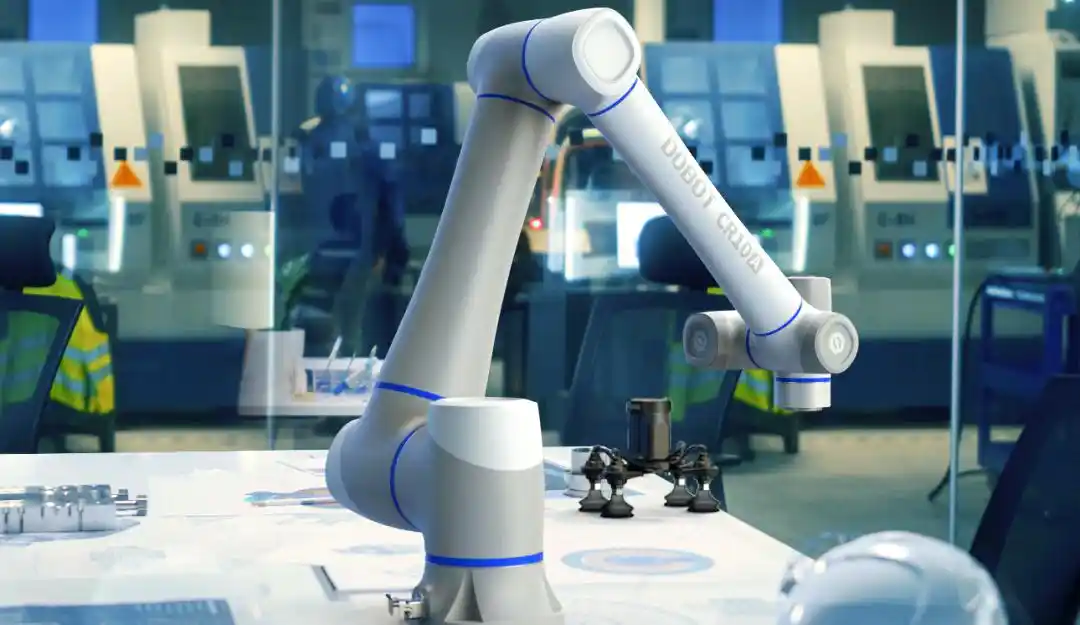
As of the end of June 2026, the company held 618 million yuan in cash and cash equivalents and had 100 million yuan in bank borrowings. Even so, it has continued with its plan for a mainland listing and wants to raise another 1.2 billion yuan.
The break-even target depends on aggressive assumptions
In its ChiNext prospectus, Dobot said it expects to turn profitable in 2028.
That target rests on three assumptions laid out in the source article. First, the company expects revenue to reach 1.723 billion yuan in 2028. Within that total, the collaborative robot business would need to maintain a compound annual growth rate of 34.17%, above the current actual rate of 28.44%. Second, embodied intelligence revenue would have to rise from 20.04 million yuan in 2025 to more than 30% of revenue and more than 500 million yuan in scale by 2028, roughly a 25-fold increase in three years. Third, gross margin would need to stay in the 40% to 45% range while the period expense ratio would have to be compressed to 35% to 40%.
Dobot also acknowledged downside risk in a sensitivity analysis. The company itself expects R&D and selling expenses alone to exceed 400 million yuan in 2026. If gross margin comes in 3 percentage points below expectation, the timeline for profitability would be pushed back to 2029.
Former COO’s public accusation added another layer of risk
Dobot’s problems are not confined to its financial statements.
In the early hours of July 17, 2026, just five days after the company passed its ChiNext listing review, Song Tao, who described himself as “Dobot’s real No. 2 co-founder,” used his WeChat public account to accuse the company and founder Liu Peichao by name. He alleged that the prospectus was “filled with false statements and deliberately concealed an equity ownership dispute worth more than 100 million yuan.” Public reports cited in the source article identified Song as a co-founder, former executive vice president, and former COO. He joined from Huawei in September 2015 and left in March 2021.
The dispute centers on a document titled Letter of Commitment on Change, stamped by employee shareholding platform Yuejiang Partnership on Jan. 28, 2023. Song said the letter confirmed that he should hold a 69.7373% property share in Yuejiang Partnership, while the prospectus registered only 22.455%. The difference, 47.2823 percentage points, corresponded to about 1.3541% of Dobot Technology’s equity interests and, according to Song, remained registered under Liu’s name.
Song also said that in December 2022, Liu, acting as the managing partner, decided on his own to transfer part of the shares held by Yuejiang Partnership to two new shareholding platforms. That reduced Yuejiang Partnership’s stake from 10.8697% to 3.5%, diluting Song’s indirect stake.
On the day of the accusation, Dobot’s Hong Kong shares at one point dropped by more than 14% intraday. The company responded that the claims were “untrue and seriously misleading.” At the Shenzhen Stock Exchange level, intermediaries conducting checks concluded that the industrial and commercial registration change procedures were compliant and the prospectus disclosure was accurate. The dispute, however, remains unresolved. Song said he had filed a real-name complaint with the exchange and started arbitration and civil litigation.
Embodied intelligence is the new bet, but it is still early
The collaborative robot market is not unlimited in size. China Insights Consultancy data cited in the source article put the global market at about 10.66 billion yuan in 2025, with that figure expected to reach about 37.69 billion yuan by 2030. Competition is already established. Denmark’s Universal Robots is an early pioneer in collaborative robots, Japan’s Fanuc is a traditional industrial robot heavyweight, and domestic players such as Jaka and Aubo are also competing for market share.
Dobot is betting that embodied intelligence can become its second growth curve. In the first half of 2026, revenue from embodied intelligence robots reached 45.2 million yuan, up 2052.4% from a year earlier, and accounted for 14.3% of total revenue. As of the end of June, the company said it had more than 60 million yuan in orders on hand and framework agreements for that business, and had expanded to 231 customers in total, including nearly 100 industrial manufacturing customers. Named customers included Valeo and Leapmotor.
The company also disclosed several related business developments. It won the bid for Guangdong Province’s embodied intelligence training ground project, signed a three-year strategic cooperation agreement with JD.com in May 2026, and unveiled its “one brain, multiple bodies” embodied intelligence platform at the World Robot Conference in August, where its humanoid robot Lumo made its first public appearance.
Still, embodied intelligence is even less mature than collaborative robotics. Unitree Technology, described in the source article as the leading A-share humanoid robotics company, reported 2025 revenue of 1.699 billion yuan, net profit excluding non-recurring items of 591 million yuan, and a corresponding margin of 34.77%, making it the only company in that segment to achieve scaled profitability. UBTech, described there as the first humanoid robot stock, reported 2025 revenue of 2.001 billion yuan. Against those figures, Dobot’s 45.2 million yuan in first-half embodied intelligence revenue remains small.
That investment is also a major reason the company’s R&D bill has climbed so quickly and its losses have widened. For Dobot, embodied intelligence may be part of the future story. Right now, it is also one of the business areas consuming the most cash.
Shipment leadership is not the same as commercial proof
Dobot has already built a recognizable position in collaborative robotics. From a startup in a Nanshan apartment to the global shipment leader in 2025 by the consultancy data cited in the article, the company has clearly expanded its reach.
What it has not yet shown is a stable path from scale to durable profitability. Lower selling prices, weakening gross margin, heavy spending on R&D and sales, sustained operating cash outflows, and an unresolved equity dispute are all still in front of investors.
Dobot now wants another 1.2 billion yuan from the A-share market to keep pushing into embodied intelligence. Whether that capital can turn shipment leadership and technical ambition into improved economics is the question investors are being asked to answer.
This article is based on a report from the WeChat public account of Phoenix Technology, authored by Phoenix Technology.