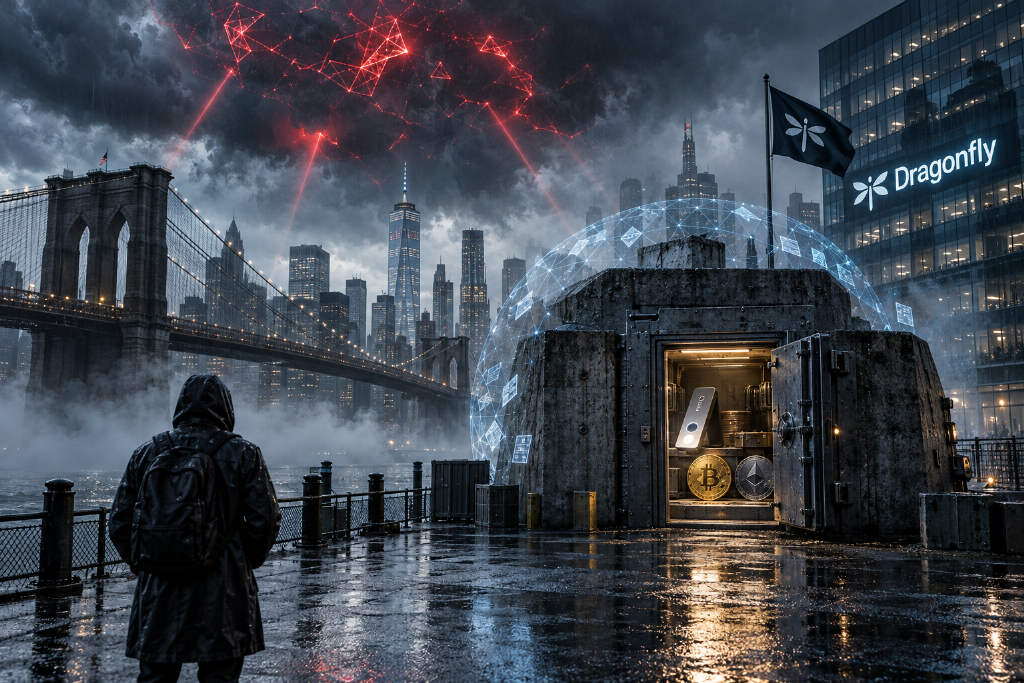
Dragonfly managing partner Haseeb Qureshi has pushed back on Ethereum researcher Justin Drake’s proposed “bunker mode” response to the risk that AI could break cryptographic signatures protecting crypto wallets. Qureshi described the idea as “cryptographic doomerism” and argued that moving tokens to fresh addresses does not solve the core problem. In his view, the approach only protects assets that remain untouched in new wallets, while tokens held elsewhere could still be attacked and dumped, eroding value across the market.
As an alternative, Qureshi proposed a “Cryptographic Recovery Mode” for blockchain networks. The model would use hash-based backup signature schemes and let users bind a recovery mechanism in advance, so validators could help restore assets if existing signature systems are broken. His comments came after Drake warned that the ECDSA signature algorithm used to secure crypto wallets could face a break “in months, not years” as AI’s mathematical capabilities improve. Drake had urged users to gradually move funds into wallets with unexposed public keys. Glassnode data cited in the report showed that about 6.26 million BTC are currently held at addresses facing potential risk.
Dragonfly managing partner Haseeb Qureshi said Ethereum researcher Justin Drake’s proposed “bunker mode” for dealing with the risk of AI breaking cryptographic signatures amounts to “cryptographic doomerism,” arguing that moving tokens to new addresses is not a real solution.
Qureshi said the approach only protects assets that users have not moved out of those new addresses. If tokens in other addresses are attacked and sold off in large amounts, those assets could still lose value.
Qureshi proposes a recovery-based alternative
He said blockchain networks should consider a “Cryptographic Recovery Mode,” built around hash-based backup signature schemes. Under that setup, users would bind a recovery mechanism in advance, and validators would help restore assets after cryptographic signatures are broken.
Drake had warned of a faster timeline
Earlier, Justin Drake warned that the ECDSA signature algorithm used to protect crypto wallets could face the risk of being broken in “months, not years” as AI’s mathematical capabilities improve quickly. He had advised users to gradually move funds into new wallets with unexposed public keys.
Glassnode data showed that about 6.26 million BTC are currently held in addresses facing potential risk.
The report was cited from Cointelegraph and relayed by Odaily.
This article was originally published by Bit.Fan. For more cryptocurrency news and market insights, visit www.bit.fan. Disclaimer:
The market information, project data, and third-party content displayed on this platform are for industry information sharing only and do not constitute any form of investment advice or return commitment.
Cryptocurrency trading carries high risks. Users should fully assess their risk tolerance and make independent decisions. All profits, losses, and legal responsibilities are borne by the users themselves.