
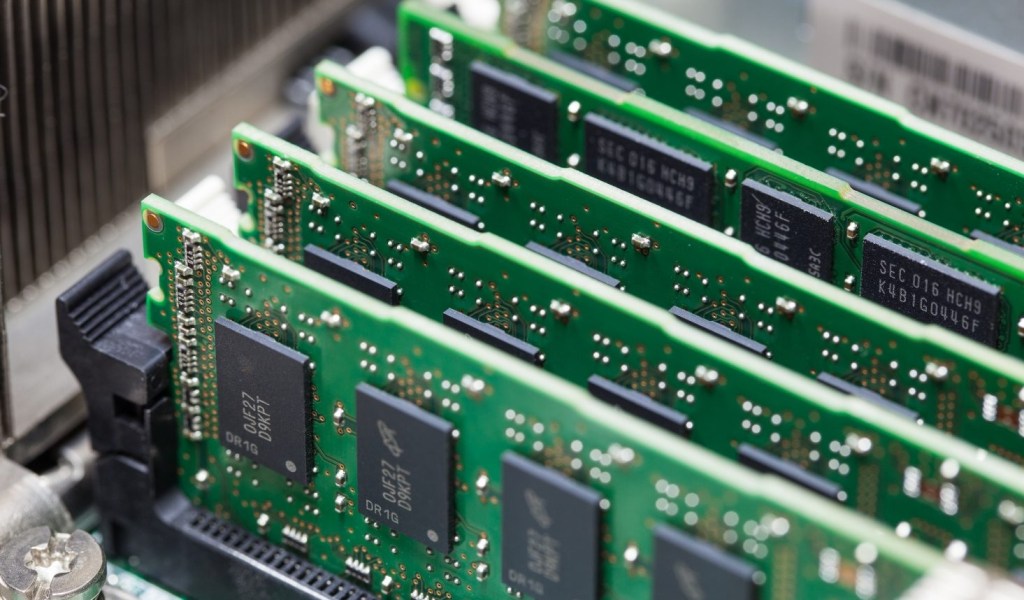
The DRAM upcycle is still running, and July revenue from Nanya Technology and ESMT showed how strong the pricing backdrop has become. Both companies posted record monthly sales, with the latest gains tied more to higher quotes than to a jump in shipment volume.
Nanya and ESMT both hit record July revenue
According to a report cited from Commercial Times, Nanya said July consolidated revenue reached NT$43.868 billion, up 49.27% from the previous month and 719.61% from a year earlier. The figure marked its ninth consecutive monthly record. For the first seven months of the year, consolidated revenue totaled NT$175.504 billion, up 660.87% year over year.
ESMT reported July consolidated revenue of NT$6.785 billion, up 40.02% month over month and 491.06% year over year, also a record high for a single month. Its cumulative revenue for the first seven months reached NT$27.998 billion, up 281.48% from the same period a year ago. Both companies said the growth was mainly driven by stronger market demand and higher pricing.
Price hikes, not output expansion, are driving the cycle
The report said institutional analysis points to pricing as the main force behind the current run, rather than a broad increase in production.
At Nanya, second-quarter DRAM average selling prices, or ASP, rose by more than 60% from the previous quarter, while bit shipments were almost flat. That means the sharp improvement in revenue and profit this quarter came almost entirely from higher selling prices.
The setup points to stronger pricing power returning to suppliers in a seller’s market. With DRAM prices still moving higher in the third quarter, institutional forecasts cited in the report see more room for Nanya’s ASP, gross margin and overall profitability to improve.
AI demand is squeezing mature-node DRAM supply
Supply tightness is the base case behind the current rally. The report said continued AI infrastructure expansion is driving strong demand for HBM, LPDDR5 and DDR5, prompting Samsung, SK hynix and Micron to shift wafer capacity and R&D resources toward higher-end products.
That shift has put pressure on supply for mature-node DRAM products including DDR4, LPDDR4, DDR3 and DDR2. Existing capacity keeps moving away, while new mature-node capacity cannot be added quickly in the short term.
ESMT’s product mix is focused on specialty DRAM, mobile memory and flash memory, placing it directly in the part of the market benefiting from the shortage. The report said institutional investors also pointed to tightening supply in SLC NAND Flash, supporting a constructive view on ESMT’s earnings momentum.
Spot prices back up the supply picture
Spot market pricing has moved in the same direction. CFM Memory data showed DDR4 8Gb 3200 rose 12.82% in one week, while DDR5 24Gb and DDR5 16Gb each gained 14.29% over the same period.
The quick rise in spot prices reflects active restocking by downstream customers, the report said, and also supports expectations for further gains in third-quarter contract prices. Institutional forecasts cited in the report expect the supply gap in mature DRAM to last for at least several more quarters, with no clear sign of easing in the near term.
Different next steps for Nanya and ESMT
Looking ahead, the two companies are taking different paths.
Nanya is focusing on DDR5, customized AI DRAM, and Wafer-on-Wafer, or WoW, 3D stacking advanced packaging technology, aiming to secure a stronger product position in the next technology cycle.
ESMT, by contrast, needs to keep raising the revenue share of higher-capacity and higher-specification products, using the earnings boost from the current price cycle to upgrade its product mix.