
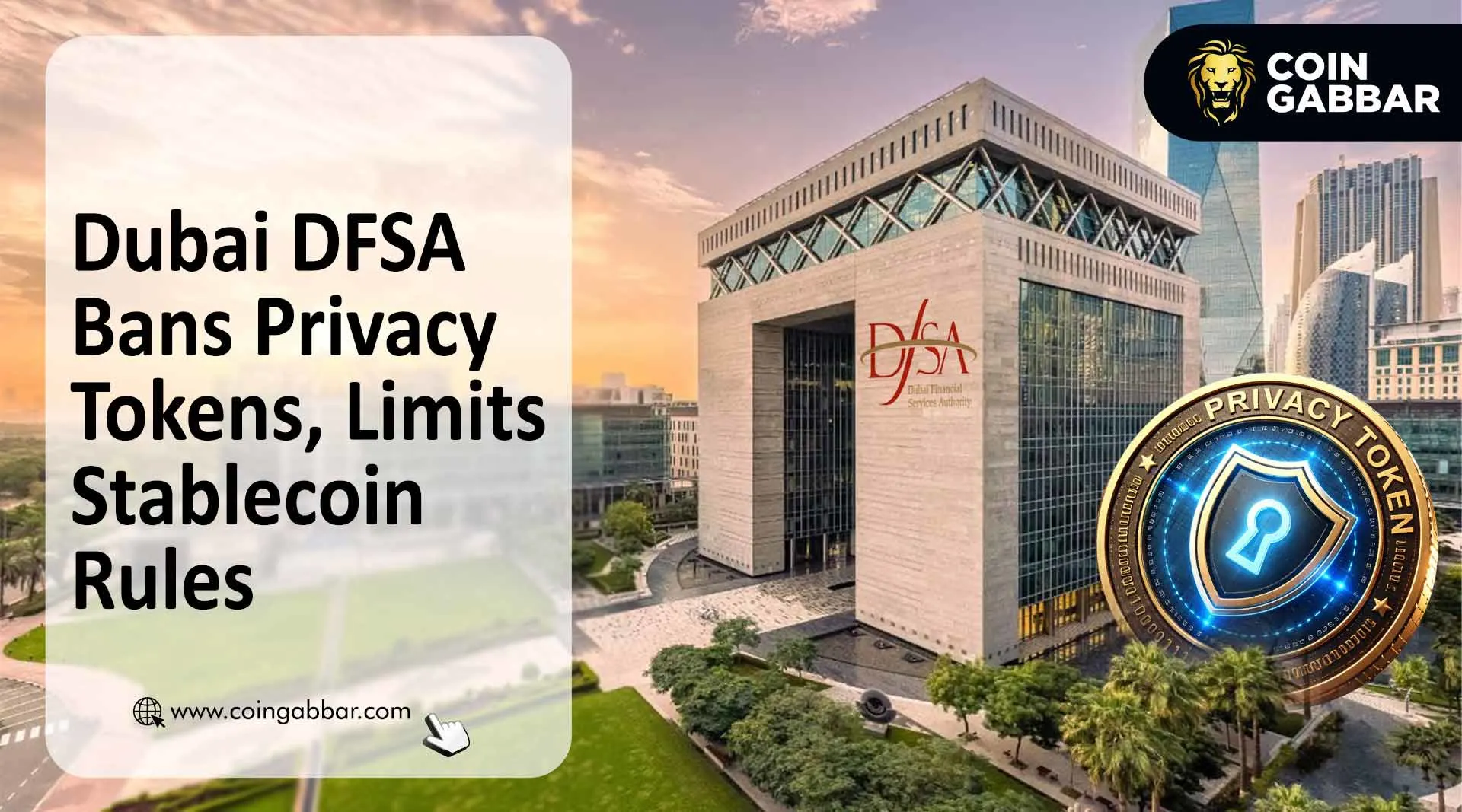
The Dubai Financial Services Authority (DFSA) has rolled out updated digital asset regulations for the Dubai International Financial Centre (DIFC), taking effect January 12, 2026. The new framework outright bans privacy-focused cryptocurrencies and imposes stricter conditions for stablecoin approvals.
Privacy Tokens Banned Inside DIFC
Under the revised rules, DFSA-licensed entities are prohibited from trading, promoting, offering, or managing funds related to privacy tokens such as Monero (XMR) and Zcash (ZEC). Crypto mixers and tumblers that obscure transaction details are also barred. Regulators cited the difficulty in tracking transactions, identifying users, and monitoring suspicious activity as the key reasons, stating such assets no longer fit within a regulated financial environment.
The ban applies exclusively to the DIFC, the emirate's designated financial free zone, not to mainland Dubai. However, similar restrictions could expand over time, observers note.
Stablecoin Standards Tightened
The new rules introduce a narrow definition for stablecoins. Only fiat-backed tokens supported by high-quality liquid assets qualify as an official “Fiat Crypto-Token.” Stablecoin issuers must demonstrate clear reserves, regular audits, and robust backing.
Algorithm-based or complex stablecoins no longer receive special treatment. Notably, Ethena's USDe has been reclassified as a regular cryptocurrency token rather than a stablecoin. USDe uses trading strategies instead of traditional cash reserves to maintain its dollar peg. Under the DFSA framework, such structures are allowed but treated as general digital assets, not payment-grade stablecoins.
Market Reaction: Compliance Over Anonymity
The DFSA's move signals a clear priority: the main financial hub of Dubai is choosing regulation, AML compliance, and institutional confidence over anonymity-focused innovation. The announcement sparked debate, with some users questioning whether Dubai is shifting away from its tax-friendly crypto hub status. Some fear liquidity may migrate to offshore or less regulated jurisdictions, while others argue stricter rules enhance trust and transparency for long-term institutional adoption.
Similar privacy-token crackdowns have already been enforced in Japan, South Korea, and parts of Europe. No significant panic selling has been reported, but the decision adds to a global trend toward traceable, compliance-first crypto markets.