

Ethena said on Sept. 25 that it is extending USDe’s basis strategy from crypto perpetuals into stock perpetuals through a partnership with Binance. The structure buys spot exposure through bStocks, tokenized stock certificates issued by a Binance affiliate, and hedges that position by shorting USDT-margined stock perpetuals on the same platform.
Guy Young, Ethena’s founder, called it the most important expansion of USDe’s funding mechanism since the product launched. Kairos Research, which wrote the admission framework for the rollout, took a narrower view. In its assessment, deployable size is capped by order-book depth, the supplemental agreement tied to approval had not been disclosed as signed, and pricing during U.S. market closures is the main structural risk.
Why Ethena is shifting the trade from crypto to equities
USDe is not a cash-and-Treasury stablecoin in the mold of USDT. The product is closer to a dollar-denominated wrapper around a market-neutral strategy: buy spot, short the matching perpetual, and collect funding paid by leveraged longs. Price moves in the underlying are meant to be offset by the hedge, leaving funding as the main return driver.
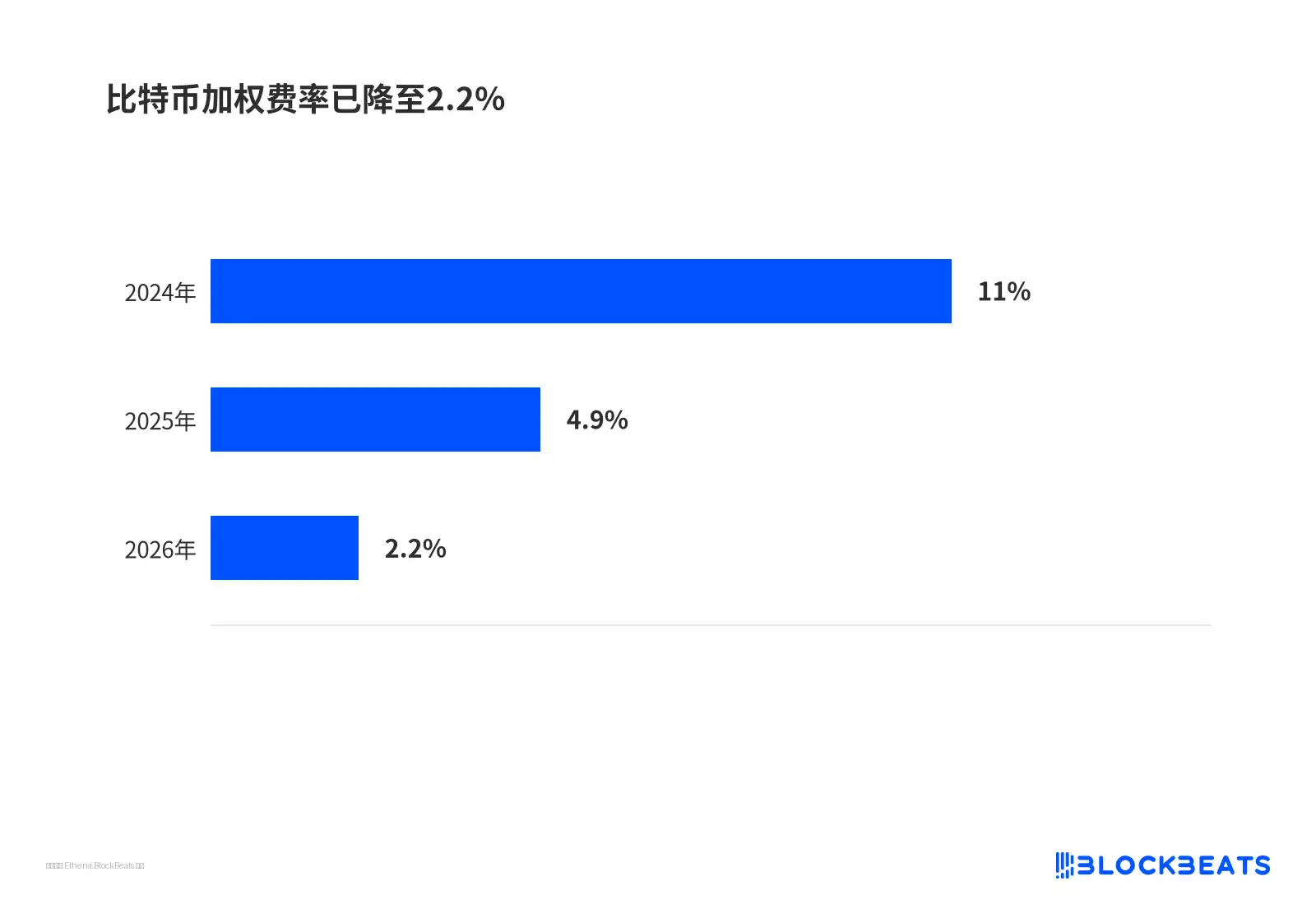
That engine worked far better last year than it does now. Bitcoin funding rates, weighted by open interest, were about 11.0% annualized across 2024. USDe supply then climbed to a peak of roughly $14.8 billion in October 2025. By August 2026, the same funding metric had fallen to about 2.2%, crypto basis contributed only around 1% to returns, and USDe supply had shrunk to about $4.9 billion.
Ethena’s answer is to rotate into a different underlying. Young’s case is that stock perpetuals offer higher funding, lower correlation with Bitcoin, and a clearer tendency for longs to pay. He expects real-world asset, or RWA, perpetuals to account for a larger share of USDe reserves than crypto perpetuals within 12 to 24 months.
Kairos set the gatekeeping rules, and only a limited set passed
Kairos Research laid out quantitative thresholds in a framework submitted to the risk committee on Aug. 28. To qualify, an instrument needed at least $25 million in 14-day average one-sided open interest, a 30-day funding-rate history, and matching tokenized spot exposure on the same venue.
As of Aug. 26, one-sided open interest in equity perpetuals across four platforms totaled about $2.9 billion. Binance had 17 contract pairs that passed the screen, but only a little over a dozen were considered truly usable, including names tied to Nvidia, Tesla, Apple, and Meta.
Binance became the first venue to go live. Keeping the spot leg and the perpetual leg on the same exchange reduces execution mismatch between the two sides of the trade.
bStocks look more like warehouse receipts than direct stock ownership
USDe is not directly backed by shares of Nvidia or Apple in this structure. The spot instrument, bStocks, is issued by Binance affiliate BTech Holdings Limited and is described as 1:1 against custodied shares. Even so, holders do not have proprietary rights in the underlying stock, and the issuer retains broad discretion over corporate actions. In legal terms, the instrument is closer to a warehouse receipt.
That is why Kairos wrote approval as conditional on a supplemental agreement. The agreement was meant to cover custody and lending restrictions, inventory reconciliation outside the group, audit and upgrade-key controls, and rules for dividends and corporate actions. As of Sept. 25, there was no disclosure on whether it had been signed. Reporting that day said that before such an agreement is in place, the spot leg is closer to unsecured credit exposure to a Binance affiliate.
Return assumptions differ sharply, and size is limited by market depth
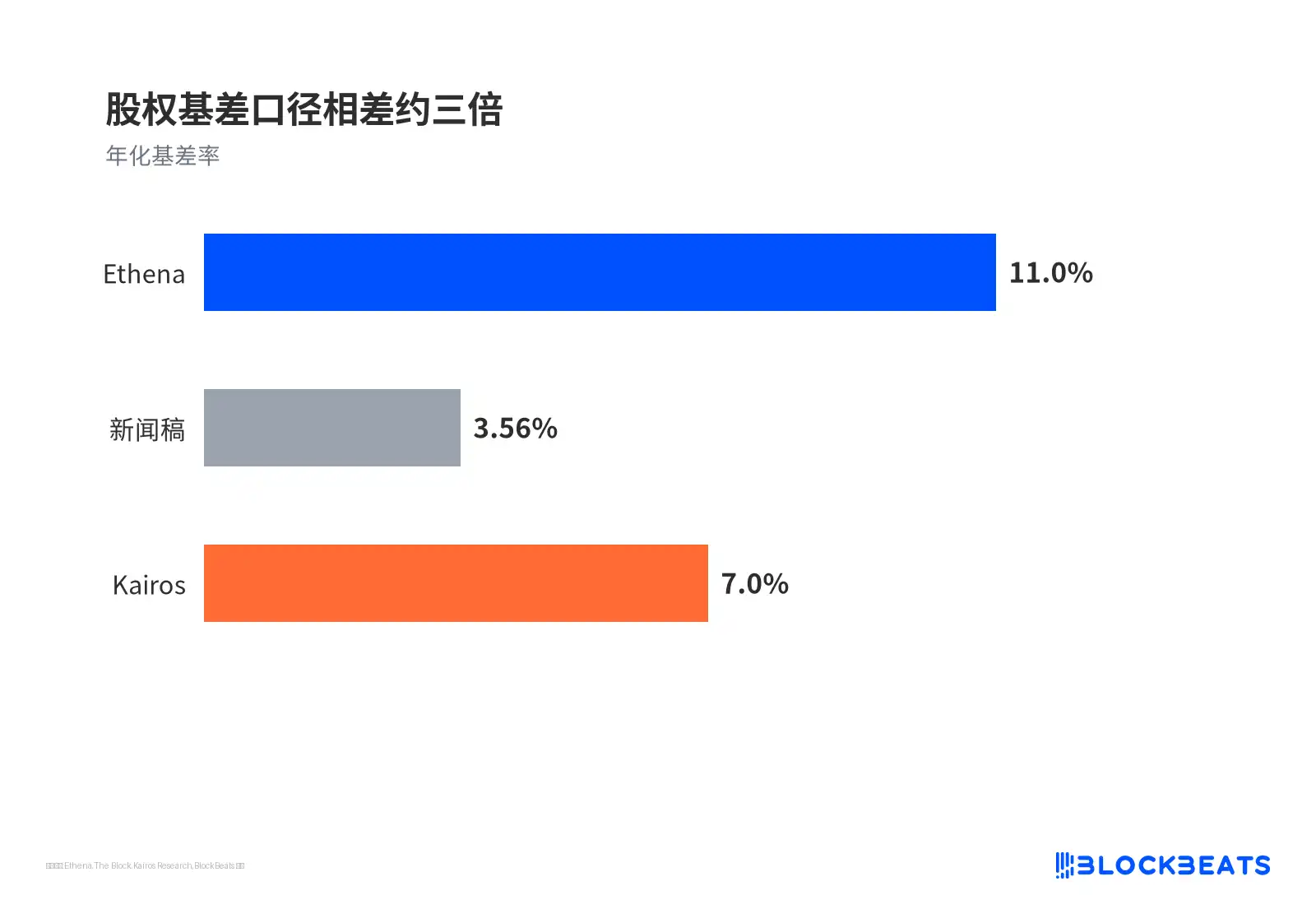
The widest gap between Ethena and Kairos shows up in the return discussion. Ethena said equity basis had been above 11% over the past six months. Another figure cited in the same discussion was 3.56% annualized, a spread of roughly three times.
The more reproducible current reference point came from Kairos. On Aug. 26, approved contracts were showing funding of about 7%. Two of them had already turned negative, while 17.5% represented a high point seen in the May-to-August window.
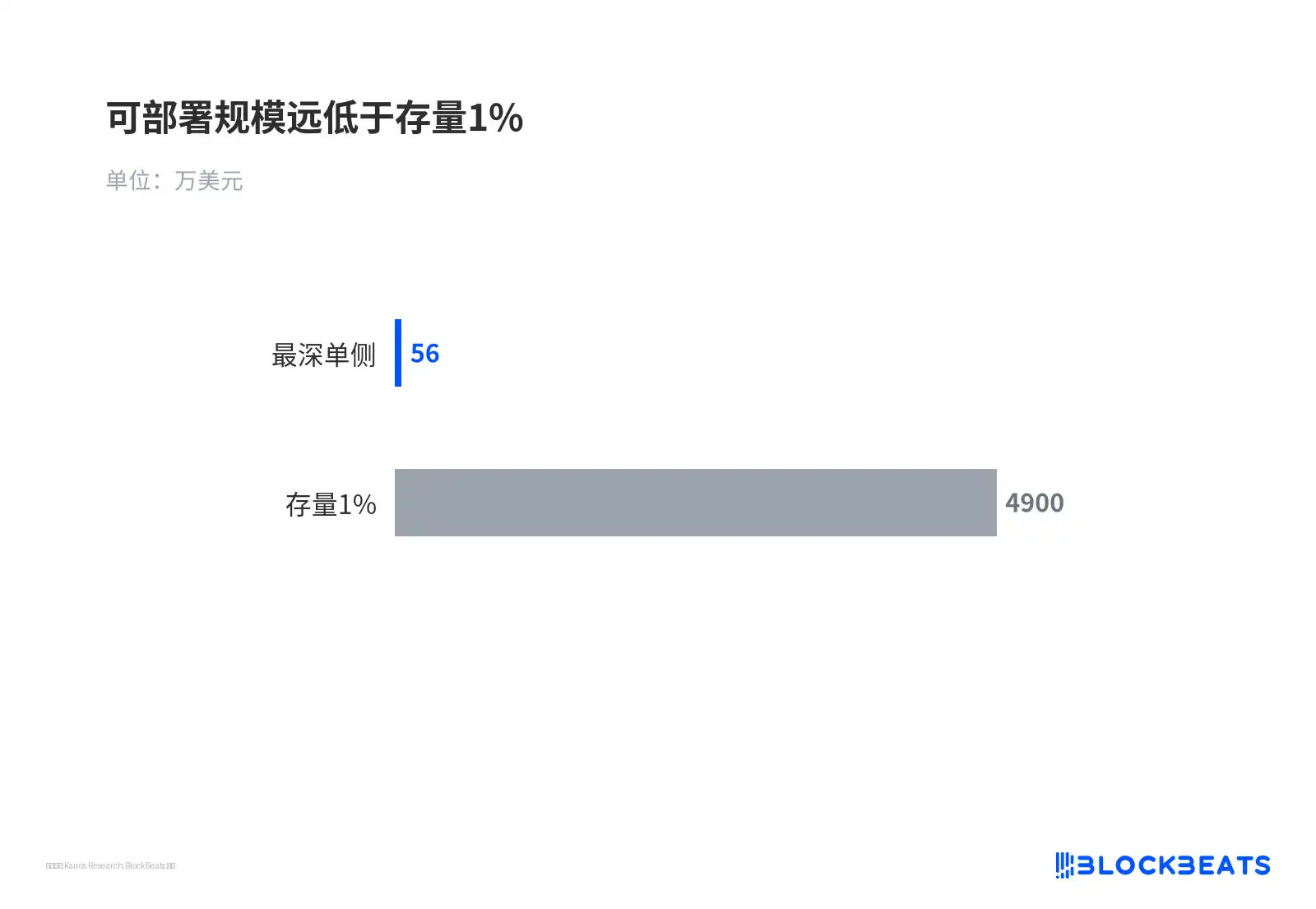
Position sizing is constrained by order-book depth. Kairos recommended keeping exposure below 10% of the matching perpetual’s open interest and below 10% of any single day’s trading volume. Based on its order-book estimates, the deepest Binance product had one-sided depth of about $560,000. Even if open-interest thresholds are met, deployable capital remains well below 1% of outstanding USDe supply.
U.S. market closures create the key pricing gap
The more practical weakness is not a 10% drop in Nvidia during regular trading. It is the fact that stock perpetuals keep trading while U.S. equities are shut. U.S. markets are closed for about 70% of the week. During those hours, Binance’s index is generated from the perpetual order book itself, which means short positions can be liquidated in a thin market while bStocks cannot be sold at comparable size.
Kairos backtesting showed an average deviation of 14.9 basis points across more than 400 weekend and holiday windows. Across 37 earnings windows, the hedged portfolio saw a maximum drawdown of 81.7 basis points. The framework requires at least 10% more stablecoin margin during those periods, or a halving of exposure, or closing positions before the market shuts.
Putting issuance of the spot leg, perpetual trading, liquidation, and index construction inside one ecosystem cuts cross-venue slippage. It also concentrates risk in a single venue and shifts the risk mix away from token price volatility toward affiliate credit exposure and closed-market pricing.
USDe supply is still about $2.6 billion short of the ENA buyback trigger
Those constraints point to the same conclusion: what started on Sept. 25 looks like a tightly capped pilot rather than an open-ended scale-up. The market still does not know how much capital has actually been deployed, whether the supplemental agreement has been signed, or when a second venue might qualify.
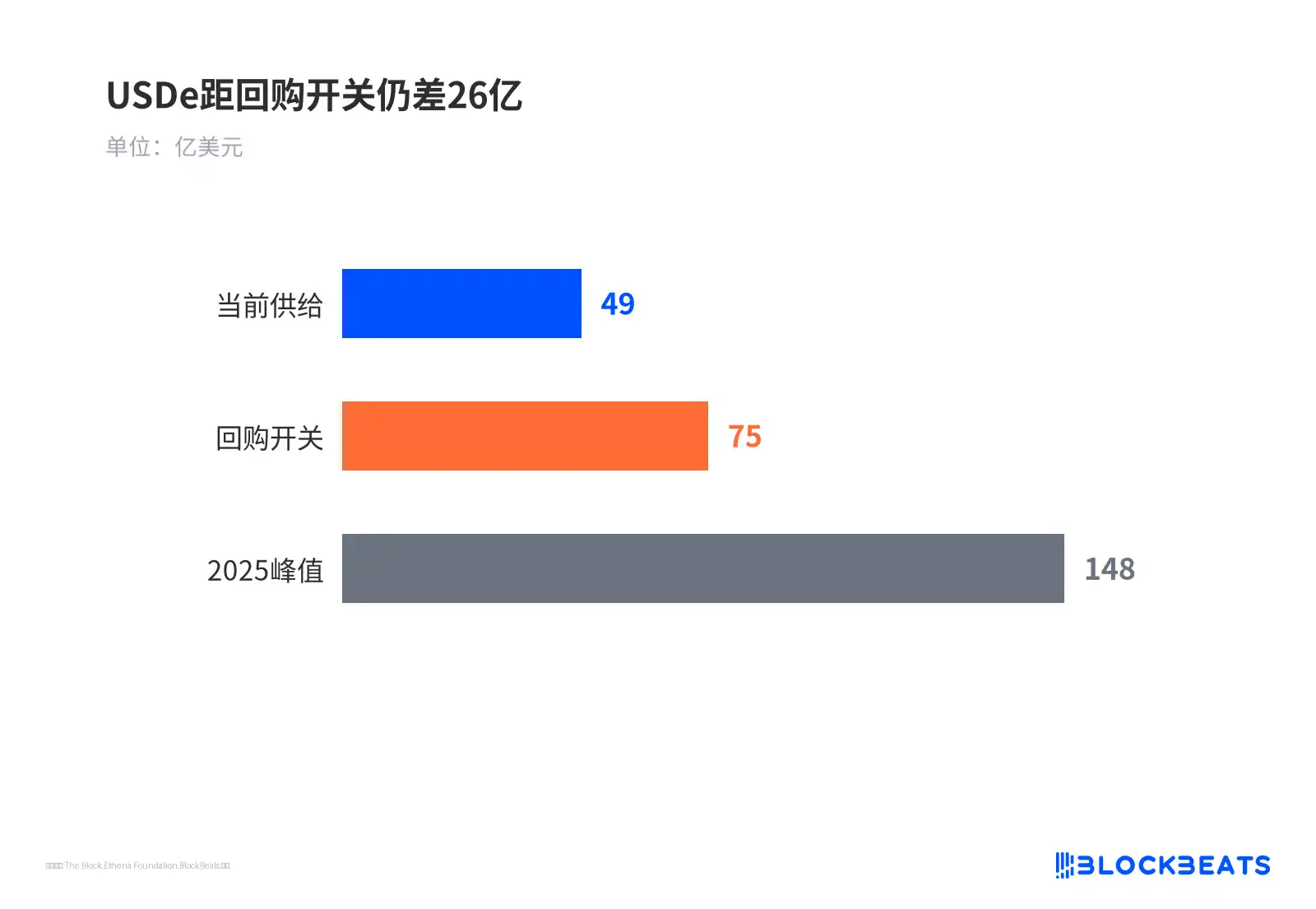
The cleaner observation window is USDe supply itself. It currently stands at about $4.9 billion, still around $2.6 billion below the $7.5 billion level tied to the ENA buyback switch.
If equity basis can deliver stable positive carry, that number should move first. ENA’s recent rebound is trading both a buyback expectation and a longer-dated growth narrative, but the timing for those two is not the same.