
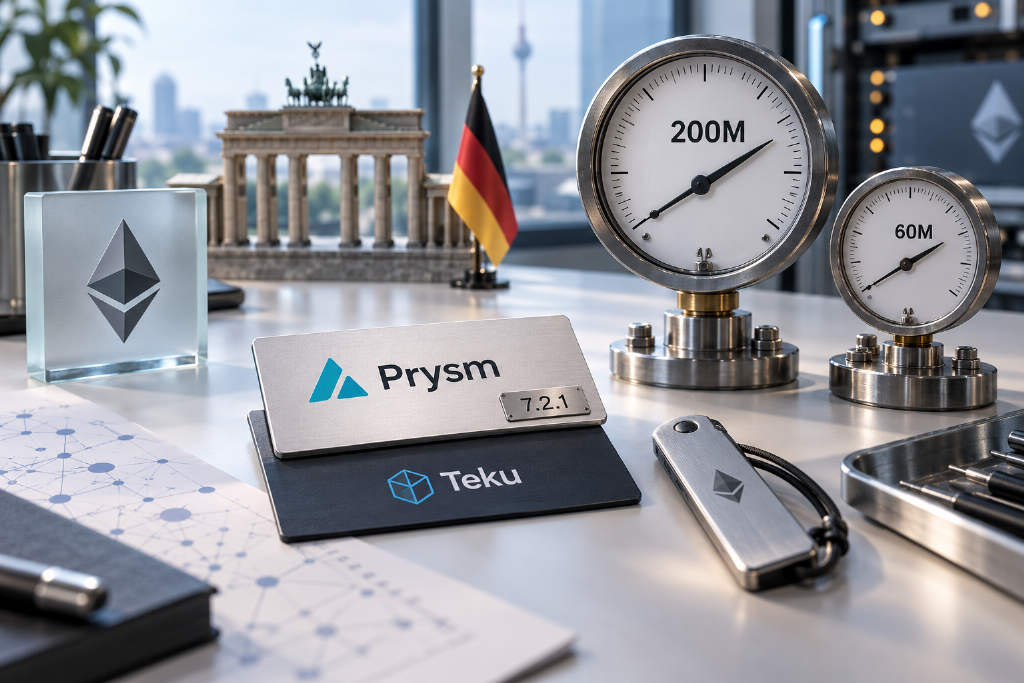
Offchain Labs, the team maintaining the Prysm Ethereum consensus client, released version 7.2.1 on Monday, only hours before the Glamsterdam upgrade is scheduled to go live on the Sepolia testnet. With the update, Prysm validators will default to a 200 million gas limit once the fork activates, replacing the 60 million default in the previous release unless operators had manually set a higher value.
Sepolia activation set for Oct. 6
According to the Ethereum Foundation’s testnet announcement, Glamsterdam is scheduled to activate on Sepolia at epoch 353,024, or 13:53:36 UTC on Oct. 6. Sepolia is the test network developers use to trial protocol changes before they reach Ethereum mainnet.
The network’s shared configuration was updated on Sept. 24 to raise the gas limit to 200 million at the fork.
A config change that landed after Prysm v7.2.0
That schedule, set under EIP-8261, came after Prysm had already published v7.2.0, the version the foundation had listed as ready for Sepolia.
Prysm’s release notes for v7.2.0 said validators would default to a 60 million gas limit in their Gloas proposer preferences. Anyone who wanted 200 million had to configure it manually. The team said at the time that a follow-up release would include the new schedule.
Version 7.2.1 is that follow-up. Under the new release, validators running Prysm do not need to take extra action to use the higher gas limit. But operators who still carry a gas limit flag from older setups will override the 200 million schedule, and the client now warns them about that at startup.
What the higher gas limit changes
Gas is Ethereum’s measure of how much computing work a block can hold. Raising the limit allows more transactions to fit into each block, while also increasing the load on machines running nodes.
At 200 million, Sepolia’s gas limit will be more than three times the old 60 million default.
The release also turns on partial data columns by default, allowing nodes to exchange individual cells of blob data instead of entire columns. It also patches a bug in how Prysm builds the first post-fork block in certain cases.
Teku still defaults to 60 million
Prysm was one of two consensus clients the Ethereum Foundation flagged for having the lower default. In the same announcement, the foundation said Teku 26.9.1 still defaults to a 60 million gas limit after activation, and Teku validators that want 200 million must set it with a command-line flag.
As of Tuesday morning, version 26.9.1 remained the newest Teku release on GitHub.
What Glamsterdam includes
Glamsterdam combines two sets of changes: Gloas on the consensus side and Amsterdam on the execution side.
The most notable items include enshrined proposer-builder separation, or ePBS, which writes the handoff between validators and block builders into the protocol, and block-level access lists, which allow nodes to process transactions in parallel.
Vitalik Buterin has argued that ePBS on its own does not prevent a small group of builders from accumulating outsized power.
The Ethereum Foundation said activation dates for Hoodi and mainnet have not yet been decided.