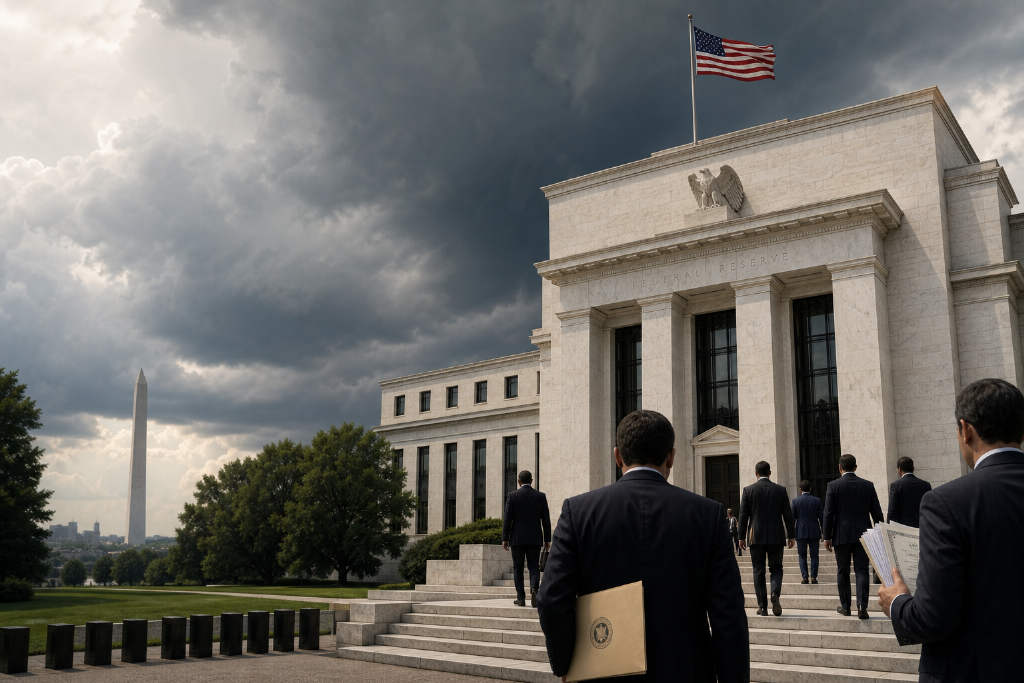
Federal Reserve officials have pushed back on the idea that the recent U.S. Treasury selloff reflects damaged policy credibility, even as long-dated yields briefly climbed to their highest level since 2007. San Francisco Fed President Mary Daly and St. Louis Fed President Alberto Musalem both said higher long-term Treasury yields are better explained by government financing needs and capital demand tied to AI infrastructure buildout, rather than a loss of control over inflation expectations. Their views begin to diverge, though, on what should come next in monetary policy. Daly said recent inflation, retail sales and labor data have eased the case for additional tightening and described current policy as being in a good place, with no strong preemptive case for either a rate hike or a cut. Musalem took a more hawkish line, saying core inflation remains elevated at 2.5% to 3%, and that policy may already be near neutral or even somewhat accommodative. He also said he would have been more inclined to support a rate hike at the July meeting. Market pricing for a September hike has meanwhile cooled from above 70% at the end of July to around 30%, though disagreement inside the Fed has not gone away.
Federal Reserve officials are downplaying concerns that the recent selloff in U.S. Treasuries signals a loss of policy credibility, even after long-term yields briefly reached their highest level since 2007, according to BlockBeats.
San Francisco Fed President Mary Daly and St. Louis Fed President Alberto Musalem both said the rise in long-dated Treasury yields is more closely tied to government borrowing needs and capital demand linked to AI infrastructure construction, not to unanchored inflation expectations.
Officials diverge on September policy outlook
The two officials were less aligned on what the Fed should do in September. Daly said recent inflation, retail sales and employment data have reduced the need for further tightening. In her view, policy is currently in a 「good place」, and there is not enough preemptive justification for either a rate increase or a rate cut.
Musalem struck a more hawkish tone. He said core inflation is still running at a relatively high 2.5% to 3%, and that current policy may already be close to neutral or even somewhat accommodative. He also disclosed that at the July meeting, he was more inclined to favor a rate hike.
Rate-hike expectations cool, internal Fed split remains
Market expectations for a September rate hike have dropped sharply, with the implied probability falling from above 70% at the end of July to about 30%.
Even so, policy disagreement inside the central bank remains visible. Daly and Musalem do not hold FOMC voting rights this year, while three officials dissented from holding rates unchanged at the July meeting, pointing to unresolved division inside the Fed over the next policy move.
This article was originally published by Bit.Fan. For more cryptocurrency news and market insights, visit www.bit.fan. Disclaimer:
The market information, project data, and third-party content displayed on this platform are for industry information sharing only and do not constitute any form of investment advice or return commitment.
Cryptocurrency trading carries high risks. Users should fully assess their risk tolerance and make independent decisions. All profits, losses, and legal responsibilities are borne by the users themselves.