
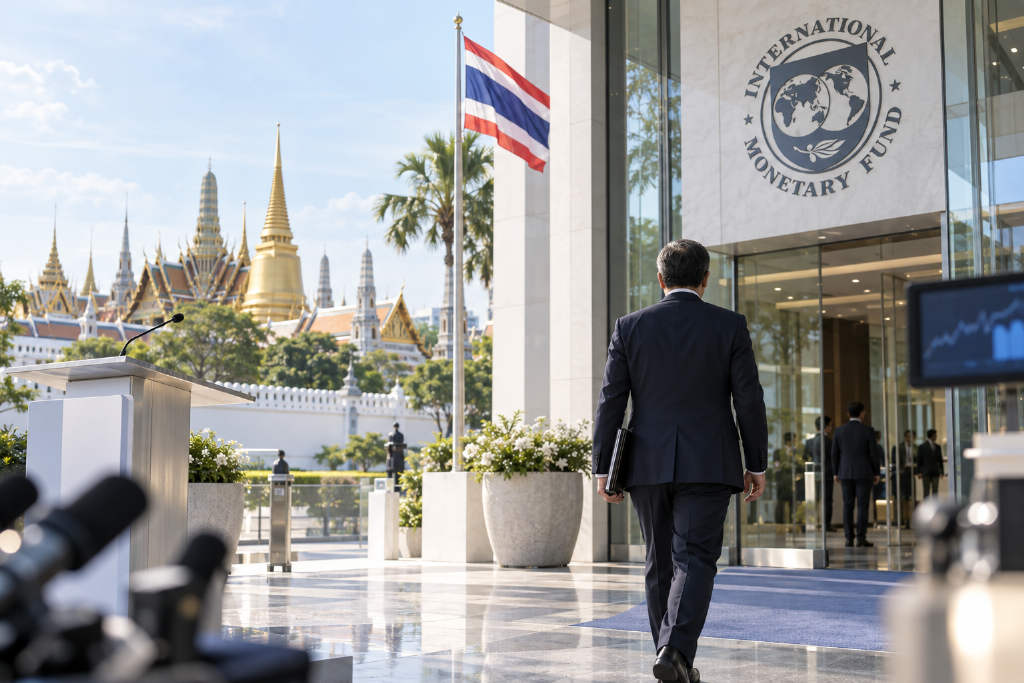
Federal Reserve Chair Kevin Warsh said in Bangkok, where he was attending an International Monetary Fund meeting, that he would not prejudge the outcome of the Fed’s two remaining rate meetings this year and would not reveal in advance what action the central bank might take.
「This is a new chapter for the Federal Reserve. We do not do that anymore,」 he said. Warsh neither explicitly backed nor pushed back against recent signals from colleagues that there is no rush to raise rates this month.
Warsh reiterates focus on price stability
Warsh said the Fed will deliver price stability. He also said the global economy has, on balance, tracked central bank expectations since the September rate increase, and described recent moves by central banks as synchronized monetary tightening across most parts of the world.
In September, the Fed unanimously raised rates by 25 basis points, lifting the target range for the federal funds rate to 3.75% to 4%. At that time, most officials expected at least one more rate increase before the end of the year.
Little effort to shift October meeting expectations
September core CPI rose 0.33% month over month, marking a second straight month of firm gains, and the latest producer price data was also strong. Even so, Warsh said little about this week’s inflation report and did not make any obvious attempt to shift market expectations for the October meeting.
According to the report, the U.S. dollar weakened during his remarks, while market bets on an October rate increase fell from about 30% to about 17%.
Investment, resilience and AI
Warsh also said the United States is going through a period of large-scale investment growth. He was upbeat on economic resilience and on the productivity gains AI could bring, though he warned the path ahead would be 「very bumpy」 and said AI’s short-term impact on employment remains unclear.
DBS Bank macro strategist Wei Liang Chang said Warsh’s repeated view that artificial intelligence can lift productivity over the medium term may help ease inflation expectations and reduce concern over back-to-back Fed rate increases.
Charu Chanana, chief investment strategist at Saxo Markets, said Warsh’s refusal to commit to another rate hike caused some Fed tightening bets to unwind, and that his comments did not help the dollar after the release of strong inflation data.