
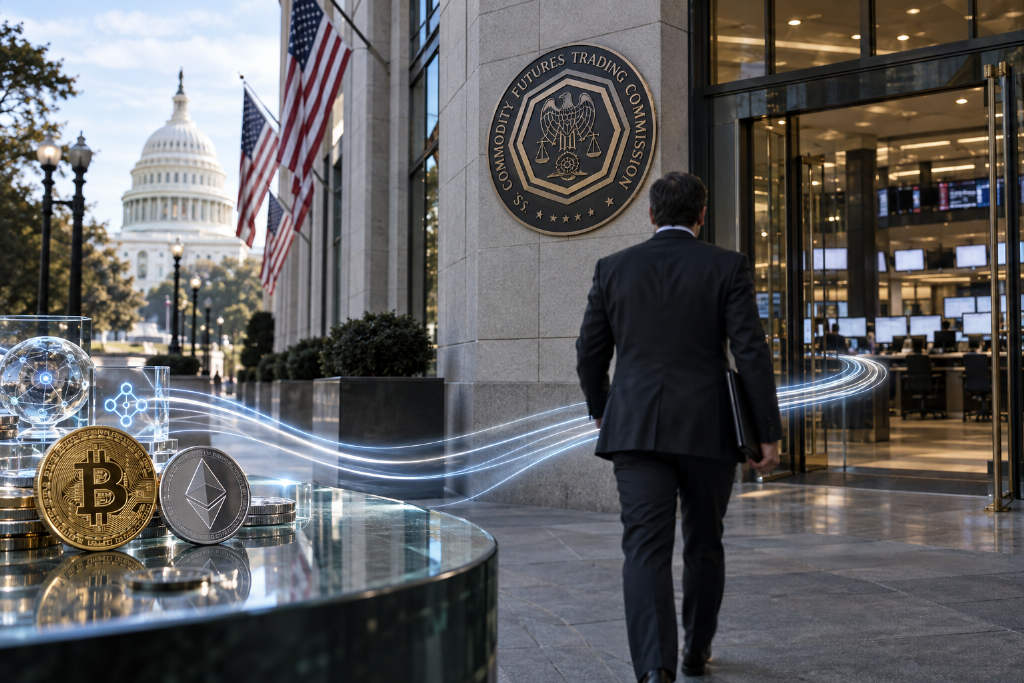
Caroline Pham, former acting chair of the U.S. Commodity Futures Trading Commission (CFTC) and now chief legal officer and chief administrative officer at MoonPay, said the existing U.S. regulatory framework is already broad enough to cover crypto markets without waiting for Congress to pass new legislation.
Pham says the Commodity Exchange Act already gives the CFTC broad authority
According to Pham, the Commodity Exchange Act gives the CFTC wide regulatory authority, and that authority can extend to crypto assets and other emerging commodity markets under the current framework. She said the CFTC’s recently proposed rules would help strengthen protections for U.S. retail crypto traders.
She also argued that investor protection would be stronger if related trading activity were brought onto strictly regulated trading platforms, rather than being supervised under a patchwork of different state laws.
Tokenized deposits are better suited to wholesale markets, she says
Discussing stablecoins and tokenized deposits, Pham said tokenized deposits are a better fit for wholesale financial markets. She said that if all transactions in a single trading day were settled on blockchain networks through real-time atomic settlement, the amount of cash required could reach $15 trillion, and existing liquidity could not support that need.
Pham said banks currently use net settlement to offset receivables and payables between counterparties. In that setup, tokenized deposits could play an important role in wholesale markets. Stablecoins, in her view, are more appropriate in situations where trading counterparties do not fully trust each other and need to reduce settlement risk.
NYSE and Nasdaq could list true tokenized stocks within two years
Pham also said she expects the New York Stock Exchange and Nasdaq to begin listing true tokenized stocks within the next two years, with meaningful trading volume developing in those products.
She stressed that true tokenized equities should preserve shareholder rights, including voting rights, and should be distinguished from synthetic tokens issued without approval from the underlying company.


