FTC urged to examine AI firms over buying, scanning and destroying books for training data

FTC urged to examine AI firms over buying, scanning and destroying books for training data

N
News Editor
2026-08-22 15:48:20
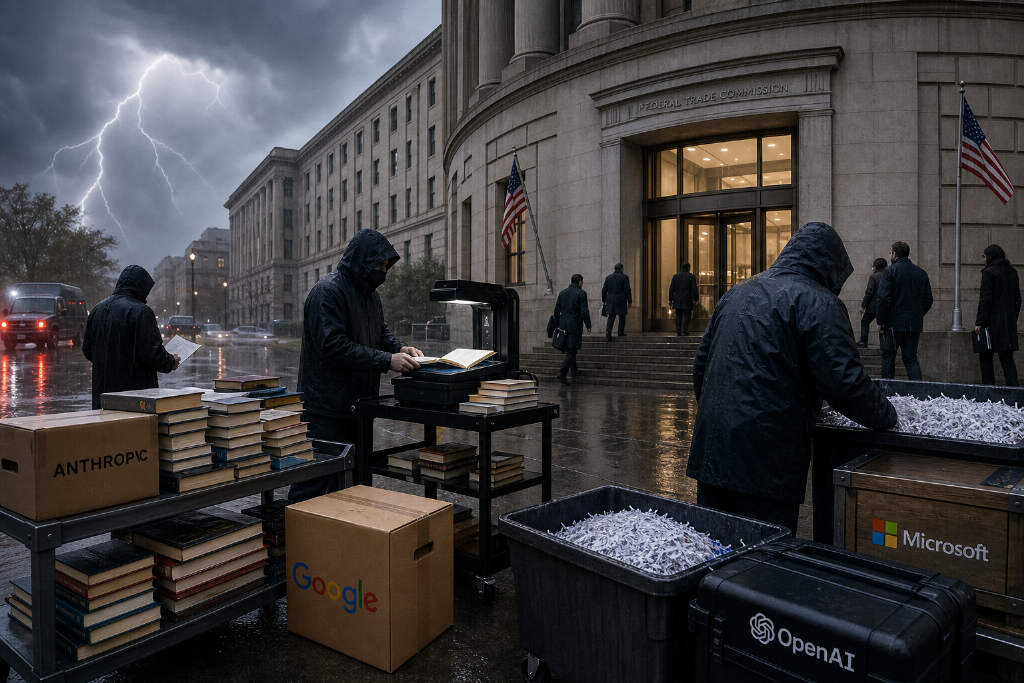
U.S. consumer protection regulators are facing calls to examine whether some artificial intelligence companies gained a competitive edge by buying physical books, scanning them for model training, and then destroying the originals. According to a public letter obtained by Axios, more than a dozen civil society groups asked the Federal Trade Commission to use its authority to review what they described as a destructive new form of data acquisition by major AI firms. The appeal follows earlier reporting from The Washington Post, which cited court filings saying Anthropic spent millions of dollars on books, removed their bindings, scanned the pages and used them to train Claude. Google, Microsoft and OpenAI have also faced similar copyright lawsuits. The groups argue that acquiring and then eliminating physical copies could deplete critical data resources, especially if rare books disappear permanently while a small number of large technology companies retain the last available copies. They are not asking the FTC to restrict AI model training in general, but to examine whether destroying existing works could amount to an unfair method of competition and deepen barriers that smaller AI startups cannot easily overcome.

The U.S. Federal Trade Commission is being urged to investigate whether some AI companies obtained training data by purchasing physical books, scanning them and destroying the originals.

According to a public letter obtained by Axios, more than a dozen civil society organizations asked the FTC to use its regulatory authority to review what they called a 「destructive new way of acquiring data」 used by large AI companies.

Earlier, The Washington Post reported, citing court filings, that Anthropic spent millions of dollars buying books, removing their bindings and scanning the pages to train Claude. Google, Microsoft and OpenAI have also faced similar copyright lawsuits.

The groups want the FTC to determine whether this practice could qualify as an unfair method of competition. In their view, acquiring and destroying physical books could hollow out key data resources in the market, especially if some rare titles disappear permanently while digital companies control the last remaining physical copies.

The letter also warned that this 「hoard and destroy」 approach could raise data acquisition costs for rivals and cut off access to source materials that startup AI companies rely on to train models, widening the competitive barriers around the largest firms.

The organizations are not asking the FTC to limit AI model training itself. Their request is focused on the destruction of existing works and whether regulators should intervene before large AI companies use the practice to build market advantages.

The public letter said the conduct was not merely a data purchasing strategy, but could become another structural way for major AI firms to build what it described as a 「systemic moat」 that would be difficult to cross.

Under the Trump administration, the FTC has sought to preserve a relatively business-friendly regulatory environment for U.S. companies while also continuing to signal concern about market competition and the monopoly risks tied to large technology companies.

This article was originally published by Bit.Fan. For more cryptocurrency news and market insights, visit www.bit.fan.
5000

Disclaimer:

The market information, project data, and third-party content displayed on this platform are for industry information sharing only and do not constitute any form of investment advice or return commitment.

Cryptocurrency trading carries high risks. Users should fully assess their risk tolerance and make independent decisions. All profits, losses, and legal responsibilities are borne by the users themselves.