
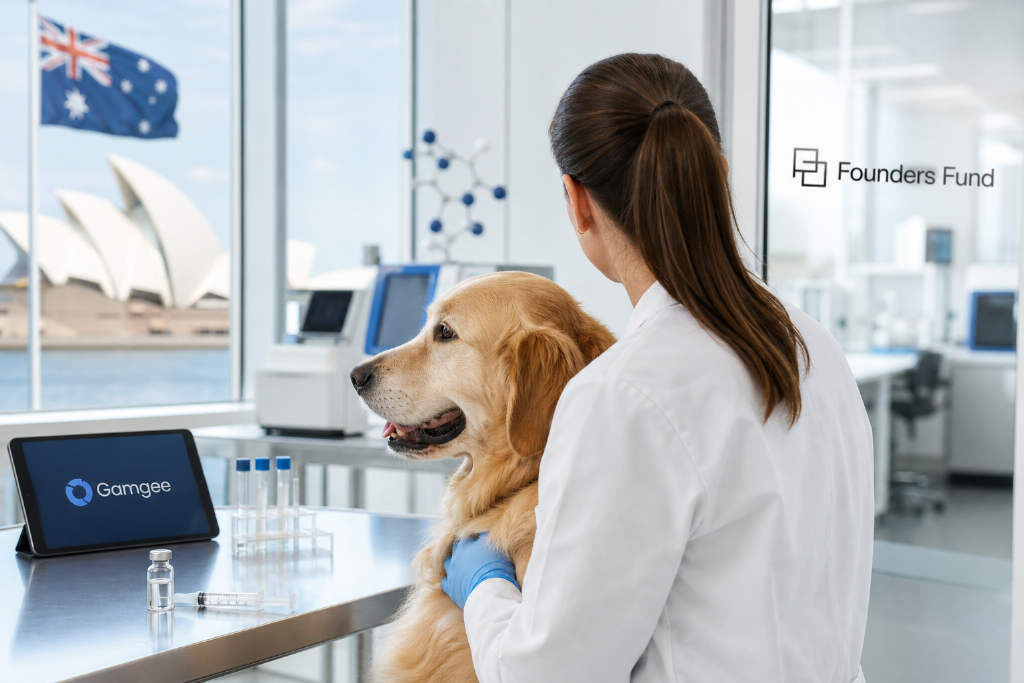
Gamgee has raised a $4 million seed round led by Founders Fund, with the company saying it wants to turn a personalized mRNA cancer vaccine process first tried for one dog into something that can be repeated for more canine cancer patients.
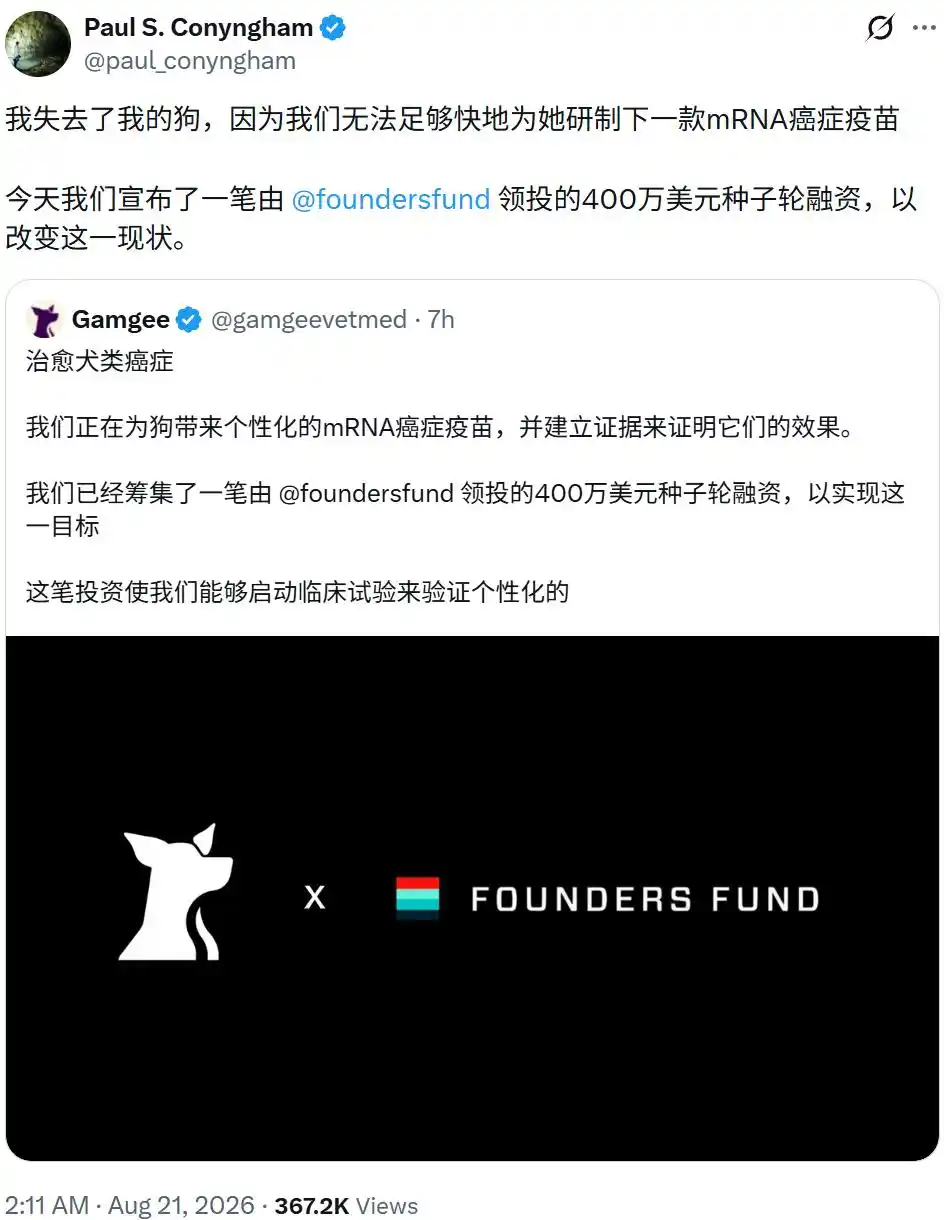
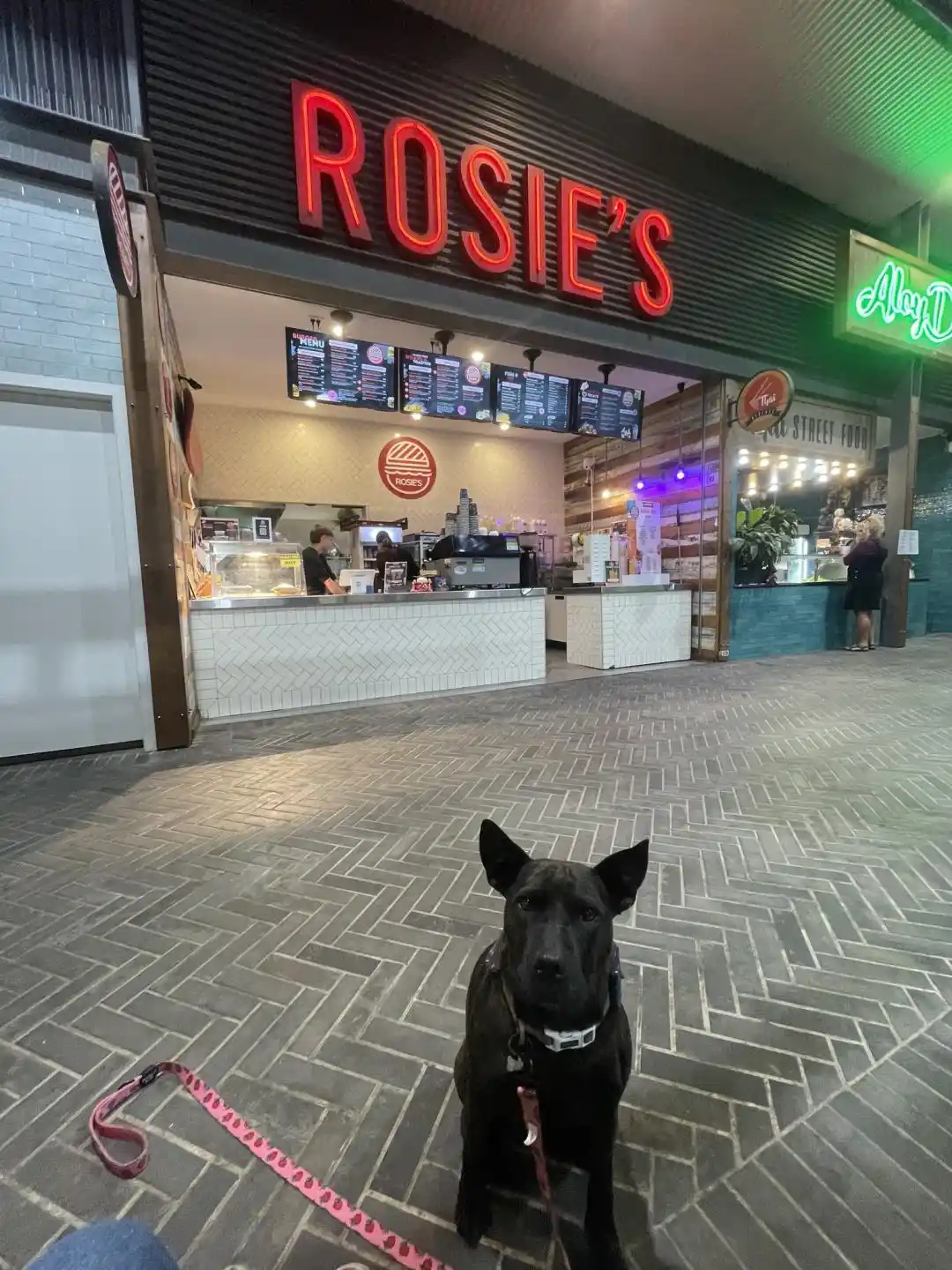
The startup was founded by AI entrepreneur Paul S. Conyngham. In announcing the financing, he wrote: 「I lost my dog because we could not build her next mRNA cancer vaccine fast enough.」 Rosie, the dog at the center of the story, did not live to see the next phase.
Rosie’s case spread widely online
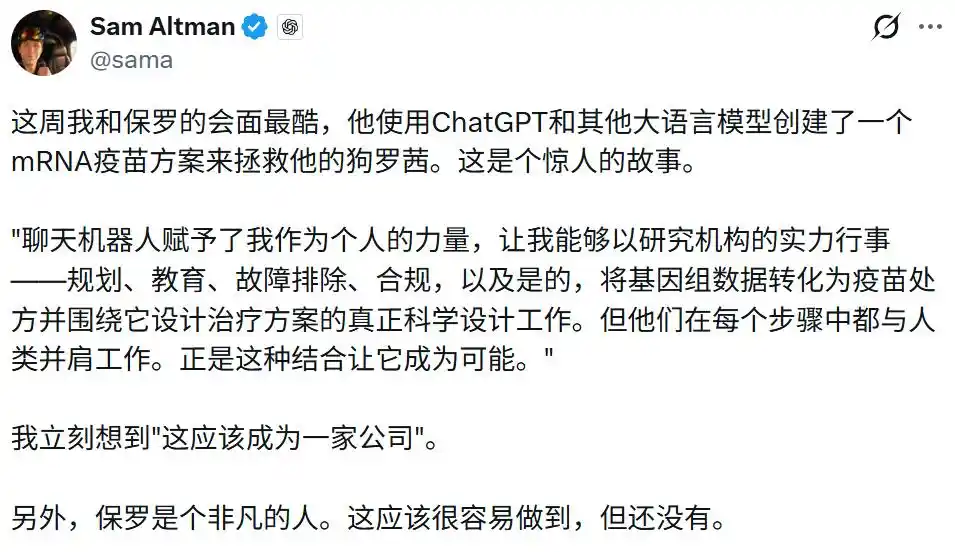
Rosie’s story broke out on English-language social media in March. Conyngham, who does not have a medical background but has 17 years of machine learning experience, tried using AI tools including ChatGPT, Gemini and Grok to design a personalized mRNA cancer vaccine for his terminally ill dog. OpenAI CEO Sam Altman shared the story with his own followers.
Rosie was a Staffordshire bull terrier mix diagnosed with mast cell tumor, described in the source material as the most common skin cancer in dogs. Surgery and chemotherapy slowed the disease but did not stop it. Immunotherapy also failed, and veterinarians gave her a prognosis measured in months.
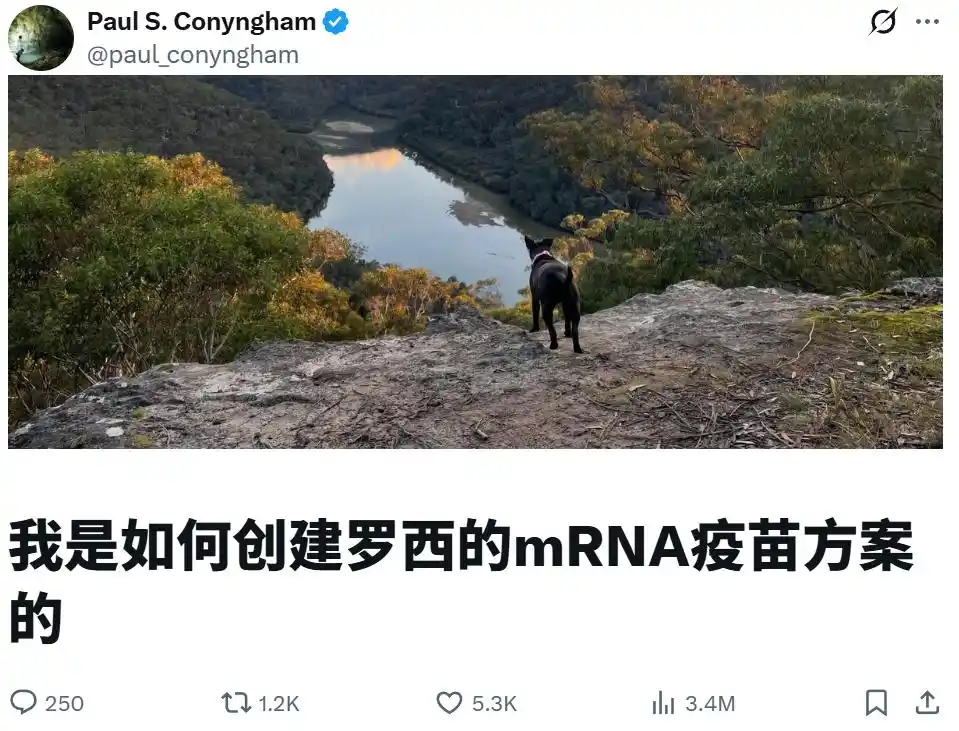
According to Medical Daily, Conyngham spent about $3,000 of his own money on matched sequencing of Rosie’s tumor DNA and healthy DNA at the University of New South Wales, or UNSW. He then used AI to screen neoantigens from thousands of mutations and used protein structure prediction to judge which ones might be visible to the immune system. A report by Reason said he used ChatGPT and AlphaFold for mutant protein identification, while the final construct design used Grok.
The vaccine was not manufactured by Conyngham alone
He did not produce the vaccine himself. Researchers at the UNSW RNA Institute reviewed the data and manufactured the mRNA construct in the lab, in work led by institute director Pall Thordarson. To obtain ethics approval in Australia, Conyngham spent three months producing a 100-page filing.
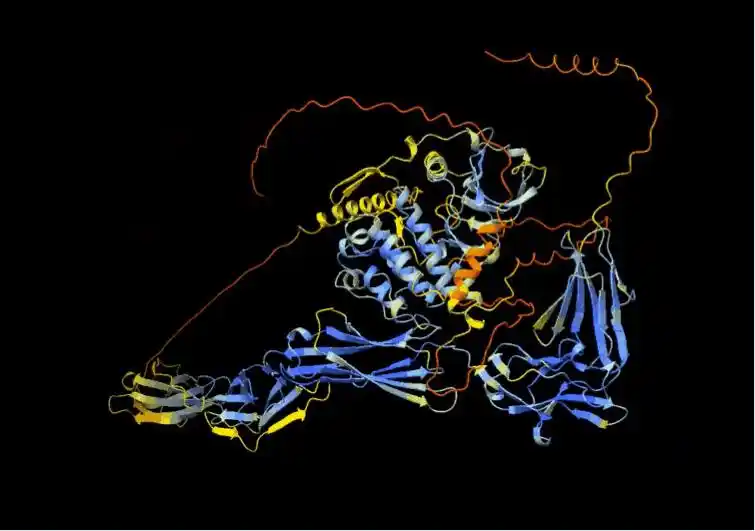
The source material also references a 3D rendering of Rosie’s healthy c-KIT protein generated with AlphaFold 2. Rosie received her first shot at a veterinary institution in Queensland in December 2025 and got a booster the next month. Several tumors then shrank significantly, and her quality of life improved. Y Combinator’s company page says this was considered the first fully computationally designed mRNA cancer vaccine actually administered to a dog.
Conyngham has consistently refused to call it a cure.
Remission ended after surgery
Gamgee said Rosie entered remission, but the cancer returned after a follow-up surgery.
A fuller version came from Conyngham’s post on X in June. He said the surgery knocked the cancer out of remission, and within four weeks tumors spread quickly across Rosie’s hind half. He wrote that she was in severe pain and was no longer the dog he knew. He decided to euthanize her and called it the hardest decision of his life. He also wrote that, in the truest sense, Rose was a pioneer.
Gamgee wants to industrialize a manual workflow
Gamgee is part of Y Combinator’s Summer 2026 batch. In addition to Founders Fund, the $4 million seed round included Celine Halioua, founder and CEO of dog longevity company Loyal; Steve Eidelman, founder of Modern Animal; Arash Ferdowsi, Dropbox co-founder; and Gokul Rajaram, creator of Google AdSense.
Founders Fund partner Amin Mirzadegan said in the release that the investment case was about the person more than the technology. He described Paul as someone who crossed several disciplines for one dog, taught himself an entirely new field, and kept pushing where most people would have stopped.
The company’s plan is to industrialize the process Conyngham previously worked through by hand: sequence each dog’s tumor and matched healthy tissue, identify mutations unique to that cancer, find tumor-specific neoantigens, design a personalized mRNA vaccine that teaches the immune system to recognize those targets, and manage the chain from veterinary intake and sequencing to design, manufacturing, treatment and follow-up.
Clinical work is starting in Australia
Gamgee said its clinical research is being conducted in Australia with partners including UNSW, the University of Queensland and the Garvan Institute of Medical Research. Enrollment is currently limited to eastern Australia. Participating dogs can receive the investigational vaccine at no cost, and eligibility is determined by the study protocol and participating veterinary oncologists.
The company also said it is in discussions with regulators and is pursuing the U.S. Department of Agriculture, or USDA, path for 「patient-specific veterinary biologics.」
Gamgee said the new money will be used to launch a clinical trial to validate the personalized treatment approach first developed for Rosie. Conyngham had also acknowledged on X that the company is recruiting veterinary oncologists and trial partners and seeking funding for a more rigorous study. That amounts to an admission that the evidence behind its central claims is not yet in the form regulators, veterinarians or cautious pet owners would ultimately require.
Why dogs
The case for working in dogs goes beyond the founder’s own pet. Comparative oncology is an established field with decades of work behind it. Spontaneous tumors in pet dogs share many biological, genetic and histological features with human tumors. The source material also notes that they preserve the complexity of naturally occurring drug resistance, metastasis and tumor-host immune interactions, something mouse models struggle to reproduce. The U.S. National Cancer Institute has a dedicated comparative oncology program, and the Cancer Moonshot has directed resources toward the area.
From an industry angle, the canine track is also attractive because the regulatory path is shorter, costs are lower and trial timelines are faster. The source material lists existing players in the space: Torigen works on autologous tumor cell vaccines, ELIAS Animal Health is developing an autologous cancer vaccine combined with T-cell therapy, and Yale’s EGFR/HER2 vaccine takes a more general route that does not require tumor samples. Gamgee’s distinction is 「N-of-1」, meaning one vaccine for one dog rather than a product built around a common target.
Conyngham’s long-term goal reaches past pet medicine. He has said he wants personalized mRNA vaccines to be deliverable through any veterinary oncologist and wants N-of-1 medicine to be established as a better treatment model across species, including humans.
The real constraint is time
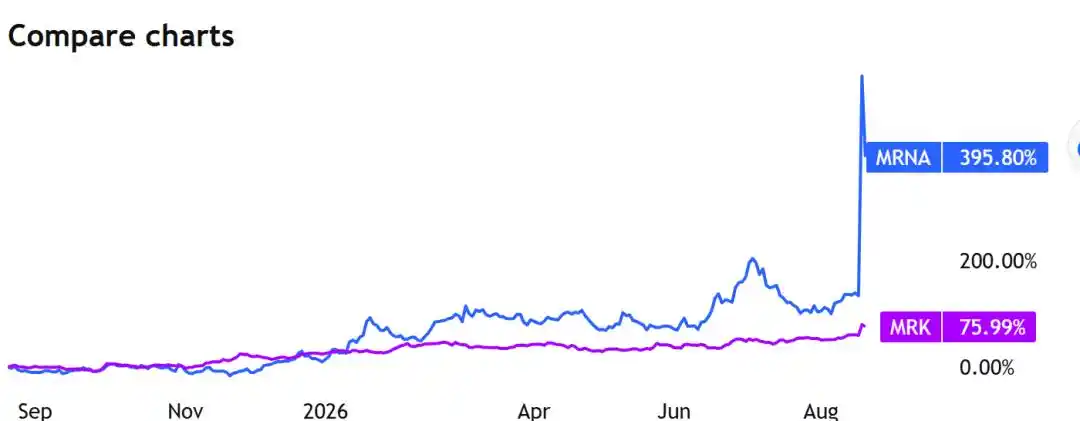
The source material places the Gamgee story alongside the latest Merck and Moderna cancer vaccine news and arrives at the same problem: time. On the Merck-Moderna side, a positive Phase 3 result showed the feasibility of building a separate therapy for each patient, but it took five years from locking the algorithmic approach to getting the Phase 3 readout, and 10 years from the start of the project to today.
On Rosie’s side, it took about two years from diagnosis to the first injection. Three months of that went into a 100-page ethics filing, while the time she had left was measured in months.
The line from Conyngham — 「we could not build her next vaccine fast enough」 — captures the central problem in personalized treatment. AI can shorten the front end of the chain, especially target selection and sequence design. The rest of the chain, including review, manufacturing and administration, has not been compressed to the same degree.
In that sense, what Gamgee is really buying with the $4 million is a chance to make that chain work more smoothly and produce evidence regulators and veterinarians can accept. Whether the effort succeeds will depend on what the Australian clinical research shows, not on how compelling Rosie’s story is. Until then, the source material says the only responsible advice for dog owners dealing with a new cancer diagnosis is to seek a qualified veterinary oncologist rather than treat a viral case as a ready-made solution.