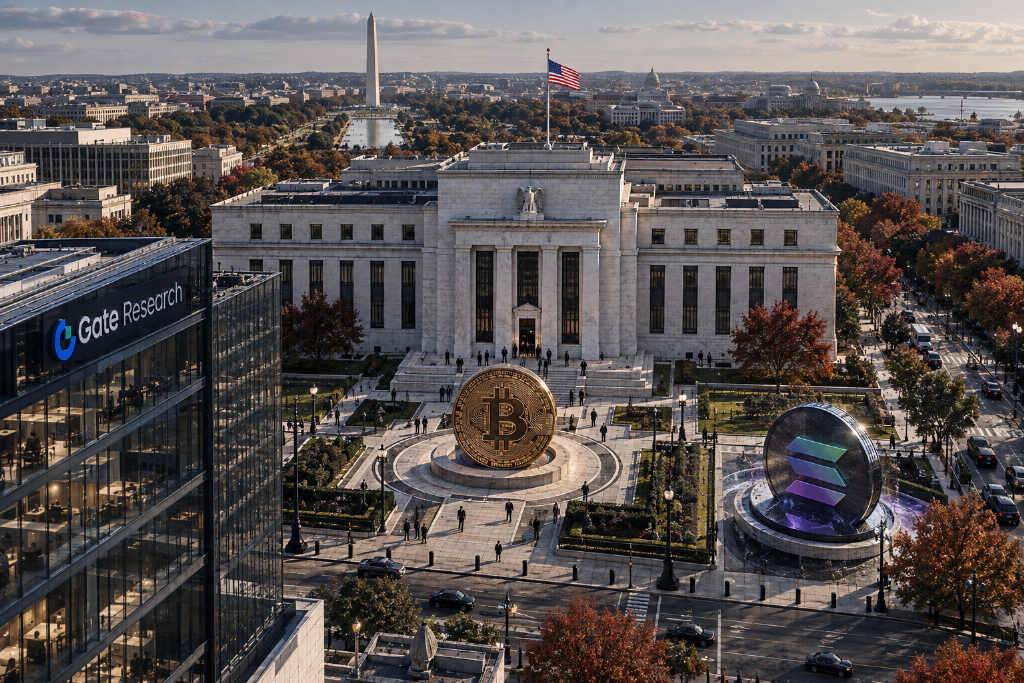
Gate Research Institute said in a recent rate-hike report that the U.S. Federal Reserve raised rates by 25 basis points in September 2026, marking the first upward adjustment in more than three years. Despite the move, the crypto market did not see clear selling pressure, and the related assets cited in the report rose 11.58% and 11.94% over the following seven days.
According to the institute, a rate hike does not automatically translate into weaker crypto prices. What the market is actually pricing, it said, is the gap between policy action and prior expectations. The report pointed to 2023, when market performance diverged during four rate hikes, and contrasted that with the deep drawdown in 2022, which it attributed to rapid tightening combined with an industry credit crisis.
On transmission effects, Gate Research Institute said higher rates lift yields on U.S. dollar assets and increase the opportunity cost of holding crypto. In that setting, BTC appears relatively defensive because of its liquidity and stronger institutional participation, while higher-beta assets such as SOL may show greater upside in a recovery but also face larger pullback risks when liquidity tightens.
Gate Research Institute said in a recent report that the U.S. Federal Reserve raised interest rates by 25 basis points in September 2026, the first increase in more than three years. Even so, the crypto market did not show obvious selling, and the related assets cited in the report posted cumulative gains of 11.58% and 11.94% over the next seven days.
The institute said a rate hike does not necessarily mean crypto assets will fall. In its view, the market is trading the gap between policy action and expectations. It added that performance diverged during the four rate hikes in 2023, while the deep correction in 2022 came from a combination of rapid tightening and an industry credit crisis.
Different reactions under higher rates
In terms of transmission, higher rates raise yields on U.S. dollar assets and increase the opportunity cost of holding crypto. Under those conditions, BTC is relatively more defensive because of its stronger liquidity and institutional participation.
SOL and other higher-beta assets, by contrast, can show more upside when sentiment and liquidity improve, but they also carry greater downside risk when liquidity tightens.
What Gate Research Institute is watching next
The report said that if inflation and employment gradually cool and expectations for further rate hikes peak, the market may begin to price in improving liquidity ahead of time. In that case, leadership could broaden from BTC to ETH and then to altcoins.
Gate said it will continue tracking changes in the macro environment and their impact on the crypto market, with the aim of helping investors identify market trends and potential opportunities.
This article was originally published by Bit.Fan. For more cryptocurrency news and market insights, visit www.bit.fan. Disclaimer:
The market information, project data, and third-party content displayed on this platform are for industry information sharing only and do not constitute any form of investment advice or return commitment.
Cryptocurrency trading carries high risks. Users should fully assess their risk tolerance and make independent decisions. All profits, losses, and legal responsibilities are borne by the users themselves.