

Ethereum is brewing its most significant architecture upgrade since The Merge, codenamed “Glamsterdam.” According to recently disclosed information, this upgrade will fundamentally reshape how the blockchain operates from the ground up: how blocks are constructed, how transactions are executed, and how on-chain state fees are charged will all be redesigned.


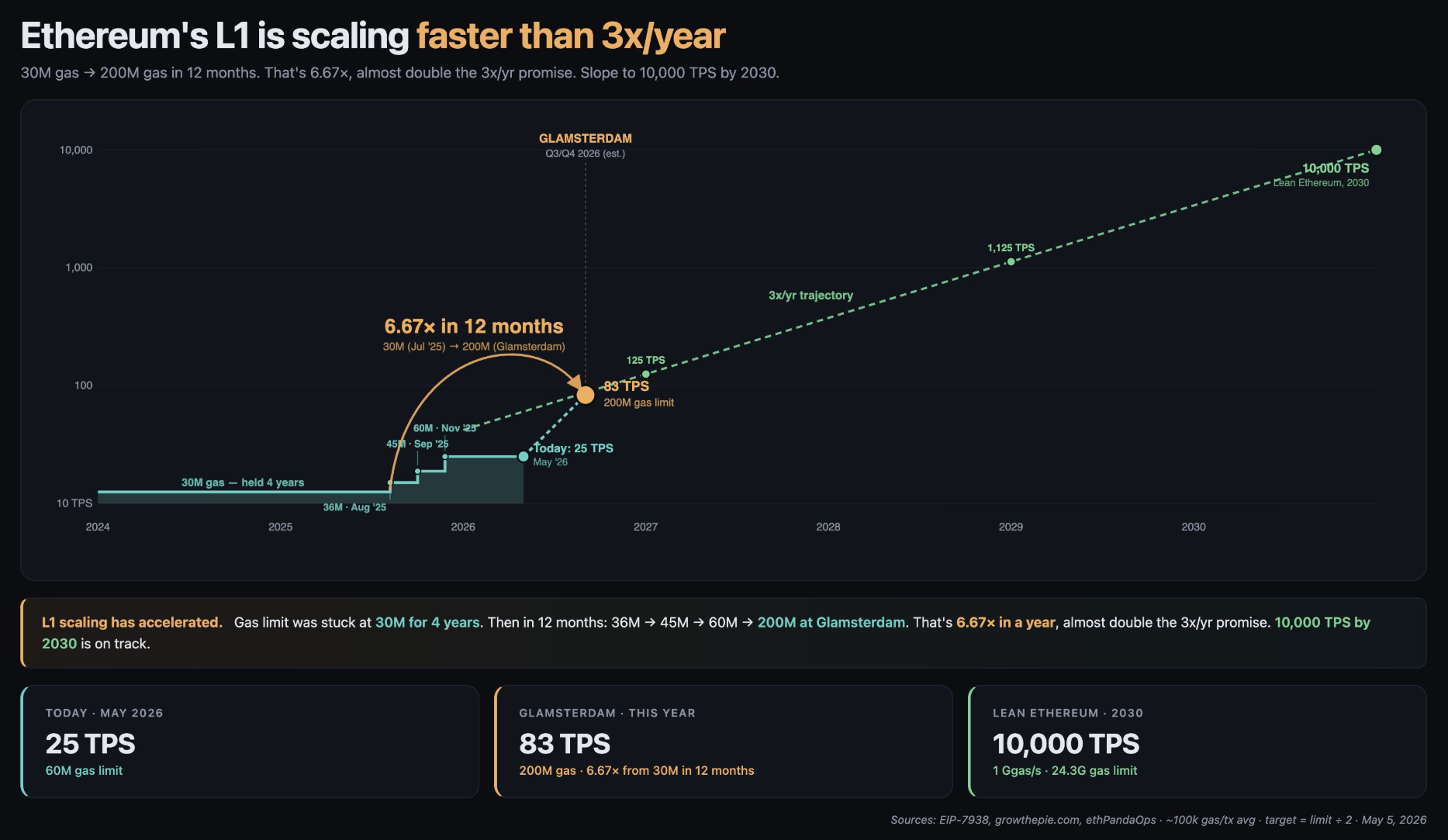
The core objective is to increase the network’s Gas Limit, allowing each block to accommodate more transactions, thereby improving overall throughput and reducing congestion and fees for users. This signals that Ethereum is laying the groundwork for a higher-capacity future, rather than relying solely on Layer 2 scaling.
This article was originally published by Bit.Fan. For more cryptocurrency news and market insights, visit www.bit.fan.