
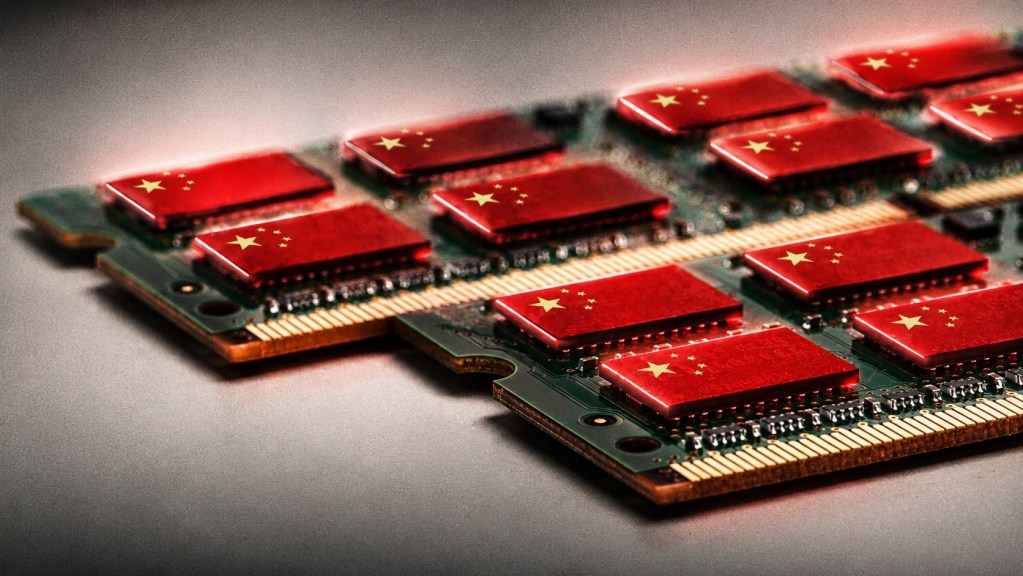
ChangXin Memory Technologies (CXMT) jumped 472% from its offering price on its first day of trading on Shanghai’s STAR Market, with its implied market capitalization briefly rising above $500 billion and surpassing Intel at one point. Goldman Sachs responded with a warning for the broader memory sector, saying the industry is dealing with a “new problem.”
CXMT debut puts China’s memory push in the spotlight
The listing was described as one of the most closely watched IPO events in recent years. CXMT sits at the center of China’s domestic memory supply chain, and the scale of its first-day move quickly drew attention to the country’s semiconductor self-sufficiency efforts.
The report said Apple is actively evaluating CXMT as an alternative DRAM supplier, a step that could reduce its reliance on Samsung, SK Hynix, and Micron. If that happens, CXMT’s position in the global supply chain would strengthen, while pressure on the existing three-company structure in the DRAM market would increase.
Goldman meeting focused on China’s DRAM expansion
Before the listing, Goldman held a closed-door expert meeting on July 24 to examine three core topics: China’s DRAM capacity expansion, the evolution of its technology roadmap, and the direction of global memory pricing. Zerohedge described the takeaway this way: the memory industry has run into a new problem.
On capacity, experts at the meeting stayed constructive on the expansion outlook for China’s major DRAM producers. Their estimate was that annual capacity at the country’s leading memory companies will double from current levels by 2030. Goldman also pointed to a major change inside that expansion cycle: reliance on Chinese semiconductor equipment is increasing quickly.
According to the report, some fabrication plants still depend on imported lithography machines, but other process stages have already shifted heavily toward domestic equipment. That shift was presented as a sign of rapid progress in China’s semiconductor supply chain localization.
HBM3E and 3D DRAM are key parts of the roadmap
With EUV lithography equipment restricted by export controls, Chinese chipmakers are not standing still. The report said they are pushing ahead on three parallel tracks. In the HBM segment, CXMT has set a goal of reaching mass production for HBM3 and HBM3E in 2026, allowing it to move directly into the high-end memory market used by AI servers and compete with SK Hynix, Samsung, and Micron.
Because access to EUV tools remains constrained, Chinese companies are turning to DUV lithography and pairing it with multiple process innovations in an effort to narrow the gap at advanced nodes.
Another path is 3D DRAM. The report said the technology is expected to post a new round of R&D breakthroughs in 2027 and is being viewed as a possible way to bypass EUV constraints in advanced manufacturing.
Goldman sees slower DRAM price gains later this year
Goldman’s experts said supply-side expansion is becoming clearer, but the demand picture remains mixed in the near term. In the third and fourth quarters, DRAM spot and contract price increases are expected to narrow from first-half levels as smartphone brands show greater resistance to higher memory prices. The report said the consumer electronics market has limited room to absorb more increases.
At the same time, Goldman said strong global spending on AI infrastructure should continue to support demand for high-end memory. On that basis, it expects the uptrend in memory prices to continue through 2027, supported mainly by AI server demand for HBM and high-speed DRAM.
As CXMT moves ahead after its market debut, the competitive map of the global memory industry is being reshaped.