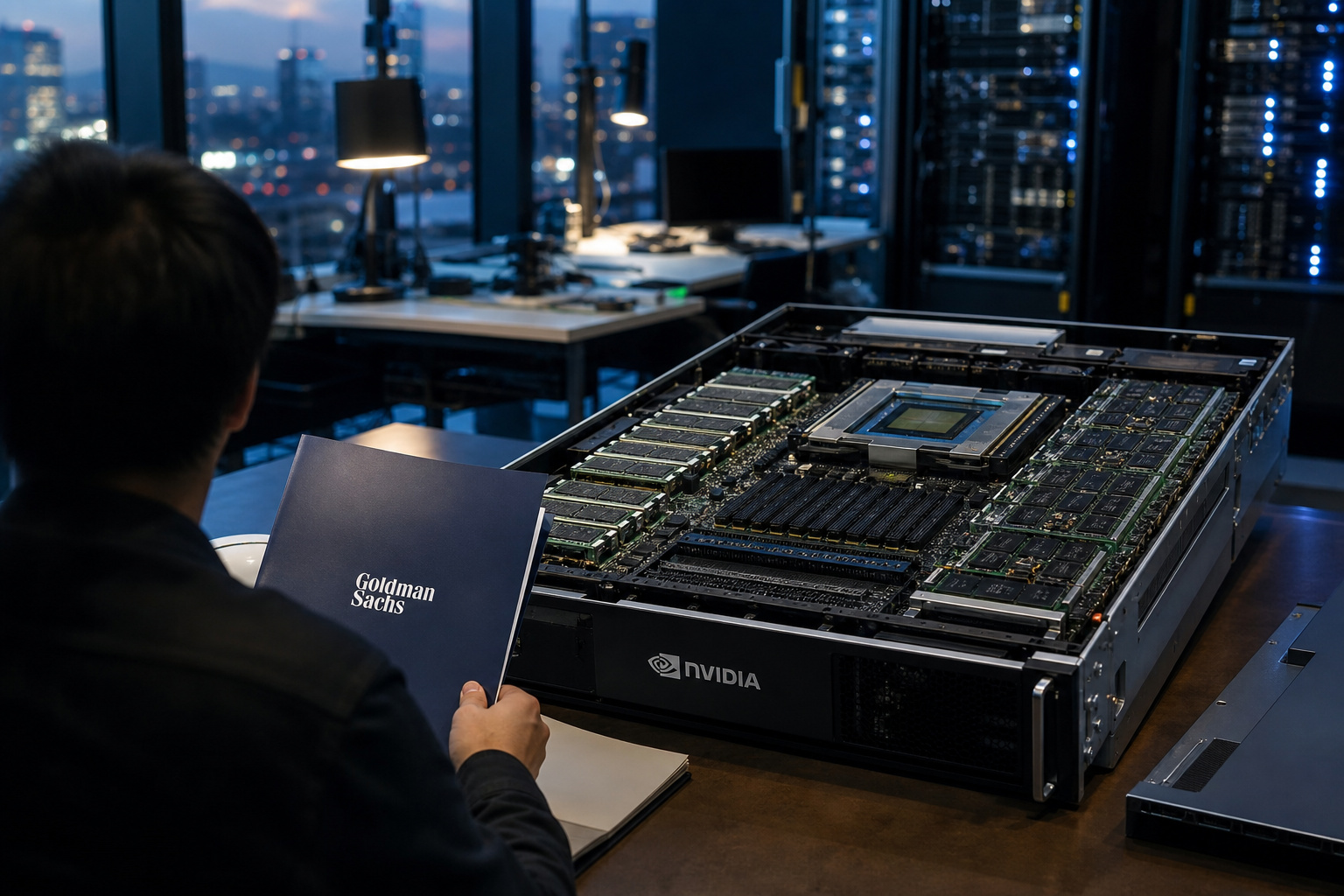
Goldman Sachs said in a report dated Aug. 10 that memory components are expected to make up about 62% of the bill of materials for Nvidia’s next-generation Vera Rubin superchip. Citing Goldman’s analysis, ZeroHedge said the cost share of SOCAMM2 memory modules on the CPU side of the Vera Rubin platform is notably higher than that of HBM4 high-bandwidth memory on the GPU side. Goldman had already noted in May that as demand for AI infrastructure keeps rising, memory is becoming a key part of the hardware cost structure for AI servers. The latest note adds to that view by pointing to the growing weight of high-performance memory in next-generation AI computing platforms and the rising importance of the memory segment across the AI chip supply chain.
Goldman Sachs said in its latest report on Aug. 10 that memory components are expected to account for about 62% of the bill of materials, or BOM, for Nvidia’s next-generation Vera Rubin superchip.
According to ZeroHedge, which cited Goldman’s analysis, the cost share of SOCAMM2 memory modules on the CPU side of the Vera Rubin platform is notably higher than that of HBM4 high-bandwidth memory on the GPU side.
Goldman had flagged memory costs earlier this year
Goldman said in May that memory was becoming a key part of the hardware cost structure for AI servers as demand for AI infrastructure continued to grow.
The latest report adds to that point, showing that demand for high-performance memory is rising quickly in next-generation AI computing platforms and that the memory segment is taking on greater importance in the AI chip supply chain.
This article was originally published by Bit.Fan. For more cryptocurrency news and market insights, visit www.bit.fan. Disclaimer:
The market information, project data, and third-party content displayed on this platform are for industry information sharing only and do not constitute any form of investment advice or return commitment.
Cryptocurrency trading carries high risks. Users should fully assess their risk tolerance and make independent decisions. All profits, losses, and legal responsibilities are borne by the users themselves.