
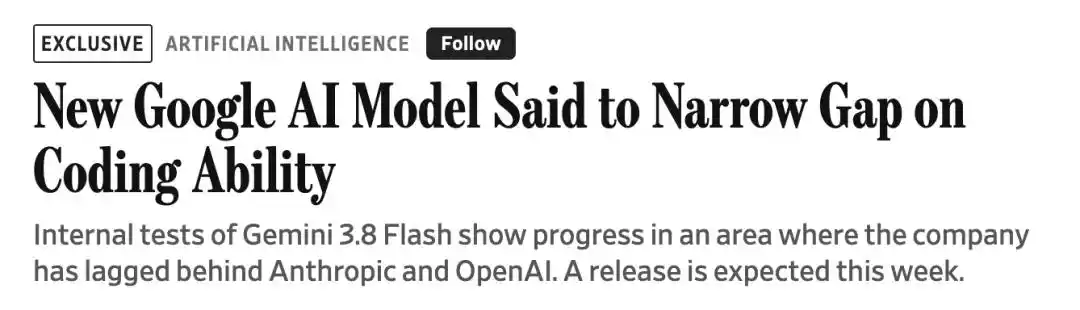
Google is reportedly set to introduce Gemini 3.8 Flash on Thursday, adding a fresh move to a week that has already seen Claude 5.1 arrive and OpenAI’s next Astra model draw closer.
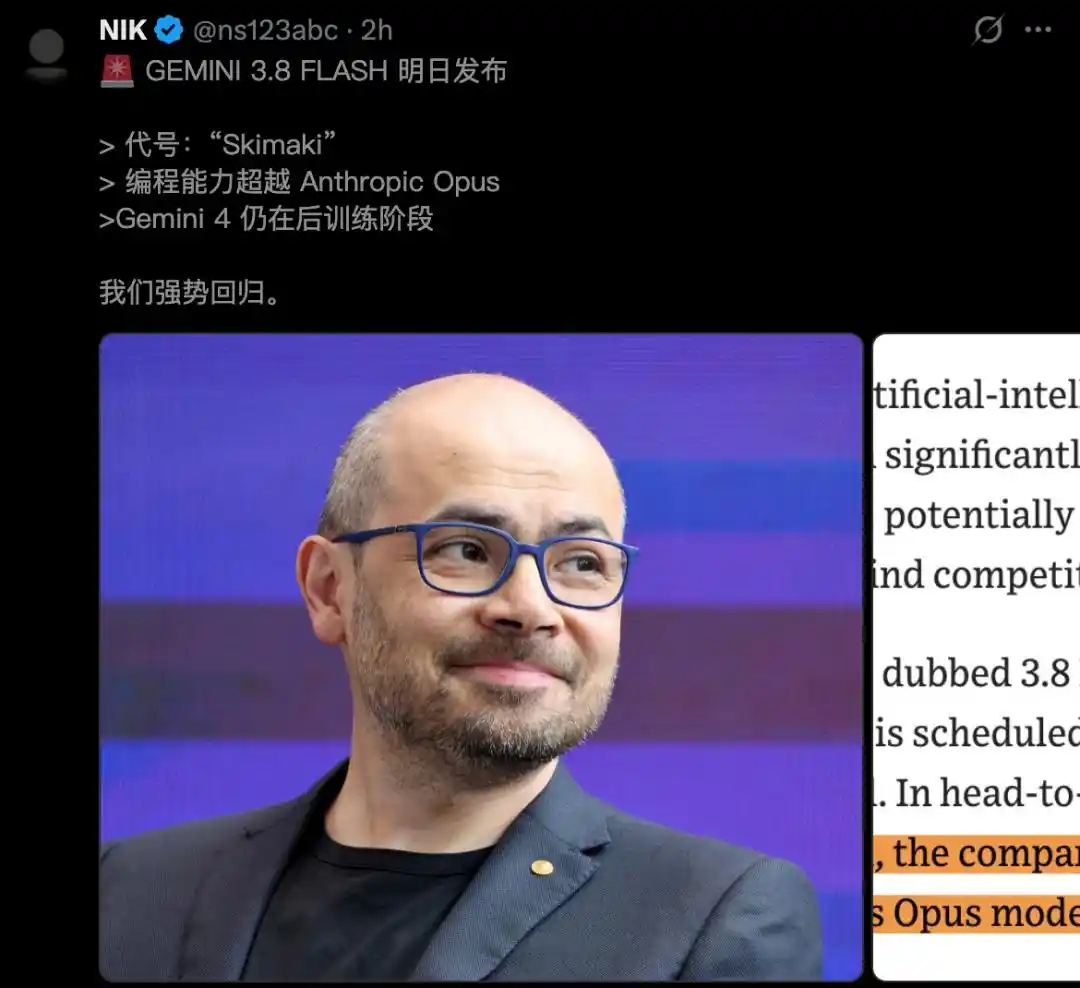
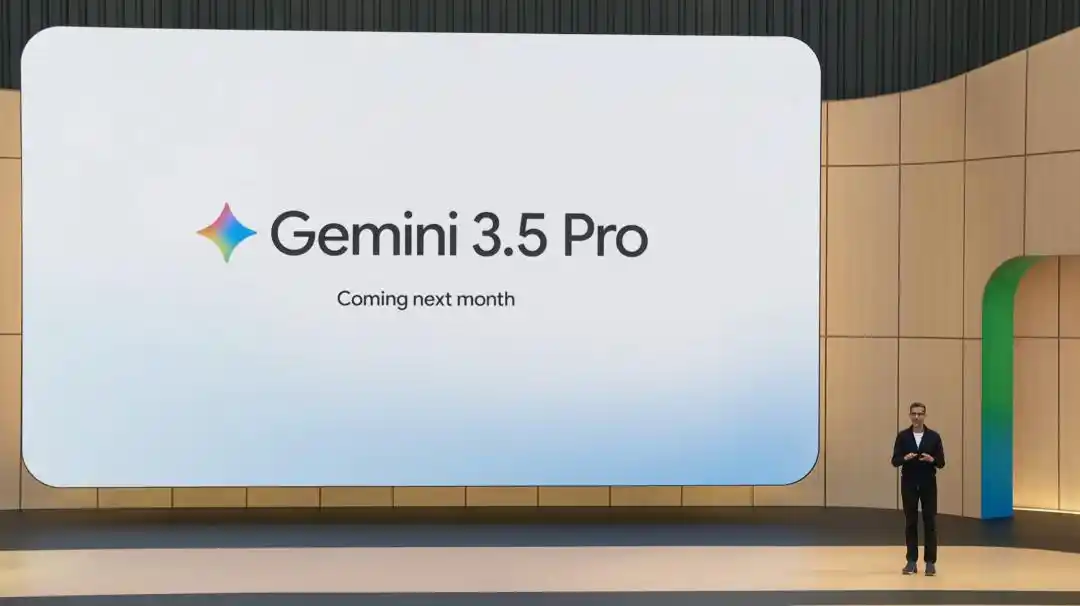
The source article says many users had still been waiting for Gemini 3.5 Pro. According to the report it cites, that wait is over: Google has dropped the model, and the next major version is now Gemini 4.0.
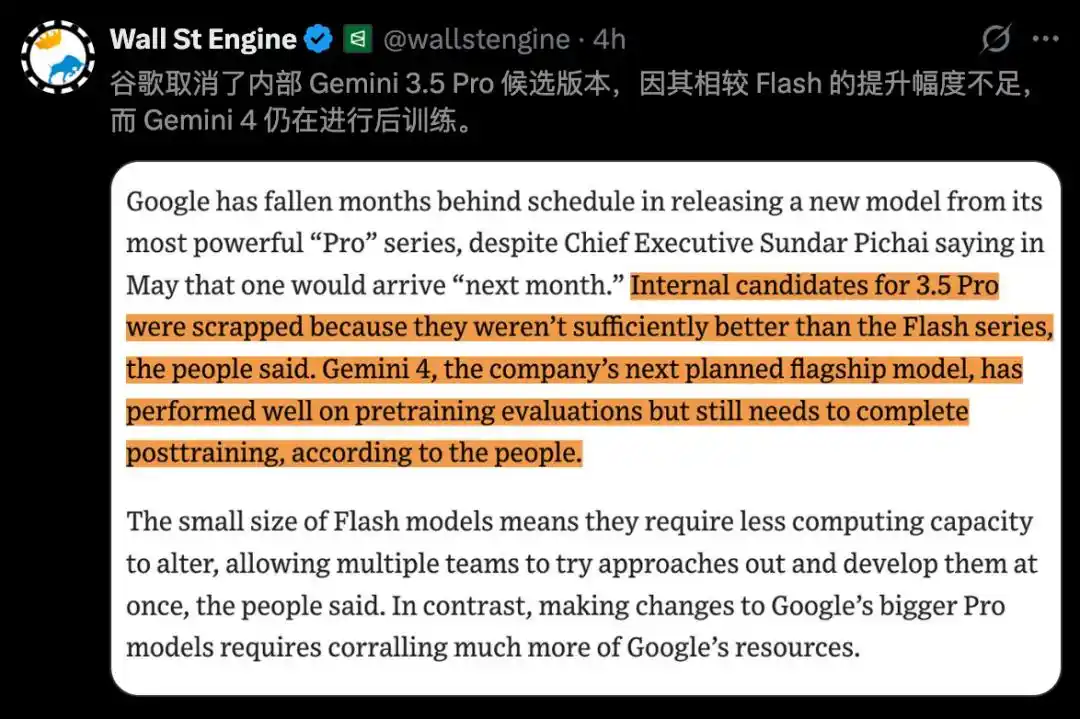
Gemini 3.5 Pro said to be canceled as Gemini 4.0 remains in progress
The article says nearly four months have passed since Google previewed plans at its I/O event in May, and Gemini 3.5 Pro did not advance enough to outpace the Flash line. Google, it says, decided to abandon that branch.
Citing what it describes as an exclusive report from The Wall Street Journal, the article says Gemini 4.0 has shown strong results in pre-training evaluation and is still moving through post-training. It also highlights Gemini 3.8 Flash, code-named "Skimaki," as a model with notable coding strength.
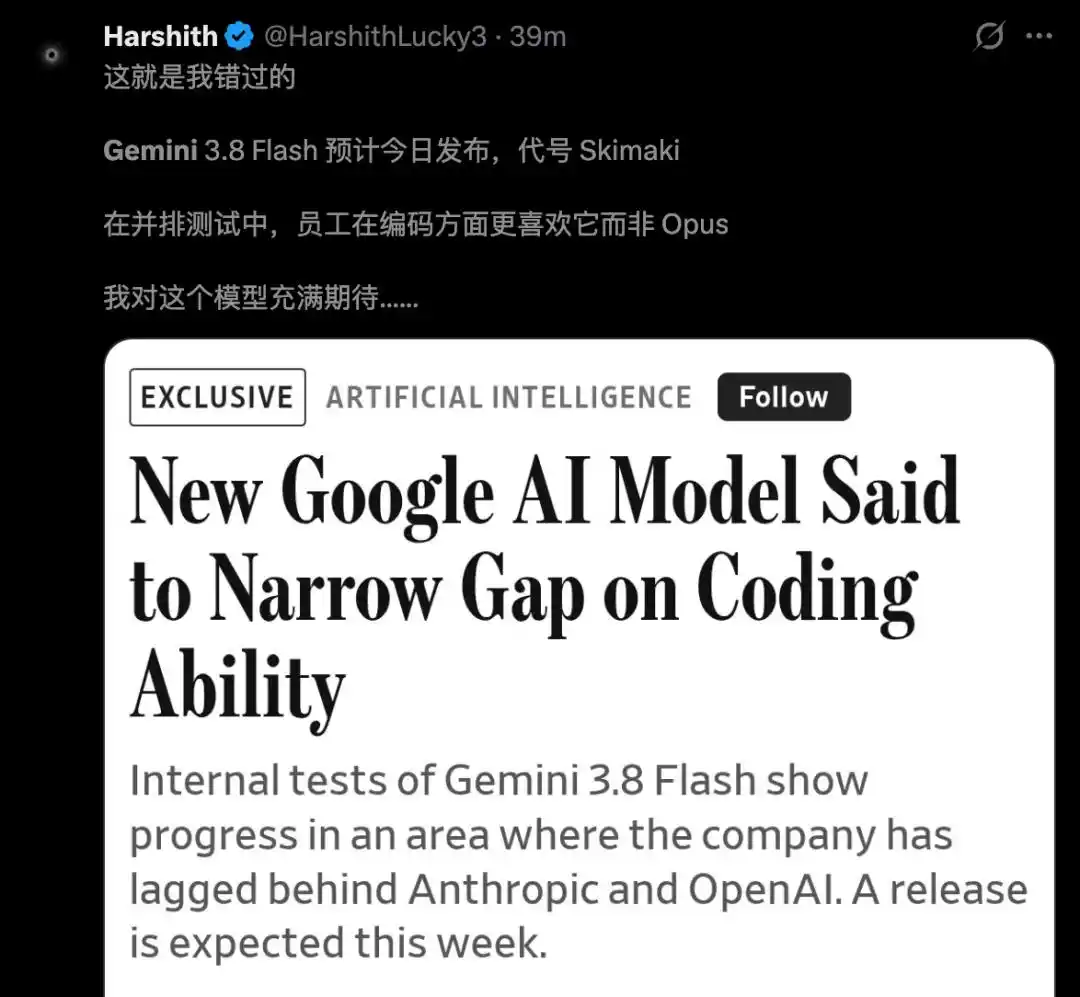
According to the article, Gemini 3.8 Flash outperformed the Opus model in comparison tests inside Google’s internal coding tool Jetski. It adds that development on the model began months ago, before leadership changes inside Google.
The piece also says Demis Hassabis stepped aside and chief scientist Jeff Dean departed, developments that fueled concern about Gemini’s future. For now, though, the article says internal work appears to be proceeding in an orderly way.
Google is said to be launching Gemini 3.8 Flash first because the model uses fewer parameters and requires less compute, making it easier to ship results sooner. The article says Google has been putting more staff and compute behind Gemini’s coding ability since the start of the year, with heavier investment in reinforcement learning so the model can improve by repeated trial and error.

It also says Google DeepMind and other labs are running several projects in parallel, giving the company other options if one effort fails. The current picture, as described in the article, is that Gemini 3.5 Pro fell short while Gemini 4.0 is not ready yet.
Google rolls out agentic video understanding ahead of the reported model release
Before any Gemini 3.8 Flash debut, Google used Wednesday to preview a separate capability: agentic video understanding.
In its official blog, Google said the feature is available for Gemini 3.7 Flash, 3.6 Flash, and 3.5 Flash-Lite through Google AI Studio and the Gemini Enterprise Agent Platform.
Google said that on standard video analysis benchmarks, turning on the feature can reduce token consumption by as much as 88%, cut analysis costs by as much as 66%, and raise accuracy by as much as 7%. The company also said there is no added charge and standard API token pricing still applies.
The article describes the shift in simple terms: Gemini now decides how to "scrub the timeline" on its own. Under the older static approach, the model received a fixed stream of frames and the frame rate was set by API parameters. With the new setup, the model can decide which sections to inspect, how fast to process them, and whether to rely on visuals, audio, or transcript text.
The piece compares this move with Google’s earlier agentic vision work, which combined code execution with Gemini’s built-in image understanding so the model could write code to zoom, crop, and compare what it saw in a single image. In the new version, the same idea is extended to video using native video tools.
Google lists four use cases in its blog post
The source article says Google’s blog laid out several difficult video tasks that benefit from the feature.
- Sub-second clip retrieval: older workflows could sample as little as one frame per second, which meant events shorter than a second were easy to miss. The new setup can locate those brief moments more precisely.
- Searching for answers in long videos: complex questions about hours of footage no longer require burning through millions of tokens in one pass.
- Anomaly detection: once the model identifies a time window, it can resample that section at a higher frame rate to catch fast motion or subtle visual defects. The article says this matters for factory quality inspection and security monitoring, where anomalies often appear only for a few seconds.
- Counting tasks: problems such as how many times an action repeats, or how many distinct objects appear in a scene, have been difficult in the past because key frames could be missed.
Lower video costs could widen what agents can handle
The article argues that video has long been the most expensive modality to process. Text is cheap, images are more manageable, but video is large and lengthy, and a single minute can consume a large number of tokens.
That cost profile is one reason most discussion around agents in the past two years has centered on reading, writing, and tool use. An agent that understands the world mostly through text is still working from information someone has already translated into words. Camera footage, meeting recordings, and production-line video remain out of reach if nobody turns them into text first.
The article says that if the cost curve falls sharply, an agent that can work through hours of surveillance footage, dozens of hours of coursework, or hundreds of clips without exhausting a budget would interact with the world in a different way. It presents Google as the first to break through on that front.
Competition across AI model makers is picking up again
The article places Google’s moves in a packed release cycle. Claude 5.1 has already arrived. OpenAI’s next Astra is said to be due this week. Google, after months of waiting, is now preparing Gemini 3.8 Flash.
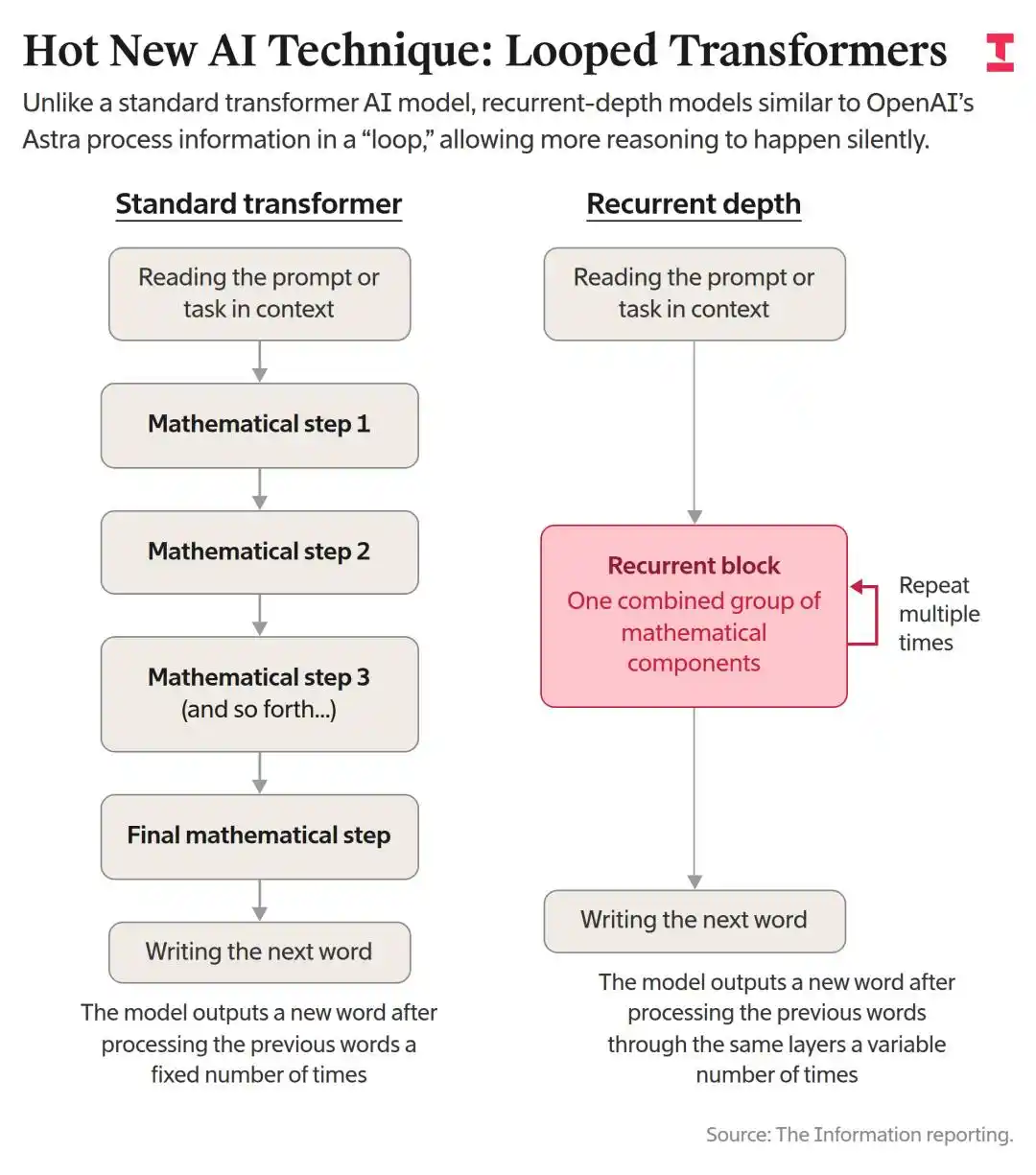
It also cites The Information as saying that OpenAI’s next Astra uses a new reasoning method called recurrent depth, which reduces thinking tokens while improving performance. On Anthropic’s side, the article characterizes Claude’s latest direction as focused on two areas: coding and research.
Gemini 3.8 Flash, the article says, is also expected to post a larger jump in coding performance. It closes by saying OpenAI, Anthropic, Google, and SpaceXAI are all accelerating at once, and adds that Elon Musk has previewed Grok 4.7 for release in 10 days.
The references listed in the source include Google’s post on X and DeepMind’s official blog post, "introducing agentic video in gemini."