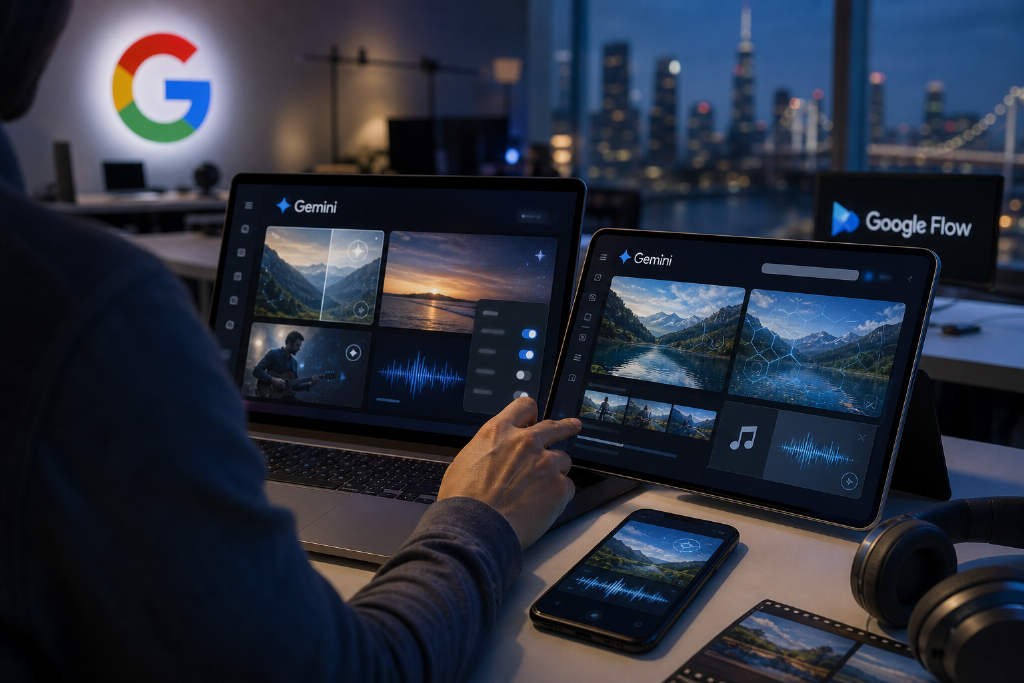
Google said on Aug. 15 that users will be able to remove visible watermarks from AI-generated content, including images, videos and songs. The company said the change will not affect its invisible SynthID watermark or metadata tied to the C2PA standard. According to Gemini Vice President Josh Woodward, the toggle will apply to the Nano Banana, Omni and Lyria models. The option to disable visible watermarks will be available in Gemini and Google’s Flow video editor, with search support set to arrive soon. Google said the feature will roll out over the next few days, and users will be able to turn visible watermarks on or off through the “Settings > Media watermark” menu. The company also open-sourced a new library called Credentio to help developers embed local verification tools in their own applications.
Google said on Aug. 15 that users can now remove visible watermarks from its AI-generated content, including images, videos and songs.
The company said the move will not affect its invisible SynthID watermark or metadata associated with the C2PA standard.
Gemini Vice President Josh Woodward said in a post that the toggle will apply to the Nano Banana, Omni and Lyria models. The setting to turn off visible watermarks will be available in Gemini and Google’s Flow video editor, and support in search is coming soon.
Google said the feature will roll out over the next few days. Once available, users can go to “Settings > Media watermark” to turn visible watermarks on or off.
Google also open-sourced a new library called Credentio, which is intended to help developers embed local verification mechanisms in their own apps.
This article was originally published by Bit.Fan. For more cryptocurrency news and market insights, visit www.bit.fan. Disclaimer:
The market information, project data, and third-party content displayed on this platform are for industry information sharing only and do not constitute any form of investment advice or return commitment.
Cryptocurrency trading carries high risks. Users should fully assess their risk tolerance and make independent decisions. All profits, losses, and legal responsibilities are borne by the users themselves.