
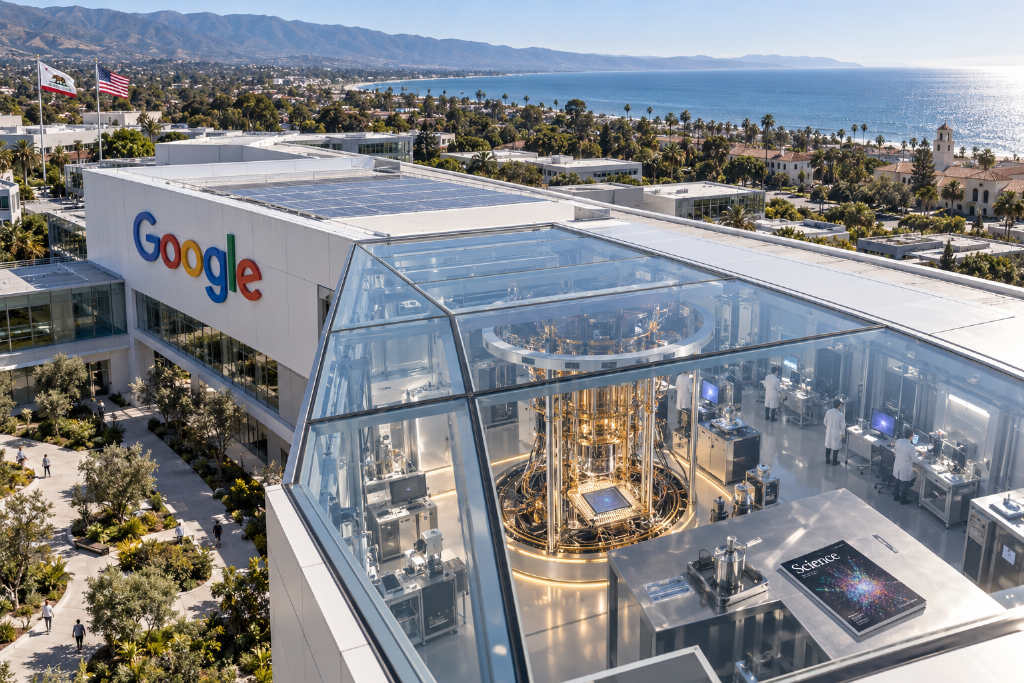
Google Quantum AI said on Oct. 15 U.S. time that it had experimentally demonstrated "magic state cultivation" on the Willow quantum chip for the first time, cutting the error rate of a key quantum computing resource by about 40x. According to Google’s official blog, the related paper was published the same day in Science.
From theory and simulation to hardware demonstration
In the write-up, Google research scientist Emma Rosenfeld and quantum software engineer Craig Gidney said universal quantum computing requires "magic states," but producing high-quality, error-corrected magic states is extremely resource intensive. One estimate cited in the article said as much as 95% of a quantum computer’s capacity could be spent producing magic states.
Magic state cultivation works like a filter. The process injects noisy states into a small region of the chip, uses coordinated measurements to detect errors, discards flawed attempts, and then amplifies the surviving states into high-purity states with very low error.
The method was proposed in 2024 by Craig Gidney, Noah Shutty, and Cody Jones. Until now, it had remained at the theory and simulation stage.
Google reports roughly 40x lower error rates
Google said cultivated magic states showed error rates about 40x lower than uncultivated ones. The logical fidelity of the T state reached 99.99%, which the company described as a record. The team also demonstrated transferring the state from a distance-3 color code to a distance-5 surface code.
Google wrote, "We have shown that magic state cultivation works on Google Quantum AI hardware," and described the result as the first experimental evidence of a practical solution to one of quantum computing’s most serious resource bottlenecks.
At the same time, Google said practical deployment will still require magic state cultivation to be shown at larger scale, adding that major technical challenges remain.
Still far from the threshold needed to break RSA-2048
According to Decrypt, the experiment used at most 54 of Willow’s 105 qubits, and about 8% of attempts passed all checks.
Decrypt said factoring an RSA-2048 key would require magic-state error rates of around one in ten billion, about one million times cleaner than Google’s result in this experiment. On that basis, the outlet said the finding does not put crypto wallets at immediate risk.
Decrypt also noted that in a white paper released in March, Google estimated that breaking the elliptic curve cryptography used by Bitcoin would require fewer than 500,000 physical qubits.