
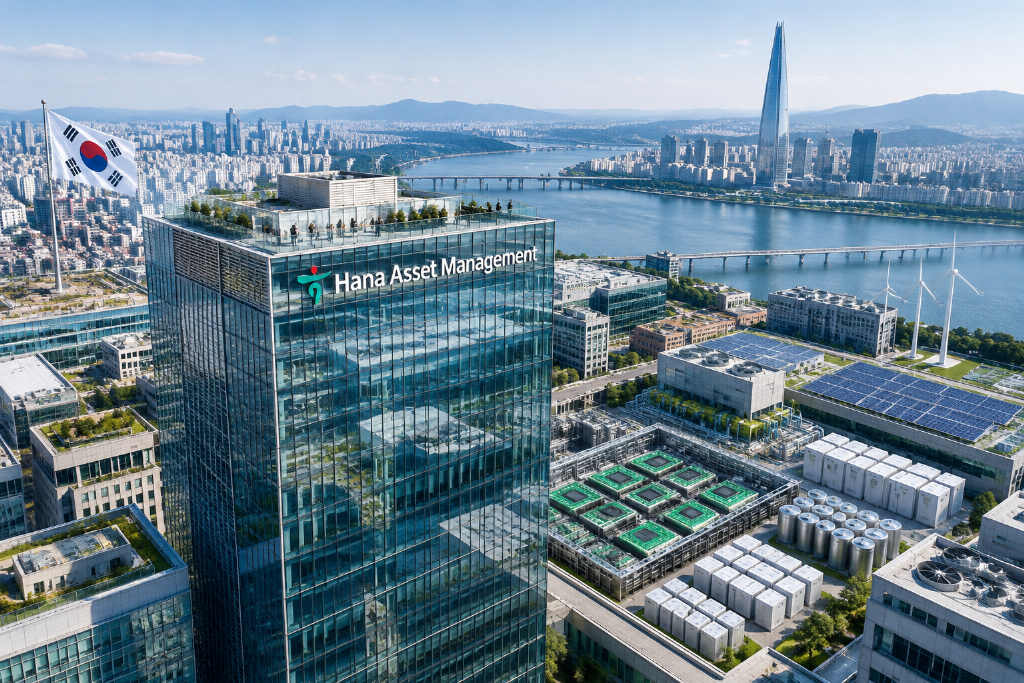
The next phase of the AI trade may lift parts of the supply chain outside memory, according to Lee Wang-seop, head of equity investments and fund manager at Hana Asset Management in South Korea.
Bloomberg reported that Lee expects capacitor makers and AI substrate manufacturers to benefit as the AI boom broadens next year. If the market rebounds, shares tied to semiconductor materials, components and equipment could perform better than memory suppliers, he said.
Three groups Lee highlighted for next year
In an interview with Bloomberg this week, Lee said capacitor manufacturers and AI substrate producers are likely to be the main beneficiaries as the AI cycle widens. He also expressed a positive view on renewable energy and energy storage suppliers, while expecting demand for data center services to continue growing.
Lee said he has widened his investment scope from semiconductors themselves to non-semiconductor parts of the AI value chain. His selection criteria focus on industries whose earnings growth is faster than the Korea Composite Stock Price Index, or KOSPI, and whose profit expectations are also being revised higher. He expects several industries, including energy storage suppliers, to post net profit growth next year above the KOSPI level.
Price transmission from HBM and DRAM to MLCC and packaging substrates
Lee said prices for general-purpose packaging substrates and multilayer ceramic capacitors, or MLCCs, have already started to climb sharply. He said the rally may not last as long or move as far as memory did, but he expects a similar cycle to develop, which is why he is most bullish on the segment.
His thesis is based on the semiconductor sector’s past pattern of price transmission. AI demand first appeared in higher-end products such as HBM. As supply tightened and prices rose, the momentum spread to more conventional products including DRAM and NAND. Lee said a similar dynamic could emerge in packaging substrates, with price increases likely to show up first in higher-end products.
748 billion won fund, 77% return this year
Bloomberg said the fund managed by Lee oversees 748 billion won, equivalent to about $558 million. Its major holdings include capacitor maker Samsung Electro-Mechanics and lithium battery developer Samsung SDI.
His Korea IT fund has returned 77% so far this year, well ahead of peer funds. The report also said Samsung Electro-Mechanics, one of the leading global manufacturers of AI substrates and MLCCs, has seen its share price rise by more than threefold this year, while Samsung SDI has gained nearly 100%.
Still holds some memory exposure and watches two indicators
Even so, Lee has not exited memory entirely. His fund still keeps small positions in Samsung Electronics and SK Hynix because of their heavy influence on the South Korean benchmark index.
He said the resilience of AI investments is not guaranteed, especially if inflation persists, borrowing costs keep rising and competition from Chinese chipmakers intensifies.
Lee said he is closely watching two indicators. The first is earnings expectations for South Korean chipmakers in 2027. Views on the outlook remain divided, and any upward revisions by analysts could leave room for gains. The second is whether foreign investors continue to be net sellers of South Korean equities after SK Hynix completes its share buyback plan.
He said South Korean memory makers will find it difficult to repeat the scale of rebounds seen in the past, and that some industries may deliver stronger share-price returns than the semiconductor sector next year.