


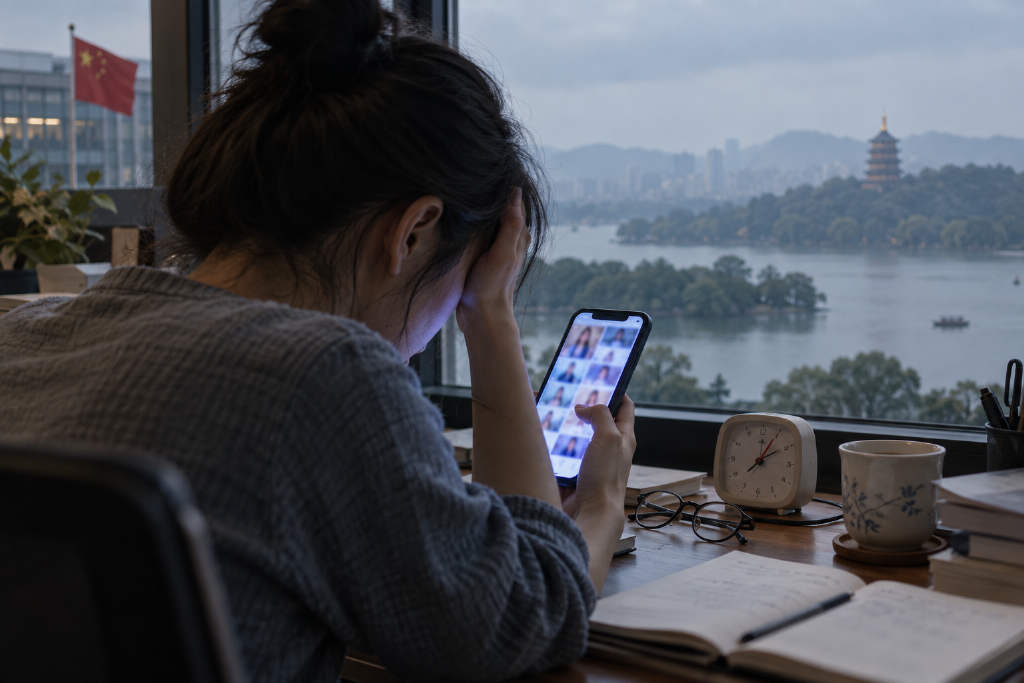
Hongguo short dramas do not lower a person's IQ, but they can temporarily weaken attention and comprehension, according to Zou Ying, deputy director of the Clinical Psychology Department at Zhejiang Chinese Medical University, as cited by BlockTempo.
Zou said a single short-drama session should not exceed 30 minutes. She gave two reasons: protecting eyesight and reducing the impact of blue light on sleep.
Why people feel more tired after watching
The report said many office workers spend the day running at full speed, then turn to their phones after work for something easy and pleasant. Short dramas can feel self-directed and mood-lifting, but for the brain, that is not the same as rest. It is still a form of ongoing mental activity.
Zou said a rise in pleasure and dopamine release does not mean fatigue disappears. Once the phone is put down, the tiredness can come back even more strongly. That, she said, helps explain why some people feel more exhausted after finishing a round of short dramas.
The article also referred to earlier research suggesting that short dramas keep pushing dopamine release through constant twists and repeated hooks, leaving the brain in a state of passive excitement and overload. Over time, that can make ordinary work and daily tasks feel more draining.
Meta-analysis linked heavier short-video use to weaker cognitive performance
BlockTempo cited a meta-analysis by Lan Nguyen's team at Griffith University in Australia, published in Psychological Bulletin in September 2025. The paper, titled Feeds, feelings, and focus, pooled data from 71 studies involving 98,299 participants.
It found that greater use of short-video platforms was associated with poorer cognitive performance, with an average correlation coefficient of r = -0.34. The platforms named in the report were TikTok, Douyin, Reels, and Shorts.
As the article explained, an r value measures the relationship between two variables. A value of 0 means no relationship, and the closer the number is to -1, the stronger the inverse relationship. A reading around -0.4 is generally considered moderate.
- Attention: r = -0.38
- Inhibitory control: r = -0.41
- Mental health: r = -0.21
The strongest associations appeared in attention and inhibitory control. The report described inhibitory control as the ability to resist an impulse and avoid doing something.
The paper did not prove causation
The figures do not mean that watching more short videos will definitely make someone less intelligent. The report noted that the authors themselves highlighted several limits.
Most of the underlying studies were cross-sectional, meaning they measured only one point in time and could not establish causation. People who were already anxious or had weaker attention may also have been more likely to become absorbed in short videos. In addition, usage levels in many studies were self-reported by participants.
In other words, the findings point to correlation, not a confirmed one-way causal effect.