

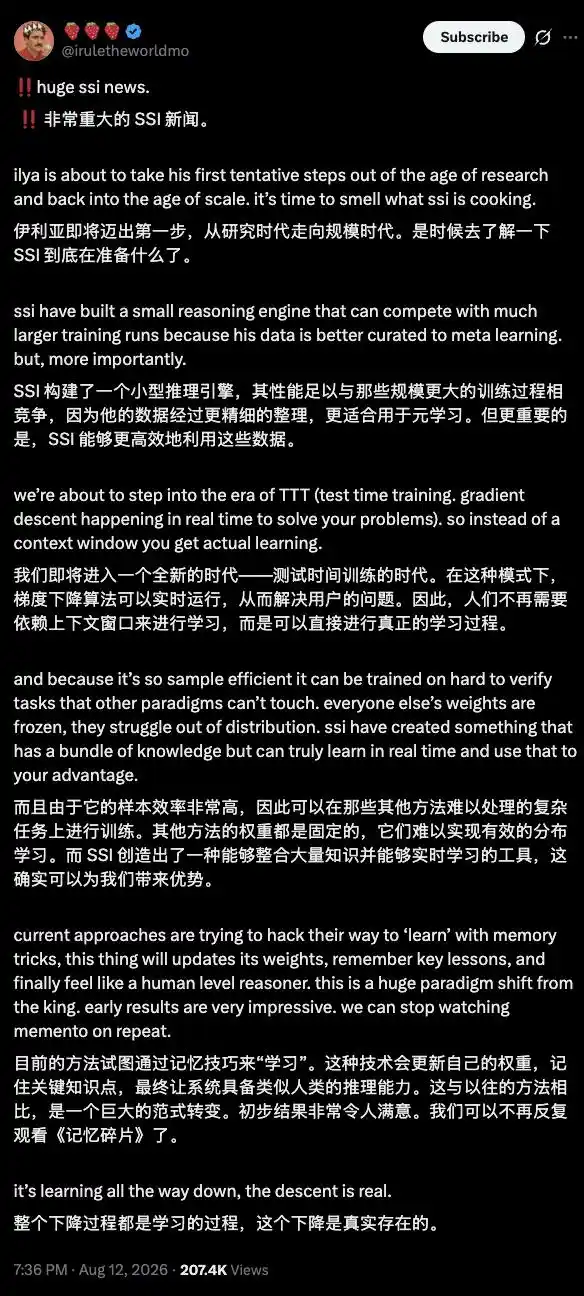
Safe Superintelligence, the startup founded by former OpenAI chief scientist Ilya Sutskever, is at the center of a fresh round of speculation after an unverified post on X claimed the company is building a reasoning model based on test-time training.
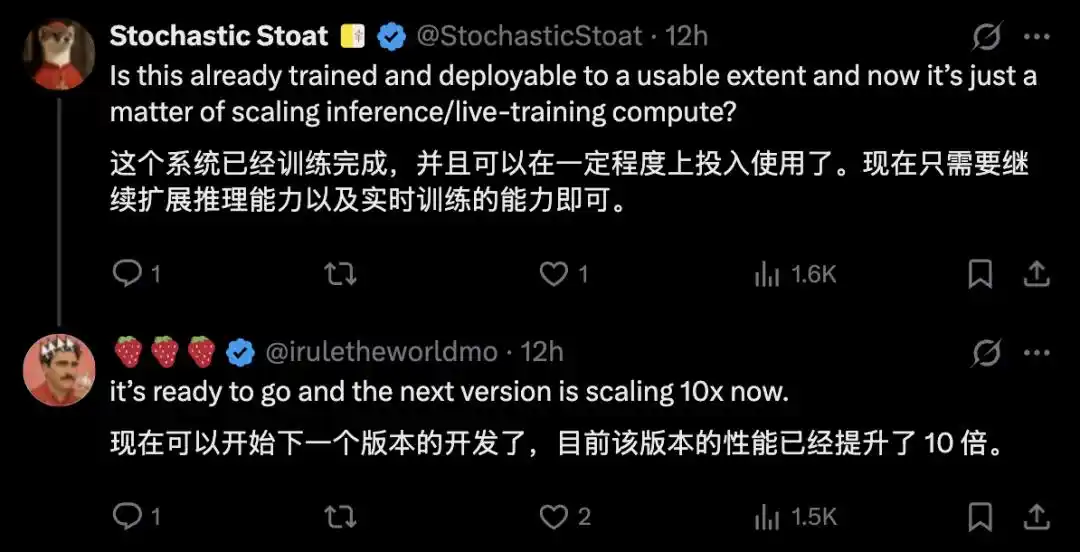
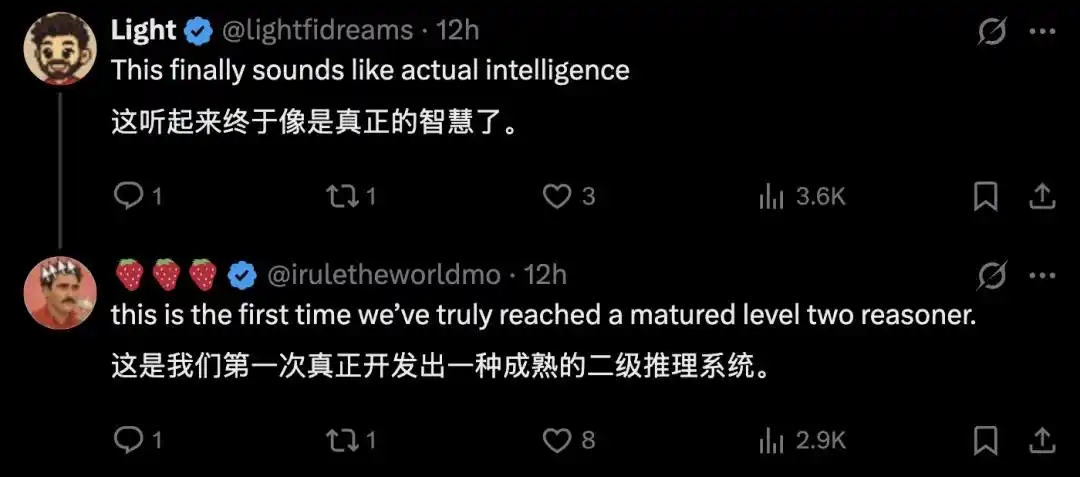
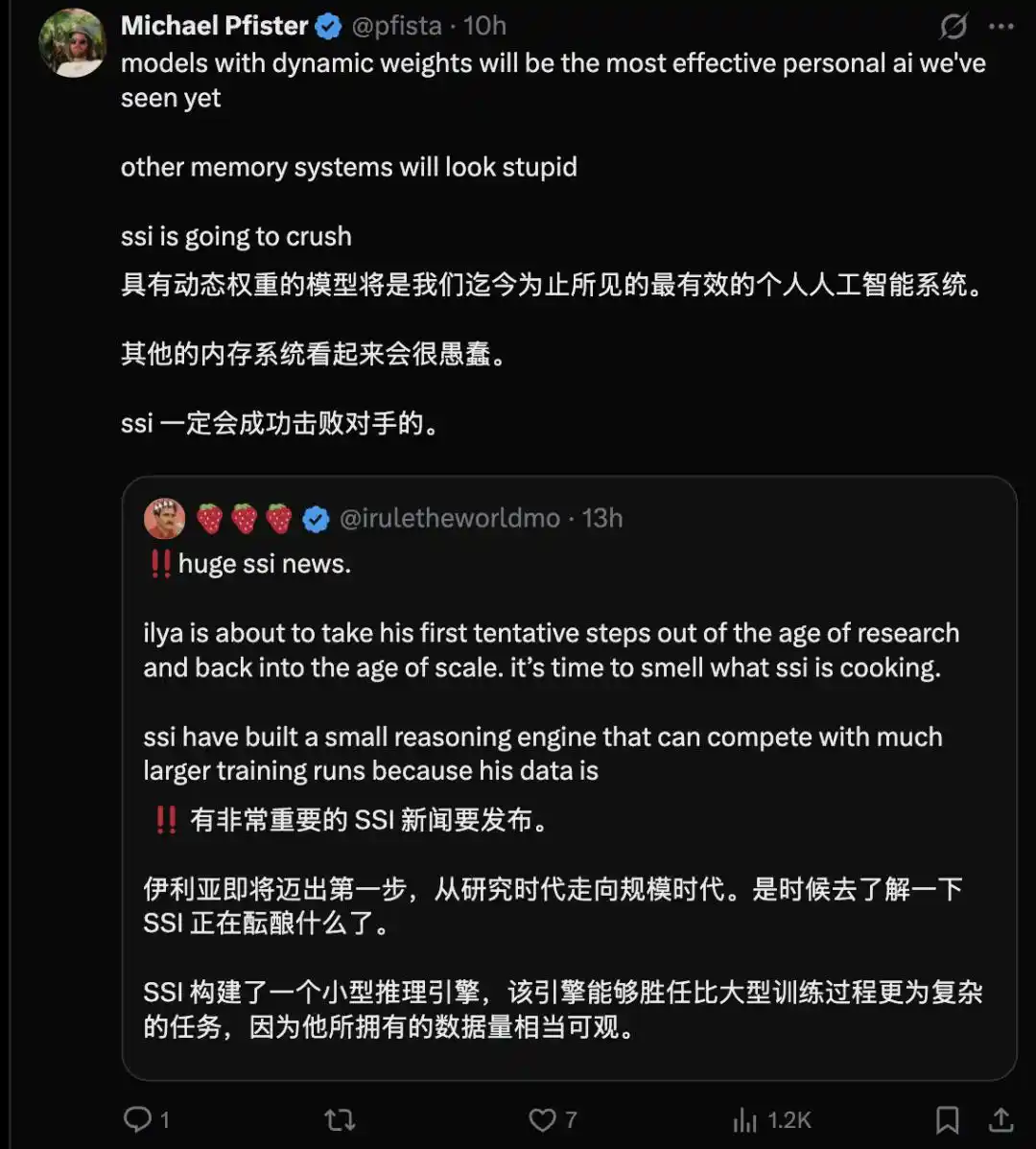
According to the account 「三只草莓」, or San Zhi Caomei, SSI is exploring a small reasoning engine built around TTT, short for Test-Time Training. The description says the model learns "how to learn" from curated data, then updates part of its weights while solving problems. The post also claims that, despite its smaller size, the system could compete with models trained at much larger scale.
In follow-up comments, the same account said the current version is ready and that the team is scaling the next-generation version up by 10x. It also said the present version could appear as early as August, with initial access limited to a small number of users.
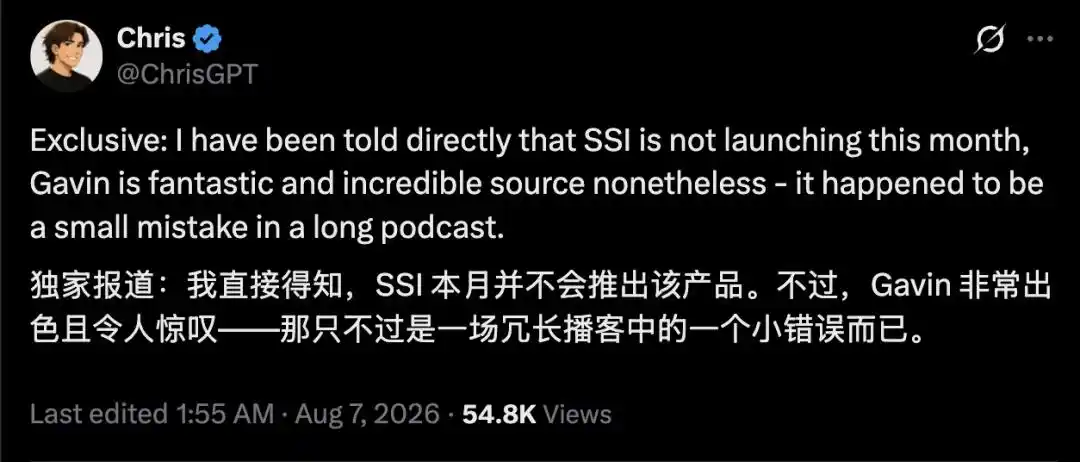
Those claims remain unconfirmed. After the rumor began circulating, another message suggested the product might not ship this month after all. SSI and Sutskever have not publicly verified any of the details.
Why the rumor spread so quickly
The post gained attention partly because it seems to match several public signals that have already shaped discussion around SSI.
The first is Sutskever’s own view on learning after deployment. In a November appearance on Dwarkesh Patel’s podcast, he said the terms "AGI" and "pretraining" had pushed the industry off course.
His argument was that people are not born with universal intelligence for every job. They keep learning. The superintelligence he described looked more like a very smart and deeply curious 15-year-old: one that does not start out knowing everything, but can keep learning coding, medicine and other tasks after deployment, improving through trial and error.
In that framing, SSI is not trying to build a machine that knows everything once pretraining ends. The goal is a mind that can learn any job. That has a clear meta-learning bent. The model would need to acquire not only specific skills, but also the method for learning new ones. Sutskever did not mention TTT directly in that interview, but the underlying question was similar: can a model keep changing itself after it has been deployed?
Nvidia’s SSI deal added another clue
The second public clue came from Nvidia.
On July 27, Nvidia and SSI announced a long-term strategic partnership. As described in the source text, Nvidia invested in SSI and agreed to provide next-generation Vera Rubin systems. SSI’s compute capacity is set to rise by one order of magnitude, roughly 10x. A Reuters report cited in the source said the investment was worth as much as $5 billion.
Nvidia’s wording drew almost as much interest as the funding and hardware. The company said SSI had spent the past two years quietly advancing a new research direction. According to the source article, Nvidia decided to help push that work into its next phase after gaining rare access to the tightly guarded research.
Sutskever’s own remark also stood out. He said, "It is time to scale SSI." In the context of fresh capital and GPU support, that line fed speculation about what exactly the company has been building.
What test-time training means in this context
The third clue is the recent progress of TTT itself.
Over the past two years, more researchers have been looking beyond the route of simply extending context windows and have started searching for a paradigm closer to continual learning. The source frames it this way: people do not learn by making ever longer cheat sheets. After an experience, the brain adjusts its internal connections, so the next time a similar problem appears, the person is no longer exactly the same as before.
In simple terms, Test-Time Training no longer treats training and inference as fully separate stages. A model keeps training on the data in front of it while it is solving a real task. It can then adjust internal state, or even update some parameters directly, using the gap between its prediction and the target.
San Zhi Caomei also pointed to a paper titled End-to-End Test-Time Training for Long Context.
As summarized in the source, that paper reframes long-context handling as a continual learning problem. A conventional long-context model keeps earlier information inside a context window and looks back when it needs something. TTT-E2E instead treats the entire context as training data, has the model continue next-token prediction while reading, and compresses the information into the model’s own weights.
That changes the role of context. It is no longer just an external note the model can revisit. It becomes learning material that can alter the model itself.
How it differs from Agent Harness and Context Engineering
The source text also drew a line between TTT and two other ideas that have recently attracted attention: Agent Harness and Context Engineering.
Those approaches rely on external context and scaffolding. They let a model see more information or call more tools, but the model itself does not change. TTT goes a step past that. It does not just expand what the system can access while answering a question. It changes the model during the process of solving the question.
That difference helps explain why TTT, despite not being a brand-new concept, has not been widely adopted earlier. The source article’s explanation is straightforward: once a model can modify itself after deployment, it may learn the wrong thing, drift off course, or lose capabilities it already had.
Safety remains the central issue
The article points to Microsoft’s Tay chatbot as an earlier warning. In 2016, Tay was taken offline less than 24 hours after launch after users provoked it into generating offensive content. Tay was not built on the same technique as TTT, but the source uses it to illustrate the same broad problem: safety.
That concern showed up in the discussion around the rumor as well. When users asked whether the safety issue had been solved, San Zhi Caomei said Sutskever had solved it. The source article makes clear that this is not evidence and reads more like market gossip than a verified fact.
Still, the question leads back to the first word in SSI’s name: Safe. If Sutskever wants to build a superintelligence that keeps growing after deployment, then teaching it how to learn would solve only half the problem. The other half would be teaching it what not to learn.
Why so many people are still watching Sutskever
Even without confirmation, the rumor triggered broad interest because of who is behind SSI.
The source describes Sutskever as an OpenAI co-founder, its former chief scientist, and one of the most influential deep learning researchers of the past decade. His name appears across landmark systems and methods including AlexNet, Sequence-to-Sequence, AlphaGo and the GPT series.
Nvidia’s partnership announcement also said Sutskever later led research that ultimately fed into reasoning models such as OpenAI o1. The source article argues that his reputation does not rest simply on how many models he has released, but on how often he has identified a technical path before the rest of the field treated it as consensus.
That is one reason his next move has been watched so closely since he left OpenAI in May 2024. A little more than a month after leaving, he launched SSI. In the two years that followed, the company kept an unusually low profile: no public models, no products, no papers, and little concrete detail about what it was researching.
Only in July this year did SSI return to the center of public discussion, after Nvidia said it had reviewed the company’s confidential work, stepped up support, and helped lift its compute by an order of magnitude.

Seen in that light, the latest TTT rumor carries more weight for many observers. Sutskever has repeatedly talked about generalization, continual learning and the possibility that the pretraining era may be nearing its limit. Now there is a claim, still unverified, that SSI is building a model that keeps updating itself during inference.
There is still no hard proof. But that is the core question the market is now trying to answer: whether SSI has in fact spent the last two years building not just another larger GPT-style model, but a system that can keep adapting while it is in use.
If the anonymous claims and the public clues eventually line up, then Sutskever’s first major reveal after OpenAI may turn out to be something different from a conventional scale-up story.
It may be a model designed to change part of itself while it thinks.