
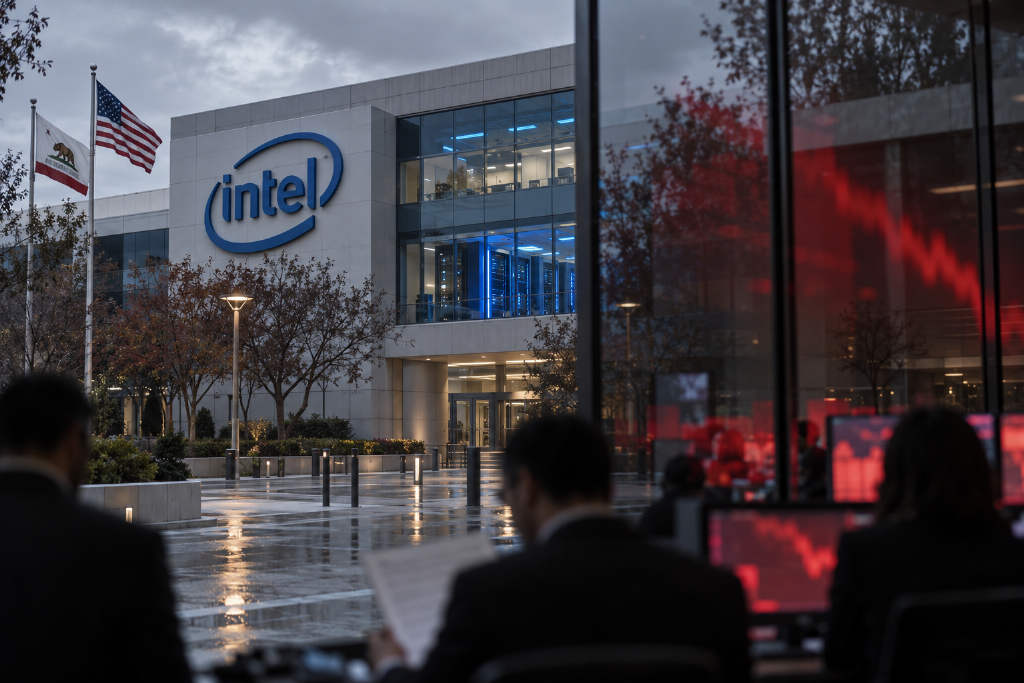
Intel’s third-quarter earnings report extended several operating improvements, but the company’s outlook for the current quarter drove a sharp sell-off in the stock. Early on Oct. 30 Beijing time, Intel reported third-quarter revenue of $16.5 billion, up 21% from a year earlier. Revenue from its Data Center and AI business climbed 78% year over year, the strongest growth in 15 years. Even so, fourth-quarter guidance came in well below expectations, sending the shares down about 25% in premarket trading before the loss widened to about 30% in the regular session.
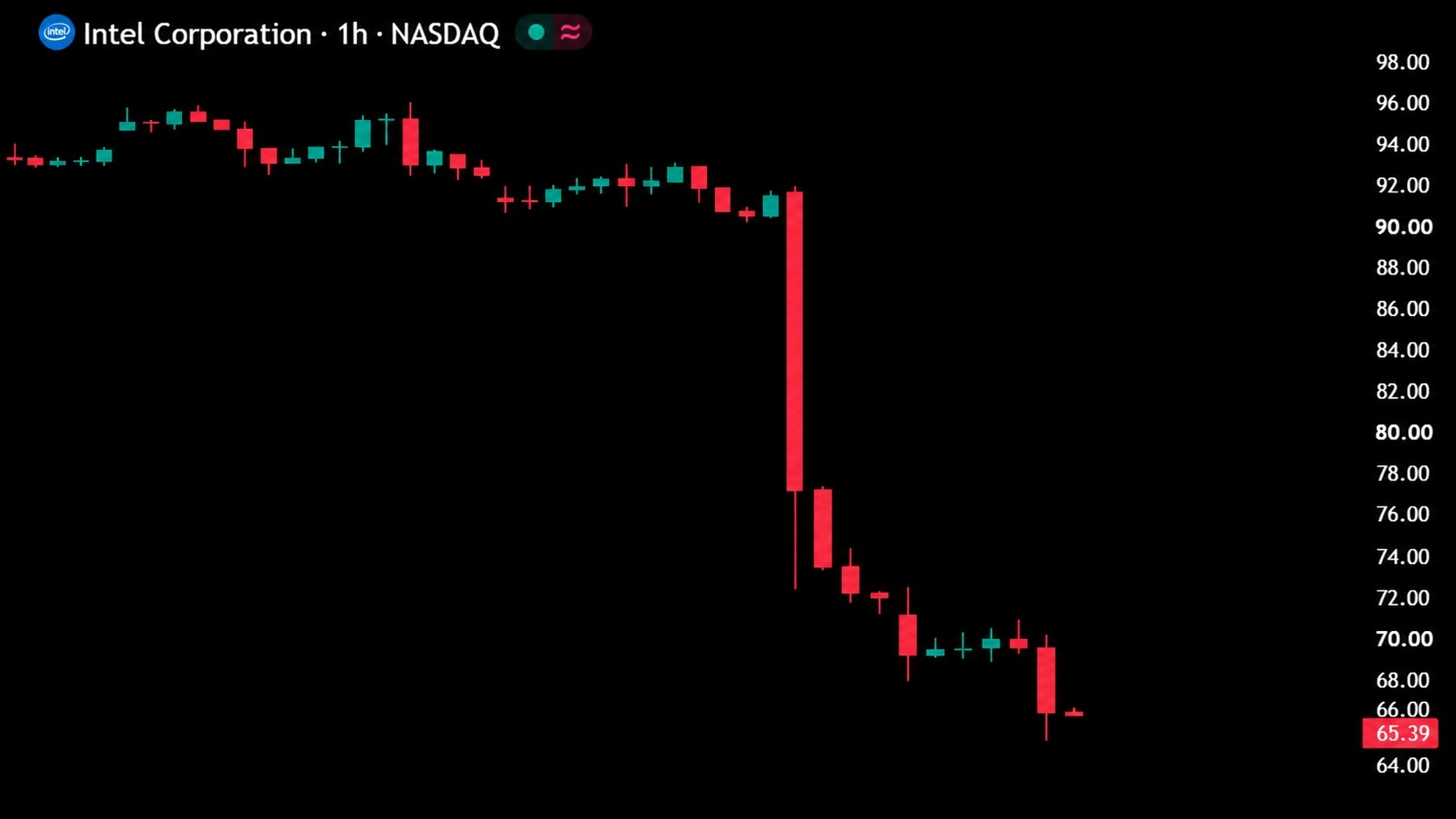
Three months ago, stronger data center growth, a narrower foundry loss and better-than-expected guidance had revived hopes that Intel’s turnaround was gaining traction. This time, the first two trends were still in place. The problem was that the PC business weakened faster, forcing investors to reassess how long the recovery may take and what it may cost.
Data center growth continued, while the PC business softened
In the third quarter, Intel’s Data Center and AI segment generated $7.3 billion in revenue, up from about $6.3 billion in the second quarter. The growth trend remained intact. AI data centers need GPUs, but they also rely on CPUs for general computing, task scheduling and back-end processing, which has allowed Intel to capture part of the current infrastructure buildout.
That strength was not enough to fully offset pressure from the company’s PC-related operations. Revenue from the Client Computing and Edge AI business, which is centered on PC chips, came in at $8.1 billion for the quarter, down 5% year over year. It remained larger than the data center business by revenue, but the direction was weaker.
The bigger concern is the fourth quarter. Over the past two months, the PC market has adjusted more quickly, with device makers managing inventory against softer end-market sales. When manufacturers prioritize clearing existing inventory, chip purchases upstream can contract faster than end demand itself. Intel expects revenue from that business to fall by more than 20% sequentially in the fourth quarter, and it said weak PC market demand will last at least through the first half of 2027. That leaves the company relying on server growth to fill the gap created by declining PC chip revenue.
The split between those businesses showed up clearly in Intel’s guidance. The company expects fourth-quarter revenue of $15 billion to $16 billion, with the midpoint about 9% below the market’s roughly $17.1 billion estimate. Adjusted earnings per share are projected at $0.25, more than 40% below the consensus estimate of about $0.44. After the report, Bank of America cut Intel to Neutral from Buy and lowered its price target to $100 from $145.
AI is lifting server demand, but also raising PC costs
The AI boom has helped Intel on the server side, but it has also created cost pressure in the PC market. As memory makers shift capacity toward AI-related high-bandwidth memory, prices for standard PC memory have risen, pushing up system costs and weighing on consumer demand.
Even though Intel’s AI PC-related revenue rose 35% year over year in the third quarter, that was not enough to reverse the broader decline in the client business. New categories sold better, but they still did not pull the overall PC market back into growth.
The server business is dealing with a different constraint. In regulatory filings, Intel said shortages of substrates, memory and other key components affected product deliveries, and demand for some data center CPUs remained above available supply. The result is a two-sided squeeze: server orders are there, but shipments cannot fully keep up, while the PC business is facing weaker demand. Together, those pressures limit Intel’s ability to convert AI demand into broader company-wide earnings growth.
Foundry losses narrowed again, but external demand remains limited
Intel Foundry reported $6.7 billion in revenue for the third quarter, up 58% year over year. Its operating loss narrowed to about $1.85 billion from roughly $2.09 billion in the second quarter. On the surface, the trend still points to improvement.
But the composition matters. Of the $6.7 billion in foundry revenue, only $411 million came from external customers, or about 6% of the total, with the rest mainly tied to internal business. Regulatory filings also showed that growth in external revenue during the quarter was driven mainly by a non-recurring foundry contract. Internal manufacturing supports Intel’s own product deliveries, but that revenue is eliminated in the group’s consolidated statements, so the increase in foundry revenue cannot be treated as a direct sign that outside orders have broken through.
Technical progress still has to pass a commercial test. Intel 18A costs were down about 40% from the first quarter, while yield and cycle time continued to improve. Profitability, though, still depends on securing enough orders and achieving sufficient capacity utilization. External customers also need time to validate a process, finalize products and move into volume production. Narrower foundry losses show operating improvement, but Intel still has to prove it can win external business consistently and make money from it.
The market is recalculating the price of waiting for a recovery
Last quarter, improvement across several business lines led investors to believe Intel may have been moving past its most difficult period. This quarter, the market was looking for a faster recovery and got weaker-than-expected guidance instead. Optimism that had supported the stock turned into pressure once the earnings report was out.
The same facts can be priced very differently depending on where a company is in the cycle. When expectations are low, operating improvement alone can lift confidence. Once the stock has already moved ahead of the recovery story, the next set of numbers has to keep pace. If guidance falls short, investors start recalculating how long the recovery may take and how much it will cost.
Intel’s challenge is that rebuilding manufacturing capability takes years, while the market reassesses progress every quarter. Research spending, capacity expansion and customer validation all run on their own timelines. Investors, though, do not keep accepting delayed returns simply because those investments are necessary. When near-term profitability is under pressure, the question of when those investments will pay back becomes more urgent.
This sell-off does not necessarily mean the market has rejected all of Intel’s progress. It does show that investors are no longer willing to wait at the same price. Intel still needs time to catch up, and it also needs to show shareholders that the finish line is getting closer.


