
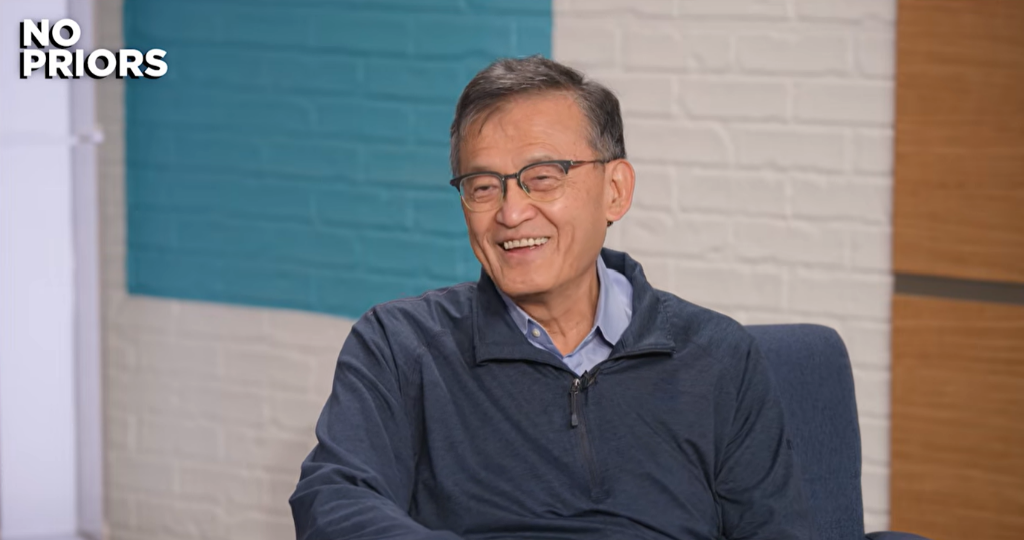
Intel CEO Lip-Bu Tan used his appearance on the No Priors podcast to give a broad account of how he intends to reshape Intel. According to TechFlowPost, citing Wall Street News, Tan said his goal for Intel is to deliver a “10x” return over a five-to-ten-year period. The plan he described is not limited to the company’s traditional PC base. It centers on advanced packaging, the EMIB interconnect approach, glass substrates, new semiconductor materials and a foundry business that he says must be rebuilt around customer trust, yield and execution.
Tan said he accepted the Intel role at age 66 because the company remains an iconic institution for the semiconductor ecosystem and for the United States. After his time at Cadence, he said he wanted to do one more major thing. He also recounted an early challenge in the job: President Trump asked him to resign, citing conflicts of interest. Tan said he set aside personal emotion, concluded that he did not need the role but was doing it to save Intel, and then secured meetings in which he explained that he was born in Malaysia, grew up in Singapore, graduated from MIT and had lived in the United States ever since. Trump listened, Tan said, and gave him a chance to continue.
In describing what “saving Intel” means operationally, Tan pointed first to culture. Over the past 14 months, he has sought to clarify accountability, accelerate decision-making and reduce layers of meetings. He contrasted Intel’s old bureaucracy with the pace of startups, where he is used to moving at “light speed.” He also said Intel must become more humble with customers: listen to what they are struggling with, solve their problems, simplify the product line and define a clearer roadmap for the next five to ten years. From day one, he decided that all engineering teams would report directly to him, because as an engineer he wanted firsthand visibility into what was broken and what had to be corrected.
Tan’s ten-year framework is the same one he says he used at Cadence: crawl, walk and then run. The first task was to stabilize the balance sheet, which he described as being in poor condition. He said he welcomed the U.S. government becoming a major shareholder, and explained to President Trump that countries such as Japan and Singapore treat advanced manufacturing as infrastructure worthy of state support. He also thanked Nvidia CEO Jensen Huang, whose $5 billion investment in Intel has, according to Tan, grown to $25 billion or more. SoftBank’s Masayoshi Son, with whom Tan had worked through SoftBank’s board, also provided support. Together, Tan said, these steps helped strengthen Intel’s financial base.
Product focus came next. Tan said Intel is simplifying product lines, listening to customers and preparing next-generation products. He also described a favorable shift in demand as agentic AI and inference workloads expand. During the training-heavy phase, the CPU-to-GPU ratio in servers was roughly one to eight; he now sees it moving toward one to four or even lower. CPU demand is rising because some AI model developers have told him that CPUs perform better in reinforcement learning and in coordinating the scheduling speed of many agents. After data center server products are on a stronger foundation, he said, Intel’s foundry business becomes another major area of work.
The most technical part of Tan’s roadmap begins with the limits of process-node scaling. Intel has 18A in place and is pushing 14A into production, while also planning for 1 nanometer and 0.7 nanometer processes. In the interview, he also said he can see a path to 10 nanometers and 7 nanometers, while warning that the road ahead becomes increasingly expensive and difficult. That is why, in his view, Intel must work more closely with substrate suppliers and equipment vendors to improve both yield and performance.
Advanced packaging is the second major pillar. Tan noted that TSMC has CoWoS, while Intel is pushing its next-generation EMIB technology. The essential requirement, he said, is that EMIB must reach customer-required yields at production scale. He has also invested in 3DGS, a glass-substrate company, because he sees glass as a strong thermal and insulating material. Intel owns roughly 1,000 patents in modules, and Tan described the integration of substrates and modules as a central engineering challenge. Intel has also announced advanced packaging manufacturing cooperation projects in India and in New Mexico in the United States.
Materials science is another route Tan is using to address bottlenecks. He said he has invested in gallium nitride, silicon carbide and indium phosphide, and that some of those companies have already been acquired by large semiconductor companies such as ADI. He has also invested in a synthetic diamond wafer company, because diamond is another strong thermal insulation material for chip packaging. Tan summarized the engineering mindset this way: “You keep hitting bottlenecks, and then you find a way to cross them or go around them.”
Intel’s foundry business remains a difficult but central part of the strategy. Tan said many people argued that domestic manufacturing was too expensive or would not work, but he decided to keep investing because advanced manufacturing in the United States is important for supply-chain security and for the wider industry. No major semiconductor company, he said, should rely entirely on one or two geographically concentrated suppliers. He said Intel respects TSMC and views it as a partner, not simply as a rival, because the industry needs more capacity to serve customers.
Execution in foundry is measured by yield, defect density and cycle time. Tan called foundry a service business and a business of trust: before customers hand over wafers, they must trust the manufacturer. If yield fails, customers can lose revenue and leave, and winning them back becomes extremely difficult. This is why he is focused on improving the reliability and efficiency of Intel’s manufacturing base before expecting the market to recognize the full value of the foundry business.
Tan also discussed Terafab, the project being developed with Elon Musk. He said both he and Musk agree that semiconductor infrastructure has not kept up with AI growth in capacity, production efficiency or power efficiency. Under the collaboration, Musk has decided to build his own fab, while Intel will provide technology and process support to help accelerate production. Tan said he meets with Musk’s team weekly and enjoys Musk’s habit of asking why things must be done in the traditional way. He also mentioned Musk raising unconventional operating ideas, including whether smoking could be allowed in certain cleanroom areas. Tan said he would not go that far, while adding that some areas can be assessed with an open mind.
On the global supply chain, Tan said AI will affect the world more deeply than the internet. In semiconductor design, AI can improve timing optimization, shorten time to market and reduce cost. Yet the AI buildout faces bottlenecks: insufficient electricity in some countries, the impact of helium on semiconductor production, and memory shortages. Even if capacity is expanded now, new supply takes years to arrive. CPUs and GPUs are also in short supply, which pushes up prices and ultimately passes costs to clients. Tan said the companies most affected will be those that do not embrace AI across forecasting, design and other workloads.
Tan’s investment background shapes how he evaluates the sector. He said he has been involved with 159 IPOs and 126 M&A exits, and has made more than 200 semiconductor investments, 38% of them in the United States. His framework begins with identifying the bottleneck and the real customer problem. He cited Cradle Semiconductor as an investment tied to interconnect bottlenecks, and Celestial AI as an example of optical interconnect becoming important inside clusters. He also noted that Jensen Huang has invested in almost every photonics-related company, saying that is not a coincidence. In EDA, he sees a “gold mine” in using AI and machine learning to reduce design complexity and improve quality. Power management, including the large losses involved in converting 40V to 1V, is another bottleneck area he watches.
He also described how he evaluates customers and founders. The key questions are whether the problem is real, whether customers are genuinely struggling with it and who the first target customer will be. He prefers hyperscale customers because they have the ability and willingness to pay, and if they like a product they can spend millions over the following years or provide some form of backing. Talent is equally important. Tan named the United States, Silicon Valley, Austin and Israel as areas he watches closely. He said Israeli founders show disruptive creativity and resilience, continuing meetings even during wartime by moving to a basement or switching to voice when alarms interrupt connectivity.
Tan’s Cadence experience remains part of his operating philosophy. He spent close to 15 years at Cadence and said one of the things he is proudest of is identifying and personally developing his successor, who is now embracing AI by putting agentic AI into tools to improve efficiency. Synopsys’ Sassine is doing similar work, supported by a $2 billion Nvidia investment, and Synopsys has also acquired Ansys to expand into full-system design. Tan said large companies are moving, but startups still have room to do more disruptive things. Depending on the founder’s vision, those companies can pursue IPOs or be acquired by the two large incumbents. As a venture investor, he said, his role is to support the entrepreneur’s dream.
Looking ten years ahead, Tan said AI will change Intel and other semiconductor companies. Capital intensity, unpredictability and cyclicality must all be considered in investment decisions. He prefers to enter early, build the team and find investors who will stay during hard times, not only during easy periods. Strategic investors in manufacturing, memory, interconnect and other areas can add value. He also said that in his own experience, nine out of ten companies he invested in changed their business plans along the way because the market changed. This is why he prefers teams over lone founders, and founders who listen openly before forming their own judgment.
For Intel’s own organization, Tan again returned to the crawl-walk-run model. In the crawl phase, he has recruited leading semiconductor talent. He is now thinking about what software talent is needed to build full-stack capability, and he also wants younger employees who understand workloads and frontier open-source models. He joked that his son has become his teacher on AI and machine learning, and that he learns from him while visiting his grandchildren. Intel, he said, used to be an old-style spreadsheet-driven company. He wants to make it an AI-enabled enterprise across the whole organization, not only in design but also in sales, marketing and internal operations.
Tan also addressed capital for infrastructure-heavy companies. He said access to capital is essential for capital-intensive businesses and infrastructure projects. Some venture capital firms now put $1 billion into a single company, which would have been hard to imagine before. For early-stage strategy, investors either need to enter very early at reasonable valuations or participate at Series A, although Series A valuations have already exceeded $1 billion in some cases. For AI factories and foundries, he said government funding, sovereign wealth funds and large infrastructure funds are necessary. As a public-company CEO, he is also focused on long-term growth-oriented investors rather than only short-term holders asking every quarter when the company will buy back stock.
Asked what investors misunderstand most about Intel, Tan said the company is still in the crawl phase even though some of its potential is becoming visible. In PC clients, Intel still has market share, but performance must improve substantially. He is quietly building CPU architecture, GPU architecture and software architecture teams to prepare for leapfrog gains, moving more like a large startup. In foundry, he said the gap with TSMC remains large, so Intel must remain humble and focus on IP, yield, defect density and cycle time. These foundations take time, but Tan said that by 2030 to 2032, people will begin to see how large Intel’s real potential is.
Beyond PCs, Tan sees Intel extending to the edge, physical AI and agentic AI. In the past, servers and PCs mainly served humans; now, millions of agents will need access to compute and software stacks. He said AI is only the beginning: training is led by Jensen Huang, but edge computing, agentic AI and physical AI all remain major opportunities. Over the past 14 months, Tan said Intel has already created about a 6x return for shareholders, but “this is only the beginning.” He compared the ambition with his Cadence record, where the stock rose from $2.4 during his path from interim CEO to retirement and generated about a 76x shareholder return; by the time his executive chairmanship ended, the return was around 85x. Intel is larger and harder to repeat, he said, but his target remains a 10x return over five to ten years.