
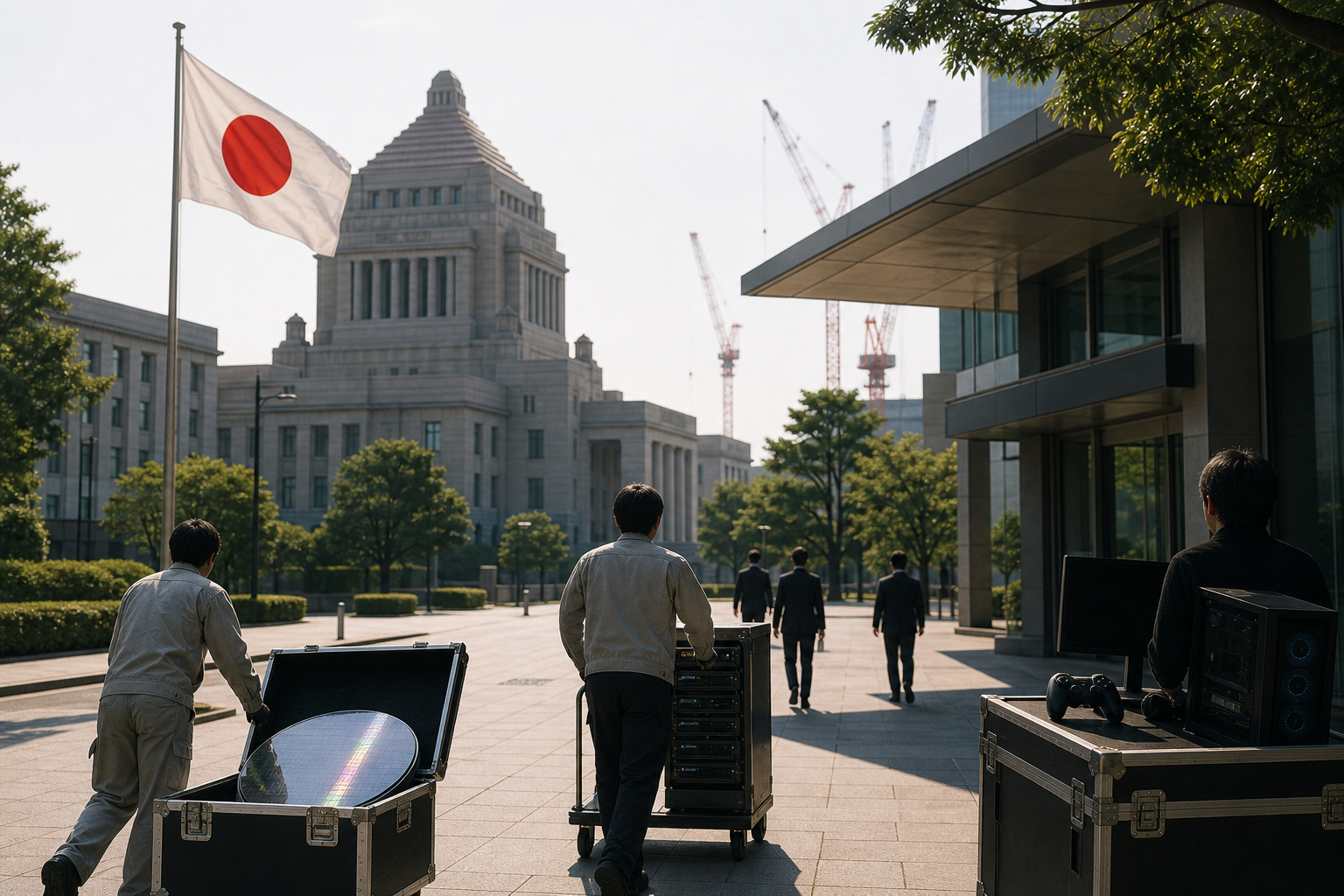
Japan’s economic revitalization minister Saneyuki Konochi said on Aug. 11 that the government’s large industry investment plan would not weaken fiscal stability, and could instead provide long-term support for the yen by raising Japan’s growth potential and attracting investment.
In June, the Japanese government unveiled a 14-year roadmap for investment in key industries totaling ¥370 trillion, or about $2.3 trillion. The plan covers 17 priority sectors, including artificial intelligence, semiconductors and gaming. It has stirred market concern over Japan’s fiscal burden and debt risks.
Konochi pushes back on fiscal concerns
Konochi said support for strategic industries such as AI and semiconductors is necessary if Japan wants to improve productivity and strengthen its global competitiveness. He said that as more funds flow into Japan and yen-denominated assets, demand for the yen would also rise.
Responding to concern over fiscal expansion, Konochi said Japan’s fiscal policy is not as aggressive as some outsiders believe. He said the government would put greater emphasis on internationally accepted indicators such as the debt-to-GDP ratio, rather than focusing only on achieving an annual primary budget balance.
Consumption tax cut and funding plan
Japanese Prime Minister Sanae Takaichi is planning a two-year consumption tax reduction program that is expected to cost about ¥5 trillion a year. Konochi said the government would secure funding through fiscal restructuring and cost-cutting measures, adding that 「raising ¥5 trillion is not difficult」.
Attention turns to government-BOJ coordination
Markets are also watching policy coordination between the Japanese government and the central bank. A government fiscal plan had previously sparked controversy after markets interpreted it as a possible threat to the Bank of Japan’s independence. A statement emphasizing the central bank’s independence was later added.
On the Bank of Japan’s future rate path, Konochi said he supports independent decision-making by the central bank and that he 「respects the central bank’s independence」. Market expectations are currently building for another Bank of Japan rate hike in September or October.