


After OpenAI released GPT-6 Astra, NVIDIA Chief Executive Officer Jensen Huang publicly congratulated the company and declared: "AGI has arrived."
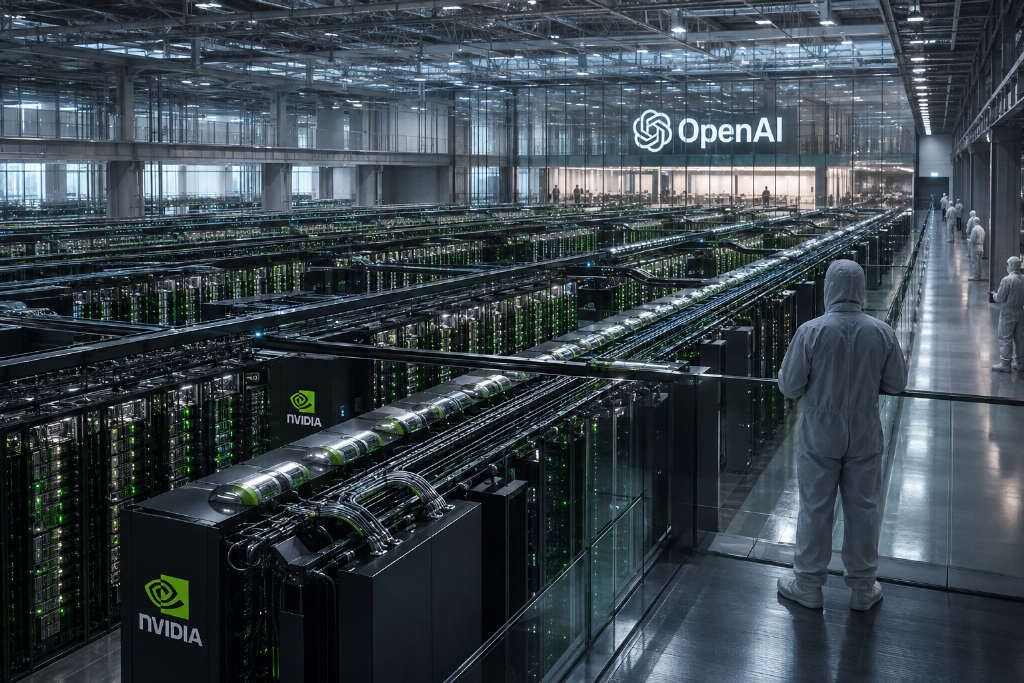
Huang said GPT-6 Astra was trained with more than 100,000 NVIDIA Grace Blackwell GPUs using an NVLink 72 architecture. He also said another 400,000 GPUs are expected to come online next. From ChatGPT to o1 and then Astra, he said, this latest jump in AI capability took only about four years.
OpenAI details Astra’s benchmark results
OpenAI described Astra as its "smartest" and "most aligned" model to date. The company said the model reached 98% on FrontierMath Tier 4, 99.9% on ARC-AGI-3, and 100% on ExploitBench. OpenAI also said Astra showed breakthroughs in computer use, software engineering, cybersecurity, science, and professional work.
Crusoe says Abilene became the "birthplace of AGI"
Another public response came from Crusoe co-founder and CEO Chase Lochmiller. Lochmiller reposted OpenAI’s Astra announcement and attached an aerial image of the large data center in Abilene, Texas, writing: "Congrats to our friends at OpenAI. I think that makes Abilene the birthplace of AGI!"
The remark pointed to OpenAI’s Stargate AI infrastructure. According to OpenAI, Abilene is Stargate’s first site in the US and is already being used for training and serving frontier AI models. OpenAI’s longer-term plan is to expand US AI infrastructure to 10GW by 2029.
Crusoe is one of the key builders involved in the Abilene Stargate data center. The company first gained attention through bitcoin mining powered by stranded natural gas from oil fields, then gradually shifted toward AI data center infrastructure.
The race is shifting toward compute factories
If the figures disclosed by Huang hold, Astra also points to a higher compute threshold for frontier models, pushing into the range of 100,000 GPUs and potentially several hundred thousand GPUs.
NVIDIA has long described data centers as "AI factories." The GB200 NVL72 links 72 Blackwell GPUs into a single NVLink domain, making an entire rack behave more like one giant GPU in compute terms. NVIDIA has also started mass production of its next-generation Vera Rubin platform and is now targeting million-GPU AI factories.
That makes Astra more than a model milestone for OpenAI. It also puts the expansion cycle behind the AI race back in focus: stronger models drive more demand for compute, which in turn pushes larger AI data centers and expands demand across GPUs, networking, power, and cooling infrastructure.
Huang’s comment that another 400,000 GPUs are coming online next also drew attention to the hardware and infrastructure needed to support that scale, including servers, NVLink and high-speed networking, HBM, advanced packaging, liquid cooling, and power systems, if that deployment is ultimately realized.