
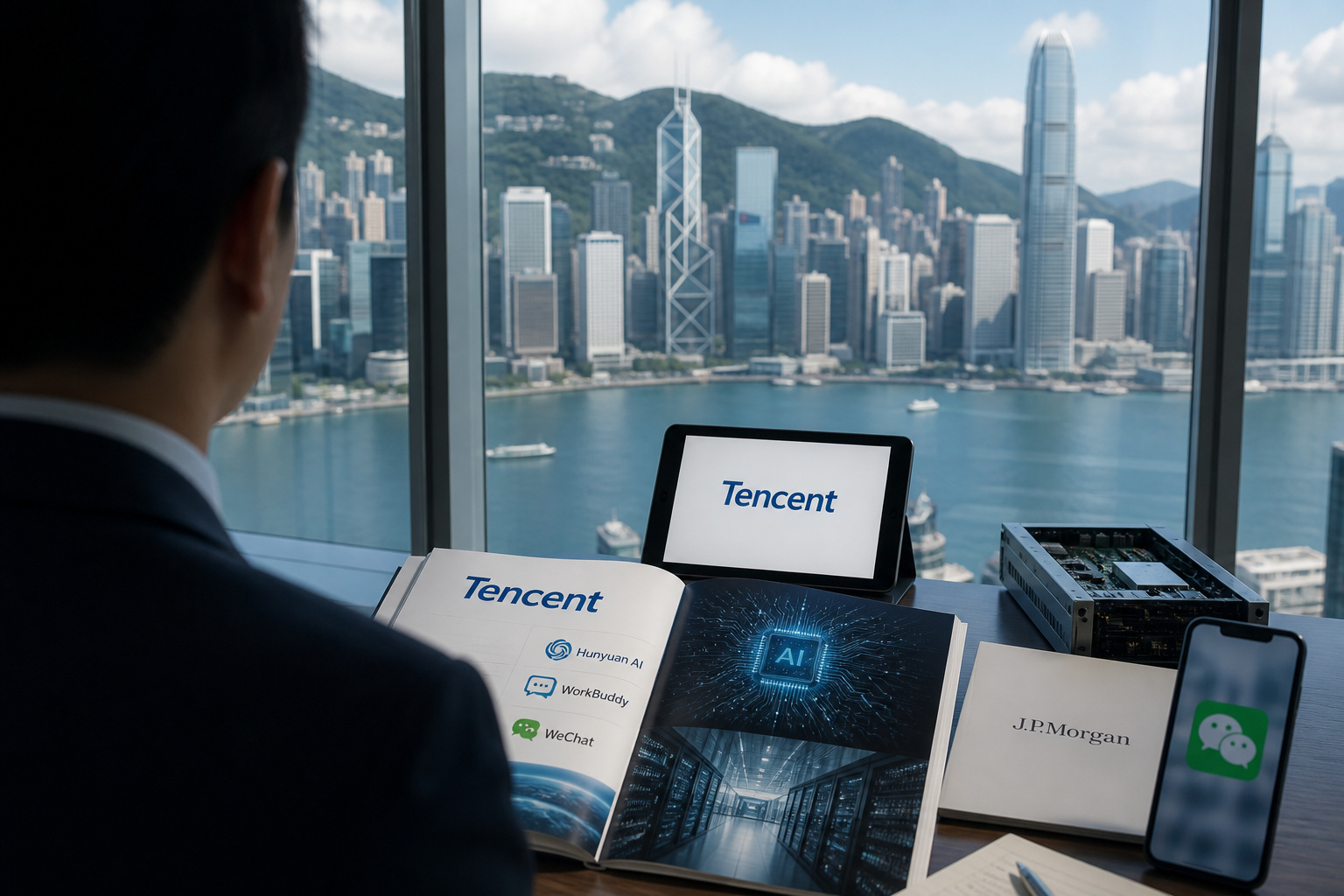
JPMorgan said in its latest research note on Aug. 13 that it is maintaining an Overweight rating on Tencent Holdings (0700.HK), with a price target of HK$690, and will be watching whether the company’s AI spending can turn into real revenue over time.
JPMorgan sees 2026 as a low point in earnings growth
The bank said Tencent is in an AI investment cycle stretching across 2026 and 2027. In its view, 2026 could be the trough for earnings growth, with adjusted earnings per share expected to grow about 2%.
As AI monetization gradually offsets the cost of that investment, JPMorgan said earnings growth could recover to a 10% to 15% range in 2027.
The note added that the market may currently interpret flat quarter-on-quarter profit and negative free cash flow as signs of growth stagnation or cash consumption. JPMorgan took a different view, saying Tencent’s core businesses still have the capacity to support AI investment.
Second-quarter revenue, profit and segment growth
According to the report, Tencent posted second-quarter revenue of 204.8 billion yuan, up 11% from a year earlier. Non-IFRS net profit rose 9% year over year to 68.4 billion yuan.
- Marketing services revenue increased 22% year over year
- Domestic games revenue increased 17%
- Fintech and business services increased 9%
The report also said cloud business growth recovered to the low 20% range after a price increase in May.
AI product spending and free cash flow adjustments
JPMorgan estimated that Tencent spent about 10.5 billion yuan in the second quarter on new AI products including Hunyuan, Yuanbao, CodeBuddy, WorkBuddy and Xiaowei. That was above about 8.8 billion yuan in the first quarter.
The bank said Tencent’s reported free cash flow for the second quarter was negative 13.8 billion yuan. Excluding prepayments for computing capacity, adjusted free cash flow was positive 37.6 billion yuan.
JPMorgan also said Tencent can still fund the current AI investment cycle through cash flow from its core businesses and through partial disposals from an equity investment portfolio worth more than 700 billion yuan.
Catalysts and risks JPMorgan is tracking
On potential catalysts, JPMorgan said it is focused on the release of Hunyuan 4 within the year, deferred revenue recognition from WorkBuddy’s paid tier, and testing and possible commercialization of Xiaowei, the WeChat agent.
The note said Xiaowei is built on WeChat’s social graph, merchant network, payments and mini-program ecosystem. If Tencent later discloses user, GMV or monetization data, that could become a key variable in how the market reassesses the value of Tencent’s AI business.
On risks, JPMorgan said it would turn more cautious on Tencent’s AI investment returns if third-quarter advertising growth comes in below the high teens, if quarterly AI spending rises above 12 billion yuan to 13 billion yuan without clear revenue offsets, or if Hunyuan 4 is delayed until after 2026.