
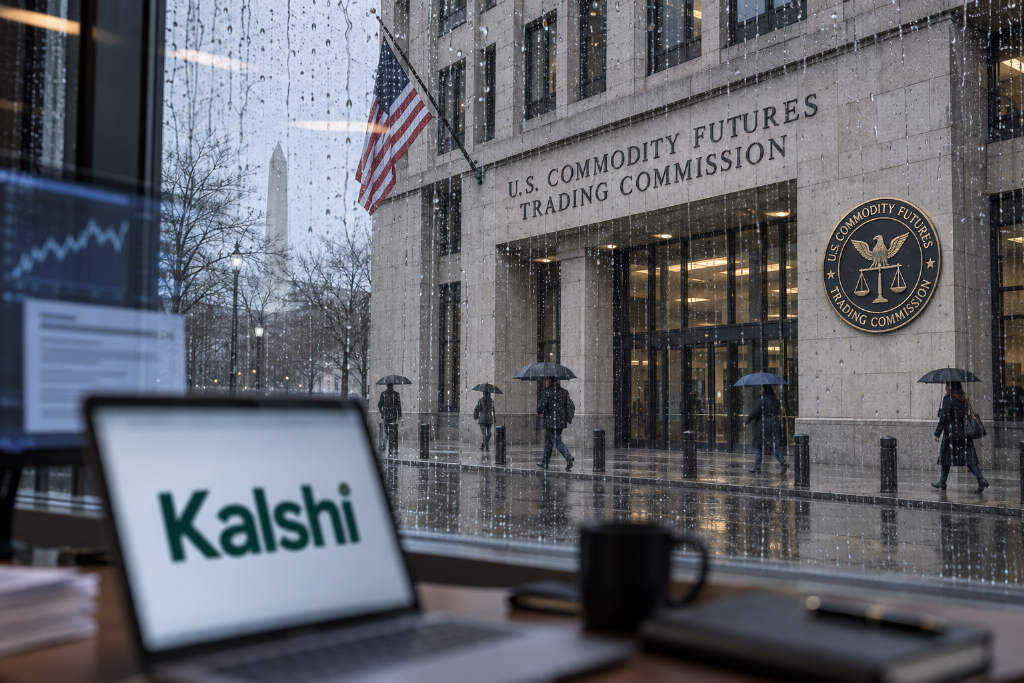
The Commodity Futures Trading Commission has privately warned prediction market Kalshi that enforcement charges could be filed soon, Politico reported on Nov. 10, citing a person with direct knowledge of the investigation. Reuters reported the same warning later that day, citing an unnamed person familiar with the matter.
The investigation reportedly concerns whether Kalshi properly informed the federal derivatives regulator about dozens of new products it was preparing. Kalshi has rejected that description of the matter. Elisabeth Diana, a spokesperson for the company, told Politico that the warning relates to a procedural error in the submission of a handful of contracts, many of which were not live. “We are already addressing the issue,” she said. The CFTC and Kalshi did not immediately respond to a request for comment from Unchained.
The investigation and self-certification
Politico reported that the Kalshi investigation has been running for months. One focus is self-certification, a process that allows a CFTC-regulated exchange such as Kalshi to begin trading a new contract as early as the next day. The exchange itself certifies that the product follows agency rules, including the requirement that it not be easy to manipulate. Express approval from the CFTC is not required.
The process has drawn criticism. Terry Duffy, CEO of CME Group, argued earlier this year that some prediction market contracts were vulnerable to manipulation and should never have gone live. In July, the agency warned operators that their certifications were too loosely worded.
A regulator that has backed prediction markets
Under Chairman Michael Selig, the CFTC has sided with prediction markets in legal disputes with state officials who argue that the platforms violate gambling laws. The agency is also reportedly investigating Polymarket, including whether it breached a 2022 settlement that required the platform to keep U.S. users off its service.
Late last month, Kalshi closed a $1 billion funding round at a $40 billion valuation. Sequoia and Wellington co-led the round. Kalshi has also entered perpetual futures, derivatives with no expiry date, and trading volume for its ether contract came under scrutiny in September. Polymarket is valued at $21 billion.
An aide said Sen. Elizabeth Warren, who is expected to chair the Senate Banking Committee after Democrats swept the midterms, wants to end what she described as a Wild West-style lack of oversight in prediction markets.
Why the case matters
Self-certification has allowed Kalshi to add new markets quickly, so a case over how the company used the process would extend beyond any single contract. Whether the CFTC files charges or reaches a settlement, the outcome will indicate how much room the Selig-led agency intends to give platforms it has defended against state authorities.



