Kalshi has raised $1 billion in a Series G round that values the regulated U.S. prediction market platform at $40 billion post-money. Sequoia Capital and Wellington Management led the financing, with Baillie Gifford, Morgan Stanley Investment Management, Coatue Management and Andreessen Horowitz joining the round.

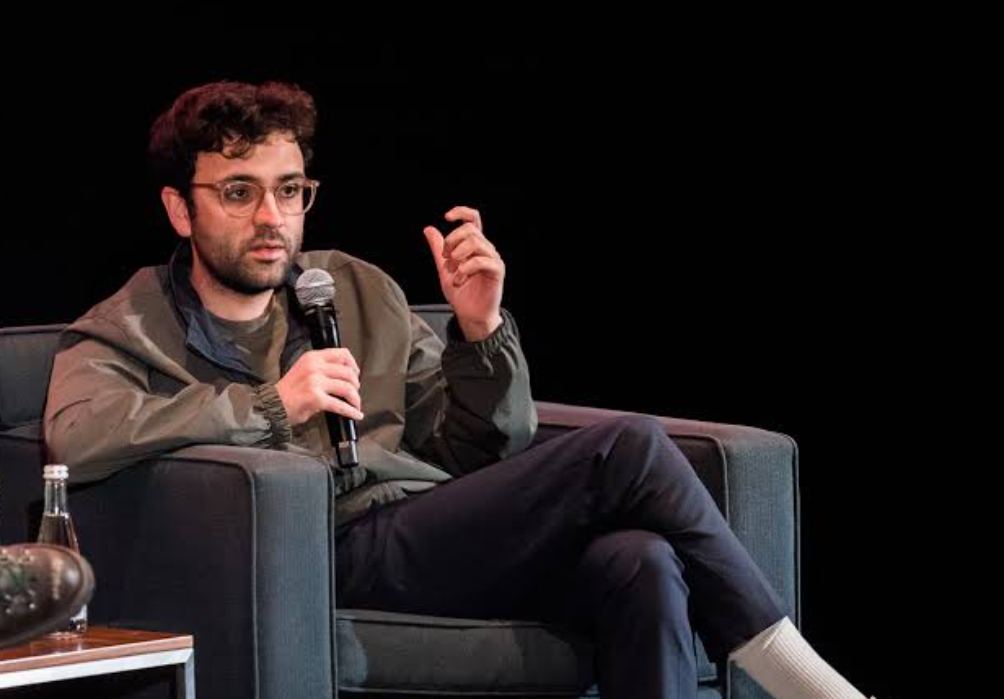
Founder Tarek Mansour declined to say whether or when the company may go public, saying only that there have been discussions. In a post on X, he said the valuation was anchored to roughly $4 billion in annualized gross revenue, or about 10 times sales. Mansour also wrote that the new capital will be used mainly for leveraged event contracts, single-stock perpetual contracts and compute-price markets.
Second $1 billion round in less than six months
This is Kalshi’s second billion-dollar financing in less than half a year. In May, the company completed a $1 billion Series F led by Coatue at a $22 billion post-money valuation. That means the company’s valuation climbed from $22 billion to $40 billion in about five months, an increase of nearly 82%.
Kalshi releases updated operating metrics
Alongside the financing announcement, Kalshi disclosed a new set of business figures. The company said annualized trading volume has exceeded $1 trillion across prediction markets, commodities, crypto and perpetual contracts. It said annualized revenue from non-sports categories has passed $1 billion, registered accounts have exceeded 30 million, and the platform now accounts for more than 75% of liquidity in the U.S. prediction market.
By segment, Kalshi said its commodities business, launched only three months ago, is already generating more than $100 million in annualized trading fees. Annualized crypto trading volume has reached $140 billion, while annualized political trading volume is above $8 billion. Since launching its perpetuals business a few months ago, the platform has recorded $83 billion in cumulative volume and attracted more than 500,000 traders.
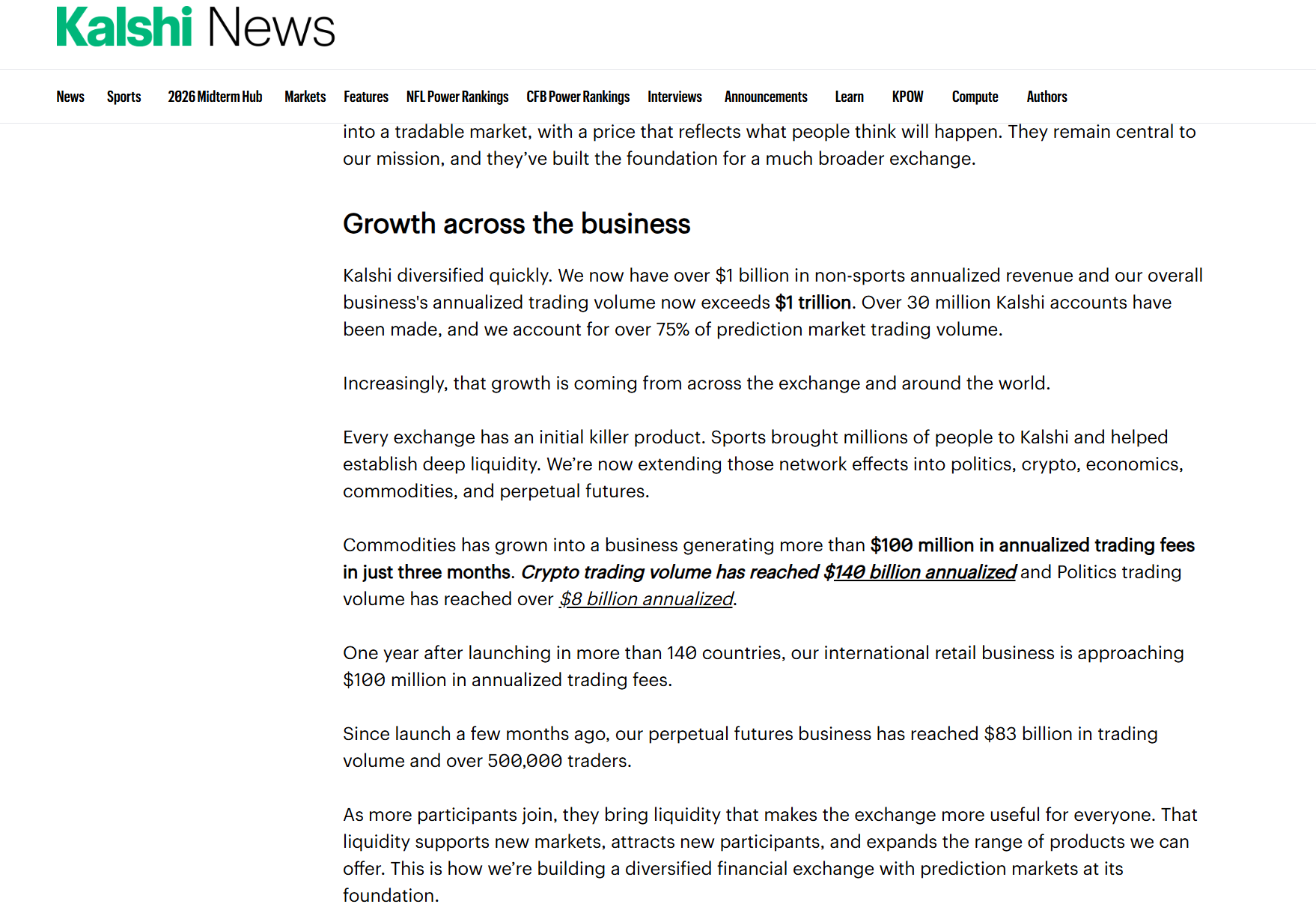
On the institutional side, Kalshi said about 500 institutional entities were active on the platform in September. Excluding market makers, those firms accounted for about 25% of total platform volume. Its international retail business, launched about a year ago and now covering more than 140 countries, is generating close to $100 million in annualized trading fees.
Those figures show how far Kalshi has moved beyond the lighter label of a sports-betting or political-event venue. The company is pushing deeper into a broader multi-asset derivatives model.
Product expansion and overseas push
Kalshi has already launched perpetual contracts tied to crypto, equity indexes and metals this year, and it has worked with S&P and other institutions to expand index-linked products. The company said it plans to add single-stock perpetuals and compute markets, while building out sales and distribution aimed at hedge funds, proprietary trading firms and other financial institutions. International expansion is focused on Latin America and Europe.
Trading data comes under fire
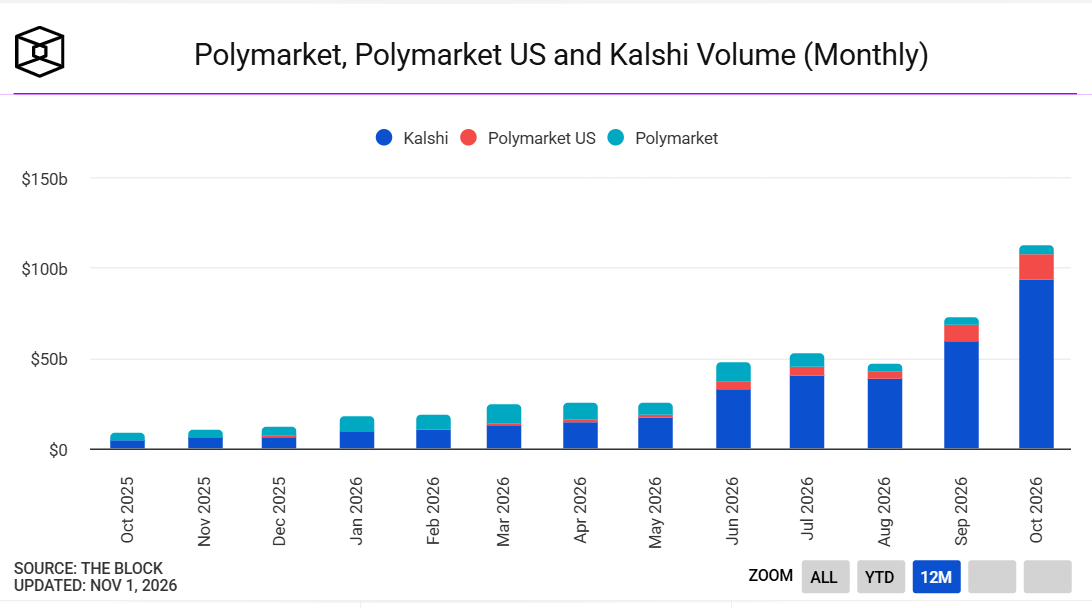
According to the latest data from The Block, Kalshi posted $93.36 billion in monthly volume over the past 30 days, well ahead of Polymarket and Polymarket US. Another set of open-interest data also showed Kalshi leading Polymarket by a wide margin on volume.
Still, some of Kalshi’s earlier figures have been challenged. On Sept. 20, Kalshi crypto lead IcoBeast.eth shared a chart showing $363.9 million in crypto volume and a 96.7% market share, far above Polymarket’s $12.3 million.
Beni, who described himself as a former quant and current co-founder of Stealth Neolab, responded with a long post accusing Kalshi of faking crypto volume. He pointed to ETH perpetuals that showed $539 million in 24-hour trading volume against only $3.1 million in open interest, a volume-to-OI ratio of 174 times. He also said repeated $5,500 trades made up 58% of total volume over four days.
Kalshi replied that prediction markets and crypto perpetuals are two different businesses. The dispute did not end there and at one point spread to event contracts as well.
Competition with Polymarket intensifies
Kalshi’s expansion is unfolding alongside a sharper rivalry with Polymarket. The report said the number of daily active markets on Kalshi rose in September, but over the past year it has mostly moved sideways and remains only slightly above the 400,000 level seen in January.
Polymarket is also preparing a new financing round. In early September, Bloomberg reported that the company had hired its first chief financial officer, Warren Jenson. The same report said Polymarket is seeking to raise $1 billion in a round led by venture firm 1789 Capital, which would value the company at $21 billion. Donald Trump Jr. is a partner at 1789 Capital and also serves as an adviser to both Polymarket and Kalshi.
In June, The New York Times also reported on the increasingly bitter commercial fight between the two companies. According to that report, Polymarket had compiled an internal file documenting roughly a dozen cases it viewed as suspiciously similar moves by Kalshi in product launches, marketing campaigns and design.
Matthew Modabber, Polymarket’s head of markets, told the New York Post that Polymarket had planned a free-food giveaway in New York on Feb. 12, but Kalshi launched a similar coupon promotion about nine days earlier. He also said Polymarket had planned to announce perpetual contracts on April 21, but about an hour before the launch, The Information reported that Kalshi was preparing a similar product.
Modabber further said that Paradigm, a Kalshi investor, has an office in Manhattan’s SoHo neighborhood directly across from Polymarket’s headquarters, with a line of sight into some of Polymarket’s floors and potentially even employee computer screens. Polymarket responded by applying window film to some windows in spring 2026. Kalshi and Paradigm later dismissed the claim as absurd.
Utah charges and the federal-state legal split
The bigger threat to Kalshi sits in the legal and regulatory arena, where its sports-related event contracts are at the center of the dispute.
Several states argue that these contracts are effectively unlicensed sports betting and should be governed by local gambling laws. Kalshi argues that, as a designated contract market, or DCM, overseen by the Commodity Futures Trading Commission, its event contracts qualify as swaps under federal commodities law and fall under the CFTC’s exclusive jurisdiction, leaving no room for state interference.
Federal appellate courts have not lined up on one side. Some circuits, including the Third Circuit, have been more receptive to federal preemption. Others, including the Ninth Circuit, have said sports event contracts look more like sports betting and should not automatically be treated as federally protected swaps. The NFL and other sports organizations have filed amicus briefs backing state efforts to get the issue reviewed by the U.S. Supreme Court.
In October, Bloomberg reported that the Utah Attorney General’s Office brought criminal charges against Kalshi and its co-founders, Tarek Mansour and Luana Lopes Lara, accusing them of illegally promoting online gambling in the state. The charges include one second-degree felony count for a pattern of unlawful activity, 12 third-degree felony counts tied to online gambling promotion, and one misdemeanor gambling-promotion count. Utah also filed a civil recovery action in state court seeking between $30 million and $60 million.
State prosecutors said an undercover investigator, while confirmed to be located in Utah, was still able to place 12 sports-event bets through Kalshi. Kalshi called the move an "insane overreach" and said it would fight the case in court.
That same month, the CFTC filed suit in federal district court in Utah seeking to stop the state from taking action against prediction markets. The broader dispute over where sports event contracts sit on the regulatory map is still unresolved, and the final answer may have to come from the Supreme Court.
Rapid growth, but a narrowing window
Kalshi now has fresh capital, a higher valuation and a wider product roadmap. It also has mounting questions around reported crypto volume, a more aggressive fight with Polymarket, and rising pressure from state gambling authorities. With the boost from the U.S. midterm election cycle nearing its limit and state-level enforcement drawing closer, the company’s next phase will depend not only on growth but on how courts redraw the legal boundary around sports event contracts.