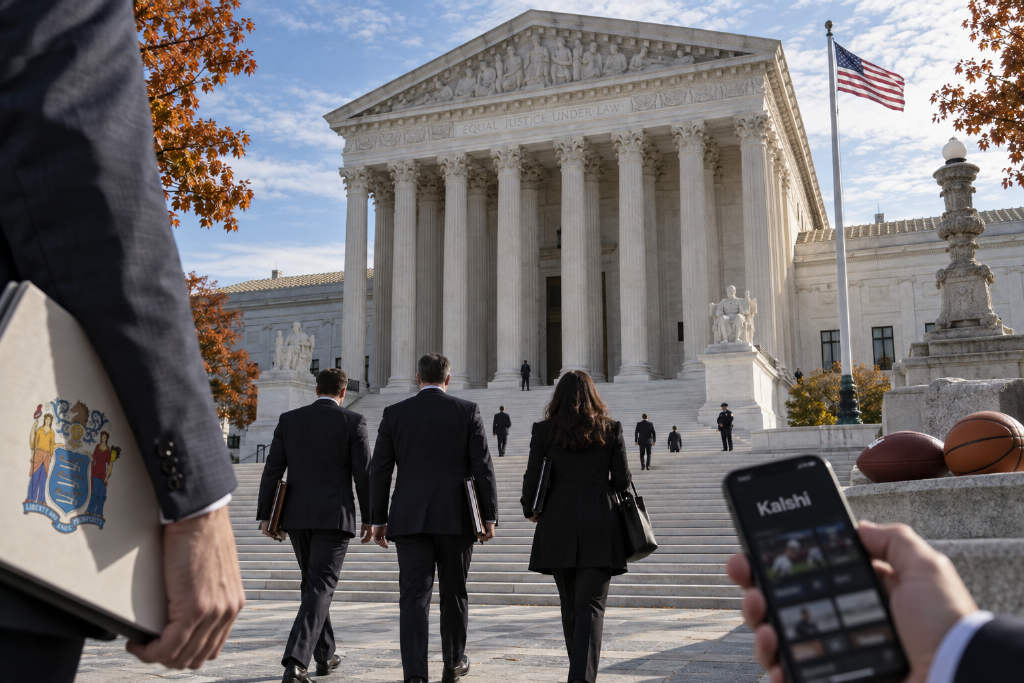
A regulatory dispute over Kalshi’s sports event contracts may be headed to the U.S. Supreme Court after two federal appeals courts reached opposite conclusions on whether individual states can regulate the products. New Jersey has already asked the court to review the matter. At the center of the case is a basic classification question: whether the contracts should be treated as federally regulated financial swaps or as products subject to state gambling laws. The distinction carries direct business consequences for Kalshi, whose sports-related contracts account for about 70% of its daily trading volume. If states are ultimately found to have regulatory authority, the company could face state taxes ranging from 10% to 51% of gambling revenue, along with other restrictions tied to local betting rules.
Two U.S. federal appeals courts have issued conflicting rulings on whether states can regulate Kalshi’s sports event contracts, and New Jersey has asked the U.S. Supreme Court to review the dispute.
The central question is whether the contracts are federally regulated financial swaps or products that should fall under state gambling laws.
Sports-related contracts account for about 70% of Kalshi’s daily trading volume. If states gain regulatory authority, Kalshi could face state taxes of 10% to 51% on gambling revenue, along with other restrictions.
This article was originally published by Bit.Fan. For more cryptocurrency news and market insights, visit www.bit.fan. Disclaimer:
The market information, project data, and third-party content displayed on this platform are for industry information sharing only and do not constitute any form of investment advice or return commitment.
Cryptocurrency trading carries high risks. Users should fully assess their risk tolerance and make independent decisions. All profits, losses, and legal responsibilities are borne by the users themselves.