
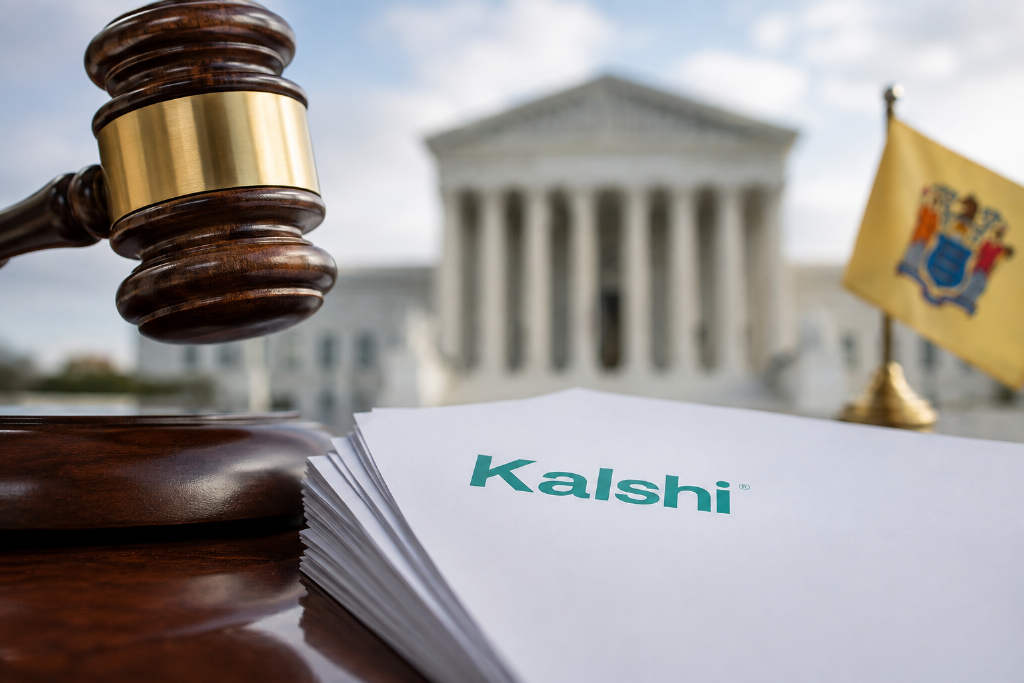
Kalshi is not letting users bet on whether New Jersey’s case against the company will reach the US Supreme Court, nor is it listing contracts on what the court would decide if it ever took the case.
That is according to Barron’s reporter Nick Devor, who wrote that Kalshi’s policy means the company "won’t have a way to hedge against the biggest risk to the company’s business." A Kalshi spokesperson told Devor that the firm could list a market on Supreme Court actions if it wanted to, "but is not doing so on principle."
Devor also said Kalshi does not want to introduce a market that it could influence itself, because doing so would violate company policy.
Appeals courts have reached different conclusions
Last Friday, an appeals court ruled in Nevada’s favor, finding that sports contracts are not swaps. That put them in the category of bets and within the scope of state regulation.
In April, however, an appeals court sided with Kalshi after the company sued New Jersey. That ruling said federal regulators such as the Commodity Futures Trading Commission, or CFTC, should have the final say over prediction markets and sports-related contracts.
Because those court decisions are split, New Jersey filed a petition with the Supreme Court this week asking it to decide "whether prediction markets can offer sports wagers without following state sports-gambling laws."
Michigan and the NFL add pressure
Michigan also moved against Kalshi this week, banning the company from offering event contracts to people in the state. It warned Kalshi that violating the new preliminary injunction could lead to a fine of $500,000 per day.
The NFL separately wrote to prediction markets yesterday and repeated that it does not want sports contracts listed if they are easy to manipulate or are "inherently objectionable."
The league said, "It is deeply concerning that bets within the objectionable categories that we identified months ago have been and continue to be listed as contracts on exchanges."
The story was first published by Protos.