
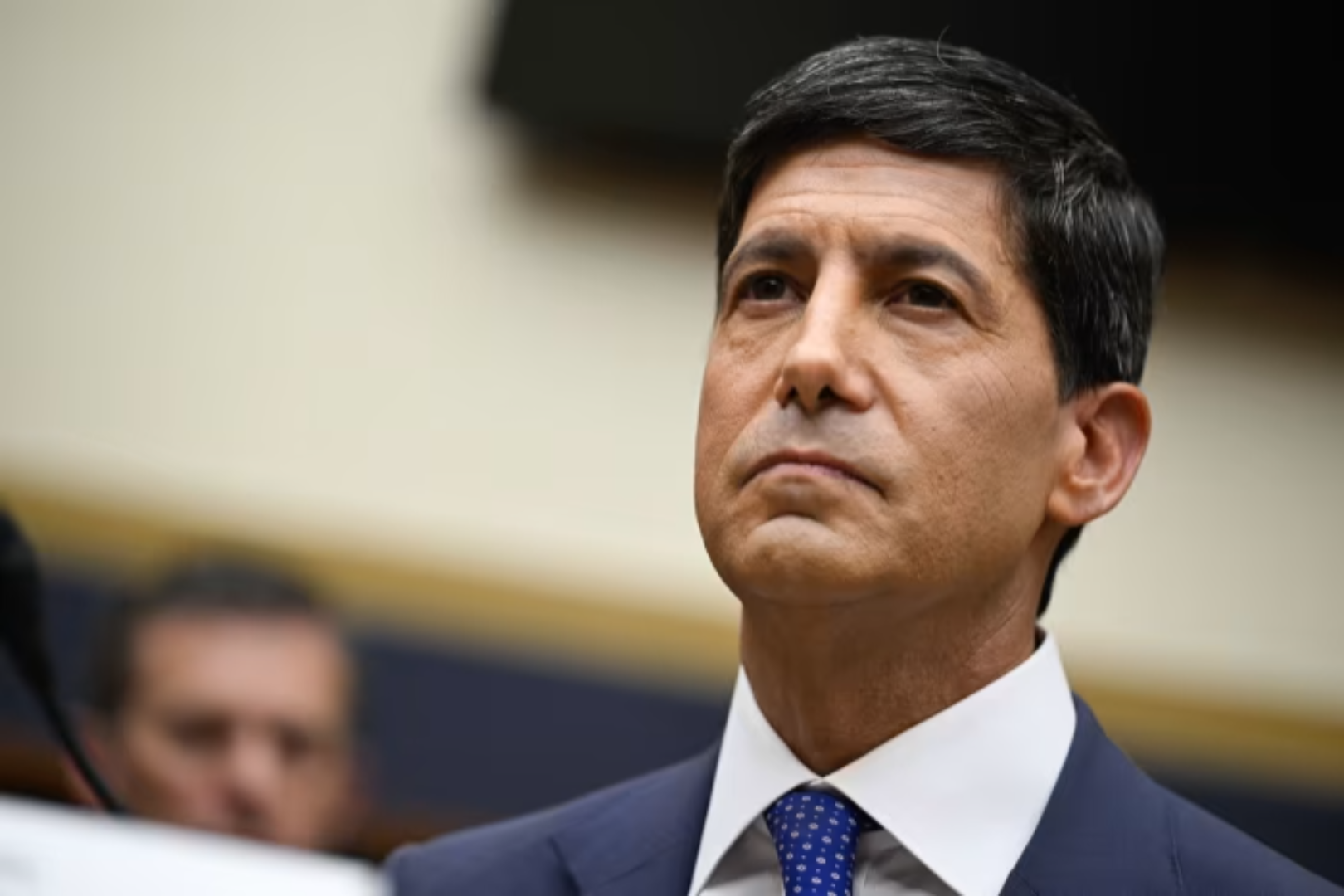
Kevin Warsh, identified in the source article as the Federal Reserve’s new chief, is facing a monetary policy choice that economist aka Shan says leaves little room for escape. In the framework cited by Wallstreetcn author Xu Chao, either decision points to a serious crisis. The difference is whether the damage shows up first in collapsing asset prices or in a breakdown in the U.S. dollar’s purchasing power.

Over the past two months, Warsh has publicly said on several occasions that he wants inflation pushed below 2% and has also acknowledged that he has “no magic wand.” The article says those remarks did little to change price trends. Futures markets moved only briefly during his speeches before returning to elevated levels.
The report adds that U.S. CPI fell below 2% only twice in the past decade, reaching 1.8% in 2019 and 1.2% in 2020. The 10-year average stayed above 3%, which aka Shan cites as evidence that the effects of long-running loose policy are now deeply embedded.
Two policy routes, one crisis outcome
In aka Shan’s view, Warsh is effectively left with two opposing choices.
One is to stay tight: keep raising rates, continue quantitative tightening, or QT, and push the government toward a balanced budget. Under that scenario, the article says, several inflated asset bubbles could break in sequence and produce what it calls a “Global Financial Crisis 2.0,” or GFC 2.0, one that would be more intense than the 2008 episode.
The other is to reverse course under recession pressure and return to zero interest rate policy, or ZIRP, together with quantitative easing, or QE. Aka Shan argues that such a move would accelerate the damage from monetary expansion to the dollar’s purchasing power and push the system toward a “Global Currency Crisis 1.0,” or GCC 1.0. He says the odds of Warsh choosing that second route are far higher once political pressure builds.
The article’s central point is that there is no real middle ground between GFC 2.0 and GCC 1.0. In this framework, either route comes with a severe recession.
Why this setup is framed as worse than 2008
If Warsh sticks to a hawkish line, the risks would not come from a single market, according to the report. Unlike 2008, when the housing bubble was the dominant fault line, aka Shan says the U.S. now faces an AI bubble, a housing bubble and a private credit bubble at the same time. He argues that each one on its own is larger than the mortgage crisis of 2008, and that a combined unwinding would hit harder than the Lehman moment.
If policy instead falls back on the Ben Bernanke playbook of ZIRP plus QE, the article says the result would be a faster decline in the dollar’s purchasing power and, eventually, a currency crisis. It notes that Bernanke received the Nobel Prize in 2022 for his response to the earlier crisis, while adding that the current U.S. predicament is, in aka Shan’s view, a direct consequence of that same easing framework.

The Cantillon Effect and the inflation argument
To support that case, the report turns to the Cantillon Effect. The idea is that new money does not spread evenly across the economy. It enters specific asset classes at different times, creating uneven price effects.
The article lists a series of balance sheet expansions between 2008 and 2020. U.S. M2 money supply rose from $7 trillion to $20 trillion. The Federal Reserve’s balance sheet grew from less than $1 trillion to nearly $8 trillion. U.S. national debt climbed from less than $10 trillion to nearly $30 trillion.
During that period, stocks, housing and bonds all posted major gains, while commodity prices moved the other way. The article says the CRB commodity index fell by nearly 75% over a decade marked by heavy monetary expansion.
The piece describes 2022 as a decisive turning point. Aka Shan argues that commodity prices, which had been suppressed in earlier years, have started to catch up with the monetary inflation built up before. His conclusion is that the United States may already be facing at least a decade of elevated inflation pressure because of historical debt accumulated through deficit expansion and artificially low rates. If monetary policy slips again on top of that, high inflation could turn into hyperinflation.
Can Warsh actually follow through
The article is skeptical that Warsh will truly carry out a hawkish program. Aka Shan says the evidence visible so far suggests that the probability is low.
He says the real test will come at what he calls a modern Lehman moment, when multiple bubbles begin to burst and the economy moves sharply into recession. At that point, the political push to restart ZIRP and QE would become intense. The question, in his framing, is whether Warsh would be willing to bear the political cost of keeping rates high, continuing balance sheet reduction and forcing fiscal consolidation.
Aka Shan’s answer is blunt. He says he sees that probability as “extremely low, close to zero.” In his telling, inflation is ultimately a policy choice, but under political constraints, the option that is more destructive and easier to execute often ends up being the one taken.