KuCoin Ventures said in its latest weekly report that the crypto market showed two notable shifts last week: attention-driven assets began appearing in batches again, and dollar liquidity conditions improved as ETF flows rebounded and stablecoin supply resumed modest growth.
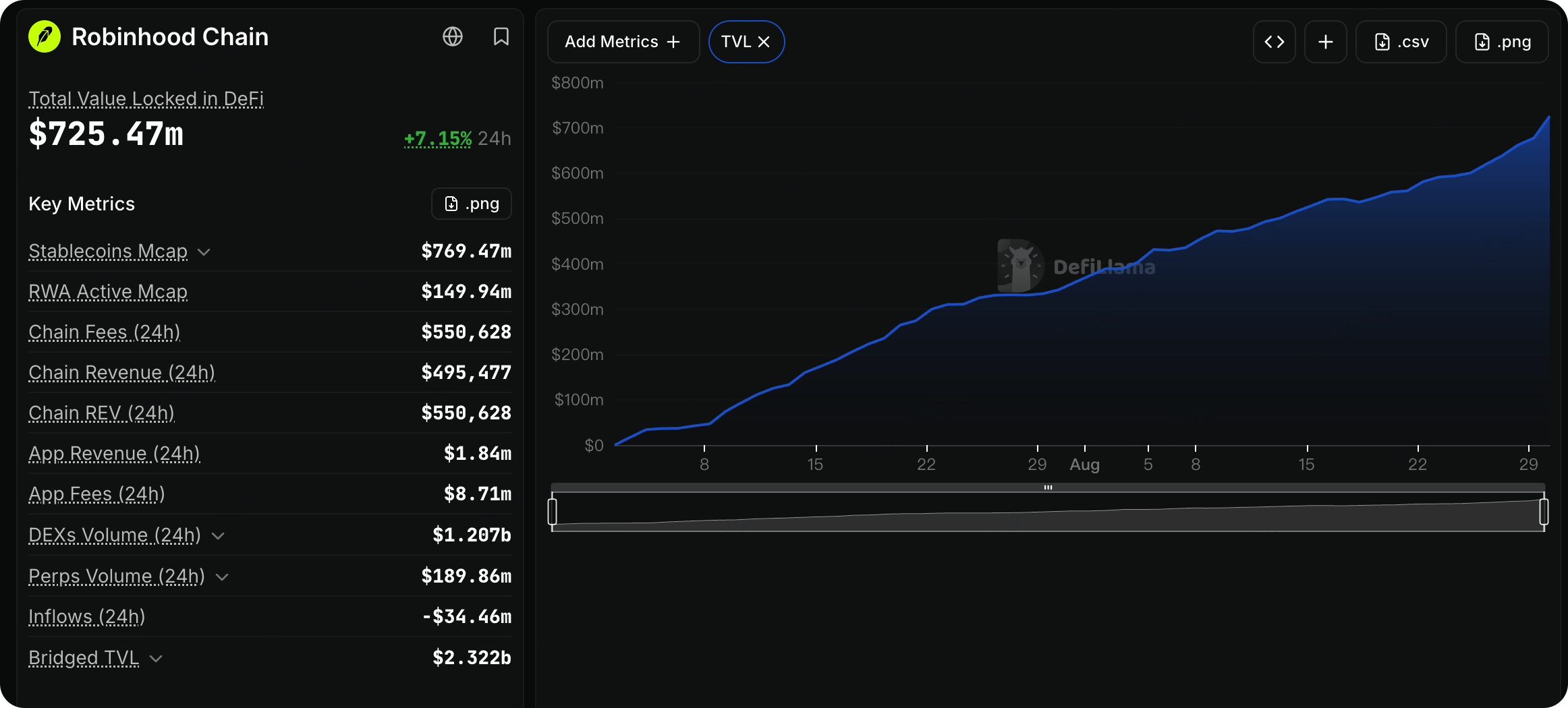
Robinhood Chain became a focal point for renewed attention trading
The report said one of the more meaningful changes was not simply the sharp volatility in a few headline tokens, but the market’s renewed willingness to notice, trade and rapidly spread a group of newly issued assets that did not exist before. KuCoin Ventures said that pattern had been relatively rare in recent months and may point to a repair in on-chain trading sentiment.
Citing DeFiLlama data, the report said Robinhood Chain recorded about $1.27 billion in DEX volume on Aug. 30, while active wallets climbed back above 115,000 and total value locked rose quickly. It also noted that all of the top 10 ecosystem tokens by market capitalization on Robinhood Chain at the time were less than two months old, with a new group of meme, launchpad and DeFi projects entering the market at the same time.
KuCoin Ventures said this cycle was not a simple repeat of the Pump.fun-style meme issuance path. In its view, the core of the new narrative comes from recombining real-world assets, or RWA, with crypto-native mechanisms. In earlier stock-token experiments, activity centered more on holding and trading the asset itself after issuance. On Robinhood Chain, the next step is now being tested: why crypto users would want to trade and hold those assets on-chain, and how stock tokens could be inserted into DeFi as part of a broader set of composable building blocks.
Pons, NET and newer RWAfi structures
The report pointed to Pons as a representative example. Described as PumpFun-like launch infrastructure, Pons initially used a familiar Bonding Curve plus AMM token issuance model, where newly issued tokens moved into permanently locked Uniswap v4 liquidity pools after reaching a threshold. More recently, it introduced a structure that allows new tokens to be paired directly with Robinhood stock tokens including NVDA, GME and AAPL. Some mechanisms also distribute trading fees to holders in supported RWAs, stablecoins or ETH.
Pons Treasury has also started providing liquidity for on-chain RWAs and describes itself as “the home of memestocks.” According to the report, the platform already shows meme markets that use NVDA Stock Token directly as the quote asset.
On top of that base layer, the market has moved into more complex RWAfi experiments. The report said NET, which recently drew market attention, reused an OlympusDAO-style treasury LP token structure. Under that setup, part of its USDG can be deployed to Morpho for yield, trading fees flow into the treasury, and game products use stock tokens such as SpaceX and Microsoft as chips and rewards.
As of Aug. 28, NET’s treasury assets stood at about $3.35 million, with net asset value of roughly $60 per NET. Its market price, however, at one point reached about $1,030, implying a premium of more than 17 times. KuCoin Ventures said that pricing clearly reflected a high level of attention and expectations for future growth, while also implying substantial downside elasticity if the flywheel were to reverse. Another project built around similar ideas, Down to Finance, is trying to go a step further by packaging stock tokens, stablecoins, Uniswap v4 LP positions and Morpho lending positions into new on-chain strategy assets.
Volatility and fast rotation remain central features
The report also stressed that this type of attention rally is marked by very high volatility and rapid rotation. After a sharp crypto market sell-off on the morning of Aug. 31, several Robinhood Chain ecosystem assets that had been hot in prior days diverged quickly. PONS briefly pushed above a $400 million market capitalization overnight before falling back to about $320 million, while AI and NET fell about 21% and 37%, respectively, over 24 hours.
KuCoin Ventures said new assets can attract heavy trading and market attention in a very short period, but price swings can be severe. In its view, that behavior reflects capital chasing attention. The report added that it is still hard to define the move as the start of a broad new meme season, because fresh attention remains concentrated in only a few ecosystems including Robinhood Chain and BSC, and the hottest assets have shown high downside sensitivity when the broader market weakens. Even so, after a long stretch of narrative vacuum, the market’s ability to incubate batches of attention tokens again and build combined RWA, launchpad, DeFi and meme frameworks is a signal worth tracking.
Warsh’s Jackson Hole remarks strengthened September rate-hike expectations
On the macro side, the report said Warsh reiterated the Federal Reserve’s 2% inflation target in his Jackson Hole remarks and said policy could still tighten if inflation does not fall quickly enough. He did not directly commit to a September hike, but KuCoin Ventures said the speech clearly strengthened expectations for additional tightening.
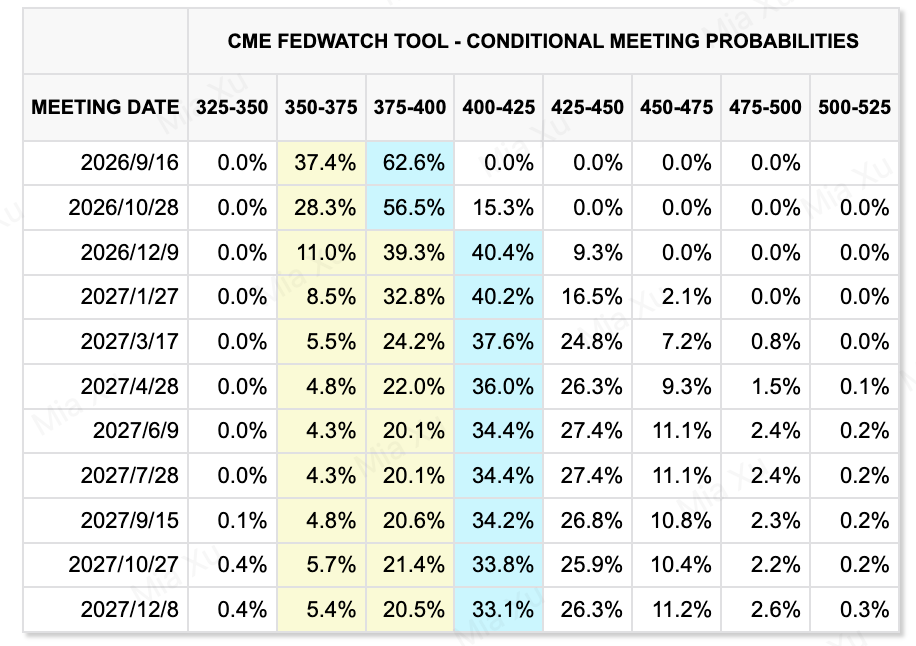
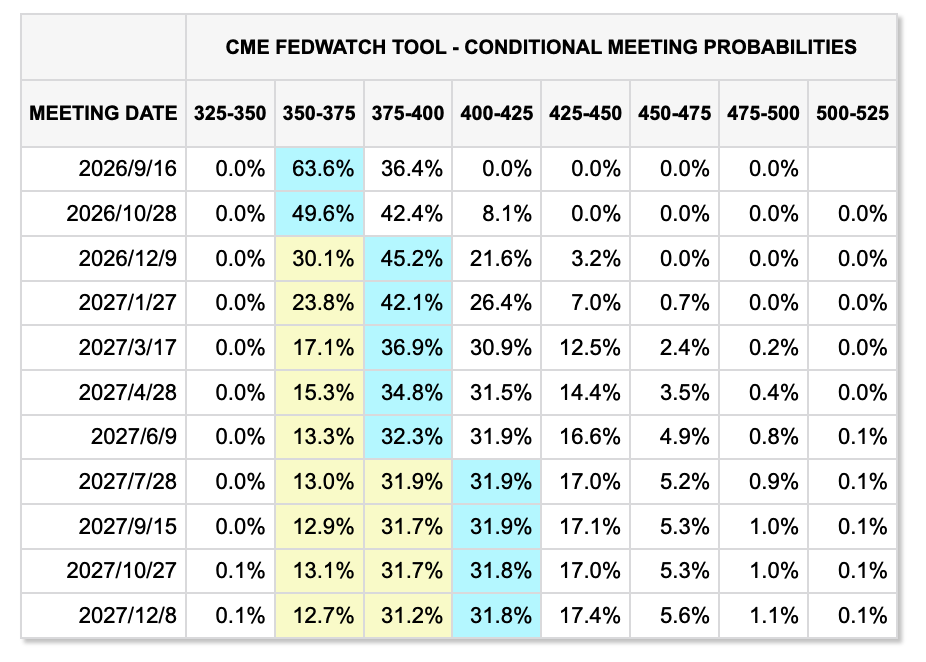
According to CME FedWatch data cited in the report, the market’s implied probability of a 25 basis point hike in September was about 36% before the speech. It later climbed to nearly 60% and remained above 50% over the weekend. U.S. 2-year Treasury yields and the dollar both moved higher, which the report said showed a shift away from the earlier view that the Fed would most likely stay on hold in September.
At the same time, labor data is acting as a counterweight. The report said the latest annual benchmark revision in the U.S. lowered nonfarm payrolls by about 79,000 through March 2026. It said the size of that single revision was not especially unusual, but noted a more important pattern: employment data has been revised lower repeatedly in recent months, and July nonfarm payrolls also turned negative. In KuCoin Ventures’ reading, that points to a cooling labor market, forcing the Fed to weigh the economic and employment costs of further tightening even if inflation remains a concern.
For that reason, the report said a September rate hike is still not fully decided. Inflation and financial conditions leave room for the Fed to tighten, but continued labor-market weakness could reduce the need for immediate action. August payrolls and CPI, both due before the September meeting, were described as the key data points for the next repricing round.
Yen pressure, gold, oil and U.S. equities
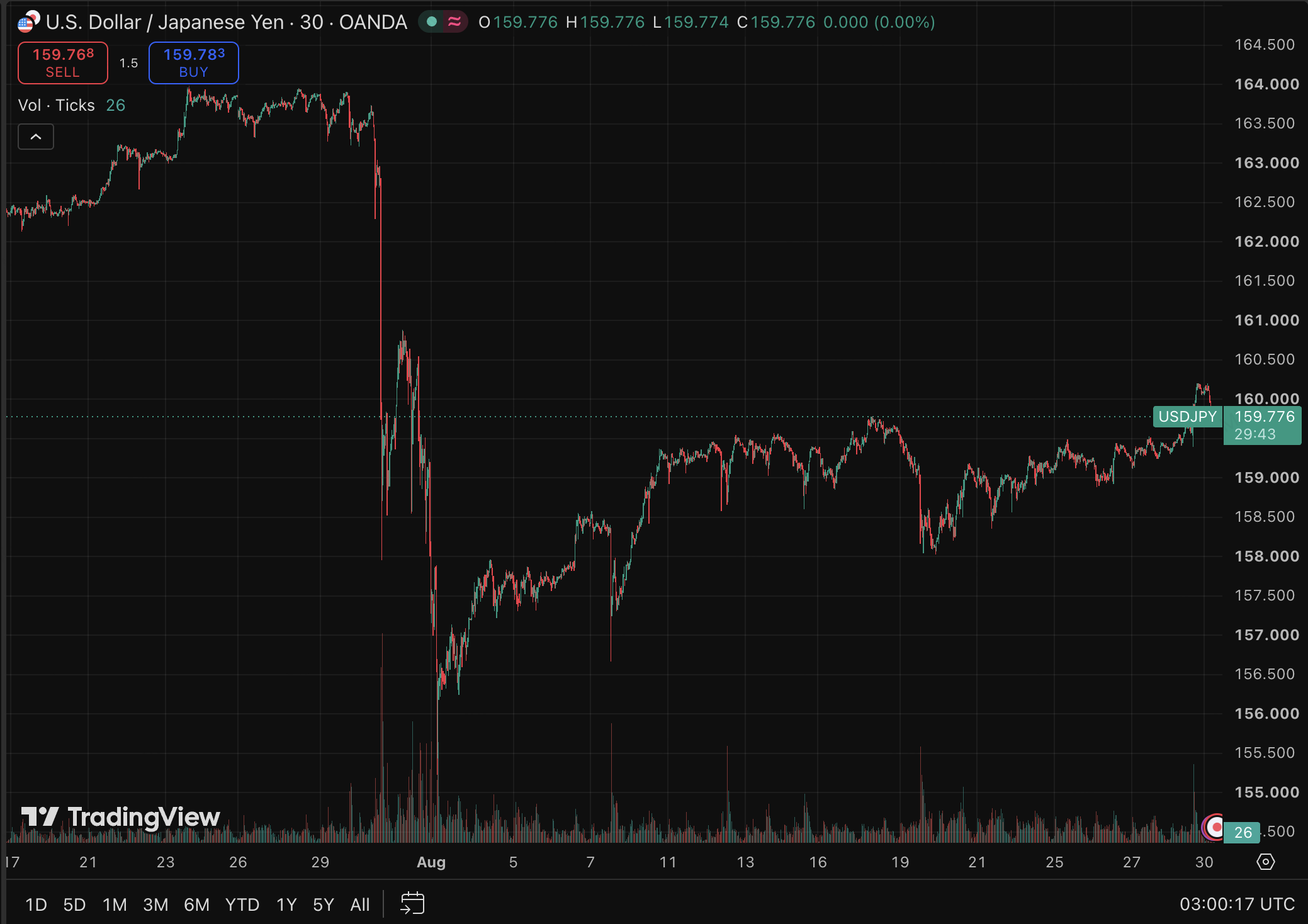
In foreign exchange, the report said Japan spent about JPY 15.4 trillion from late July to late August to support its currency. After Warsh’s remarks pushed both the dollar and Treasury yields higher again, USD/JPY moved back toward and then above 160. KuCoin Ventures said that showed how FX intervention alone can only slow yen depreciation for a period, while the large U.S.-Japan rate gap limits the lasting effect. If Japan relies more on rate hikes to narrow that gap, carry trades funded by low-cost yen could face further deleveraging, creating potential liquidity pressure for high-volatility assets such as technology stocks and crypto.
Gold rose earlier in the week on fiscal-risk concerns and expectations for a weaker dollar, then gave back those gains after rate-hike expectations climbed again following Warsh’s speech, ending the week lower. The report said gold’s medium- to long-term fiscal-hedge case remains intact, but short-term pricing is still highly sensitive to the dollar and real yields. As long as markets return to pricing “higher rates for longer,” gold can see sharp pullbacks.
Oil prices retreated after marginal improvement in transport conditions through the Strait of Hormuz, with WTI and Brent falling about 4.2% and 5.4% last week, respectively. But after the U.S. military struck Iran again on Aug. 30 for the first time in more than a month, tensions escalated and Brent moved back above $90. KuCoin Ventures said oil is still being driven mainly by Hormuz transit conditions and U.S.-Iran military action, and that the earlier pullback reflected a temporary decline in geopolitical risk premium rather than the disappearance of supply risk.
U.S. equities remained resilient overall, with the S&P 500, Nasdaq and Dow all posting modest weekly gains. Nvidia’s earnings continued to validate demand for AI infrastructure and eased concerns that the capital-expenditure cycle had peaked, the report said. Even so, technology stocks came under pressure again after Warsh’s remarks. KuCoin Ventures said the message from price action is that AI fundamentals remain firm, but valuations are still constrained by rates and funding costs. It added that AI trading is moving beyond a simple focus on capex size and is now testing whether revenue growth, gross margins and cash flow can support continued expansion in investment.
BTC returned to $80,000 as ETF flows rebounded
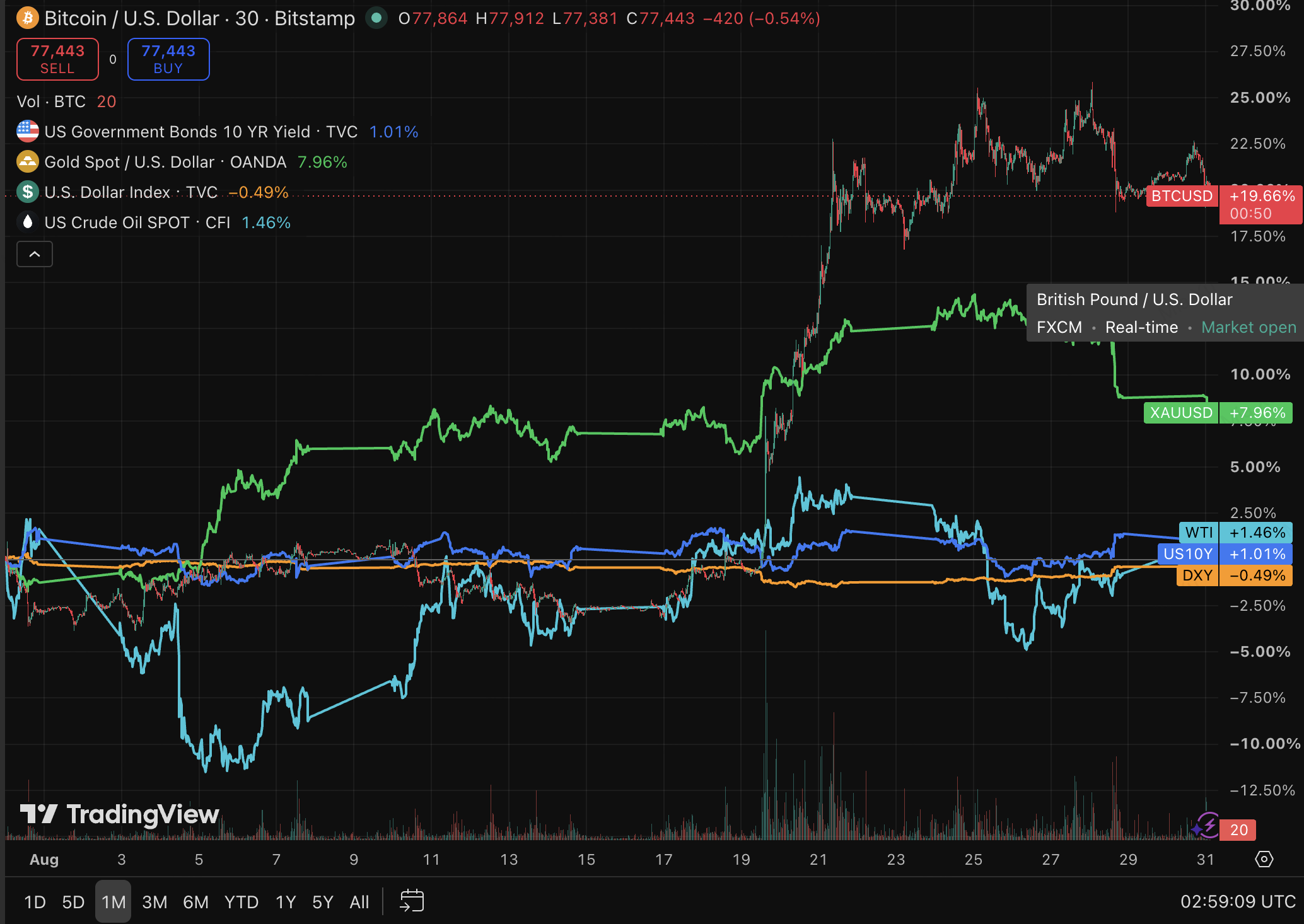
In crypto, KuCoin Ventures said the market repaired sharply over the week. BTC briefly moved back above $80,000 in the middle of the week, its first return to that level since mid-May. ETH traded near $2,500 over the same period and outperformed on a relative basis. The report attributed the rebound to a weaker dollar earlier in the period, growing trades around fiscal and monetary debasement, and renewed institutional inflows.
Still, after Warsh’s remarks pushed rate expectations higher again, BTC quickly slipped back toward $78,000. The report said that even with clear improvement in crypto-specific flows, the market remains tied to the macro influence of the dollar and real yields.
Using SoSoValue data, the report said U.S. spot BTC ETFs recorded about $924.5 million in net inflows from Aug. 24 to Aug. 28. The first four trading days of the week all saw inflows, but the day of Warsh’s speech flipped to roughly $201.8 million in net outflows. BlackRock’s IBIT brought in about $938 million for the week and was the main incremental driver.
Spot ETH ETFs recorded about $824.4 million in net inflows over the same period, the strongest weekly performance of 2026, according to the report. BlackRock’s ETHA contributed about $567 million during the week. Even after the market raised September rate-hike expectations again on Friday, ETH ETFs still posted net inflows that day.
KuCoin Ventures said ETF flows have shifted from scattered replenishment in earlier weeks to more visible institutional allocation, with ETH showing especially strong flow intensity relative to its market size. But BTC’s Friday outflows and its quick drop back below $80,000 also show that institutional buying is improving downside support rather than fully offsetting pressure from higher rates.
Stablecoin market cap resumed growth
DeFiLlama data cited in the report showed total stablecoin market capitalization at about $304.6 billion, up about 0.48% over seven days and 1.51% over 30 days. USDT’s market share stood at about 60.2%. KuCoin Ventures said that after several weeks of contraction or stagnation, stablecoin supply has started to add mild incremental growth again, which, together with ETF inflows, points to improving dollar liquidity in crypto.
Among the top 10 stablecoins, USDT was essentially flat and USDC rose about 0.76% week over week. USD1 grew about 4.1%, while BUIDL rose about 7.9%, with fresh issuance concentrated more in products backed by distribution channels or real-world yield. By contrast, USYC and PYUSD fell about 5.0% and 3.8%, showing continued capital rotation within the stablecoin category.
The report said stablecoin signals improved this week compared with earlier readings: both total supply and mainstream USDC turned positive. That suggests demand for incremental on-chain dollars is recovering, though KuCoin Ventures said more time is needed to know whether the trend will last.
Key events to watch this week
The report said this week’s macro focus centers on U.S. labor data and September rate pricing, AI chip earnings and OPEC+ supply policy. August nonfarm payrolls were described as one of the most important labor releases ahead of the September FOMC meeting and a direct input into how markets price the tightening risk revived by Warsh’s remarks.
- Sept. 1: U.S. JOLTS job openings data, to gauge whether labor demand is cooling further.
- Sept. 2: U.S. ADP private payrolls data, an advance signal for nonfarm payrolls.
- Sept. 3: The Federal Reserve’s Beige Book and Broadcom earnings, with attention on AI custom chips and networking.
- Sept. 4: U.S. August nonfarm payrolls, unemployment rate and average hourly earnings. The report said a clear downside surprise in employment could quickly reduce the odds of a September hike, while resilient labor and wage data could strengthen tightening expectations.
- Sept. 6: The monthly OPEC+ meeting. With U.S.-Iran tensions heating up again, the pace of supply increases could affect oil risk premium and inflation expectations.
KuCoin Ventures said the core macro question this week is whether the labor market can support a rate hike. Weaker employment would help push down the dollar and rates, supporting technology shares and crypto assets. If labor remains resilient and oil rises, the higher-rate backdrop could harden again.
Private-market funding rose, led by strategic and infrastructure deals
The report said broad primary-market fundraising rebounded last week, but the increase was driven mainly by a small number of large strategic and growth-equity transactions rather than a full recovery in early-stage crypto venture risk appetite.
SBI Holdings made a $270 million strategic investment in Indonesian integrated investment platform Ajaib Group and acquired about 20% equity, making it one of the largest deals of the week. The report said Ajaib spans stocks, bonds, funds, crypto, stablecoins, payments and institutional stablecoin settlement, making it closer to a multi-asset financial platform that combines traditional finance and digital assets than to a single-vertical crypto project. In KuCoin Ventures’ view, deals of that kind show capital still prefers mature platforms with users, licenses and distribution.
RQD Clearing, a clearing and custody infrastructure provider, raised $74 million in a round led by Bain Capital Tech Opportunities. The capital will be used to expand clearing, custody and digital-asset and tokenization products. The report said that as tokenized securities and 24/7 trading expand, clearing, custody and institutional connectivity are becoming more important infrastructure areas for investors.
Among crypto-native projects, Entropy.io raised $14 million in a round led by Ribbit Capital. The project is building perpetual markets for non-standard assets such as pre-IPO names and stock indices on Hyperliquid HIP-3, aiming to provide continuous price discovery for assets in traditional markets that are otherwise difficult to trade directly.
KuCoin Ventures said last week’s deals highlighted three preferences: mature multi-asset financial gateways, institutional clearing and tokenization infrastructure, and on-chain tools that can convert non-standard assets such as pre-IPO and RWA exposure into tradable markets. By contrast, fundraising conditions remain cautious for general-purpose protocols without real users, revenue or distribution.
About KuCoin Ventures
The report said KuCoin Ventures is the main investment arm of KuCoin exchange. KuCoin describes itself as a global cryptocurrency exchange serving more than 40 million users across over 200 countries and regions. KuCoin Ventures said it focuses on Web3.0 infrastructure, artificial intelligence, consumer applications, decentralized finance and payment finance, and works closely with portfolio projects across their lifecycle with both financial and strategic support.
The report also included a disclaimer saying the material is for general market information only and may contain information from third-party, commercial or sponsored sources. It said the content does not constitute legal, compliance, financial or investment advice, and that investing and trading involve risk.