

Kyle, a researcher at DefiLlama, says the 2026 cycle may finally be the one in which the market starts favoring crypto assets backed by fundamentals. He argues that this idea is not new. Since the earliest smart contracts, early DeFi supporters had imagined moving financial infrastructure for institutions onto blockchains. What repeated cycles showed instead, he writes, was that the timing was early and most market participants mainly wanted price appreciation.
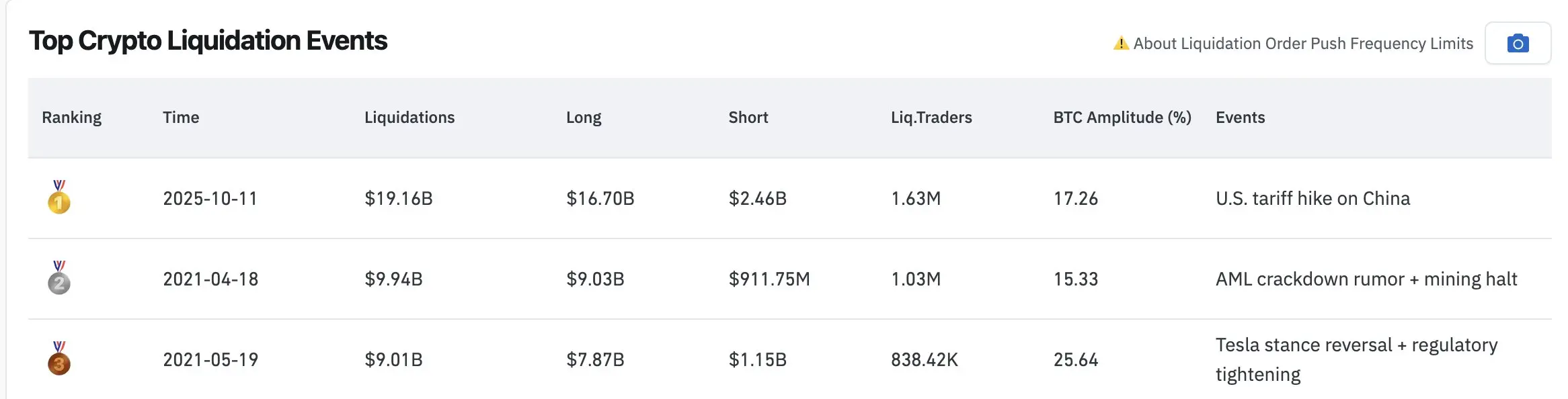
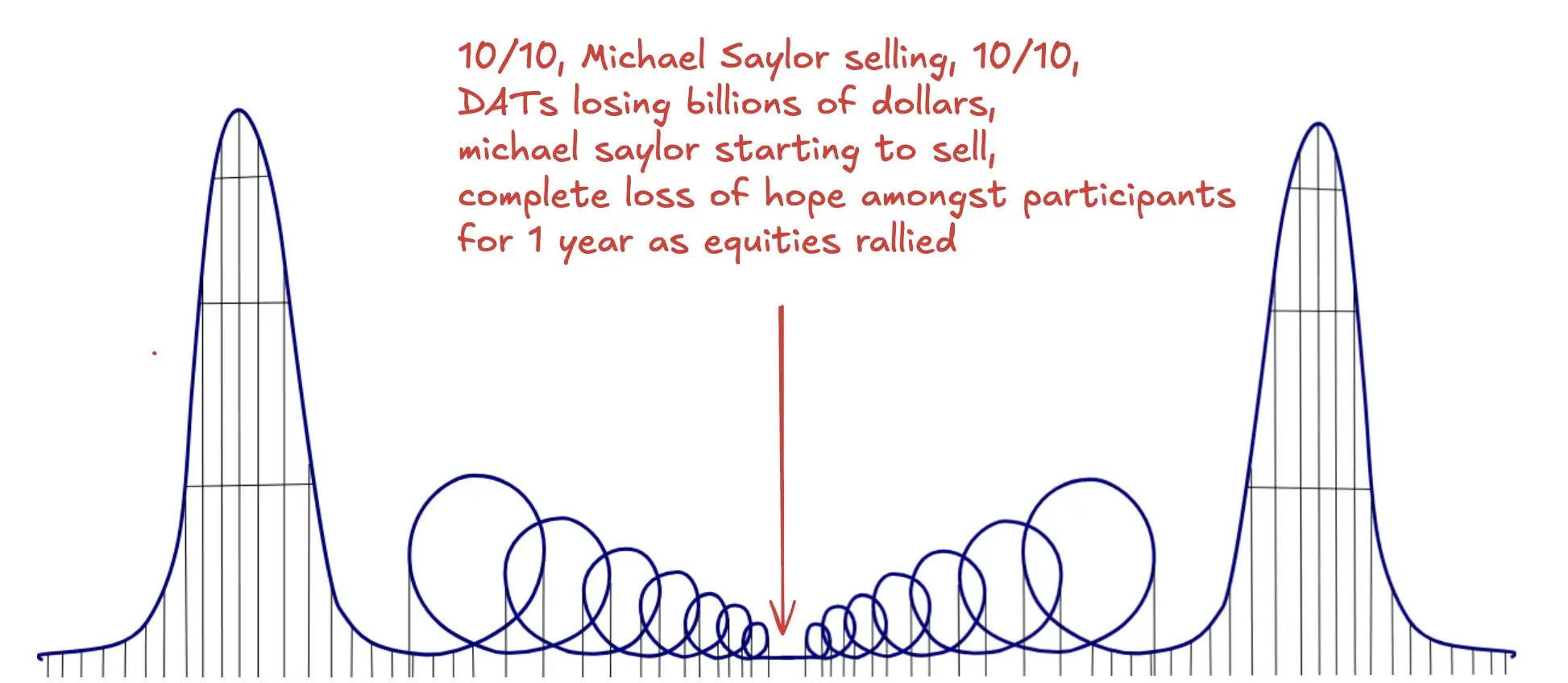
He points in particular to the 2025 cycle, when many traders thought a turning point had arrived. Donald Trump had just been elected, Gary Gensler was out, and the White House had a crypto czar. What many expected did not happen. In Kyle’s telling, the Trump token pulled billions of dollars out of the crypto market, digital asset treasury companies, or DATs, helped shape a double-top pattern with two failed rallies, and then Oct. 10 delivered the final blow: what he described as the largest liquidation event in history, arriving with little warning.
At the same time, equities were moving higher, especially semiconductor and memory-chip names. The S&P kept printing record highs, and sentiment around the broader economy was relatively upbeat. The result, he says, was straightforward: many crypto veterans walked away from the market, and he counted himself among them.
Looking back, Kyle says weak token prices, project shutdowns, repeated DeFi hacks and the exit of many capital allocators were all signs of a bear-market bottom. What made that bear market harsher was the destruction of hope. The industry had been waiting for traditional finance to enter. Instead, he writes, a president used a token to extract value from the market, while parts of crypto dressed themselves up in traditional finance clothing and used Nasdaq-listed holding companies to sell assets to another group of crypto buyers.
That experience, in his view, left many market participants carrying trauma into the current cycle. He says friends later persuaded him to return to crypto. The deeper issue, he argues, is not that long-time participants stopped understanding the opportunity. They have simply lived through too many disappointments to rebuild conviction easily. Every real upcycle begins by climbing a wall of worry.
Kyle believes something larger is now taking shape. He says the era many crypto participants knew is ending and a new one is beginning, with what he calls the “internet capital market” starting to form. Over the next few cycles, he expects the focus to shift toward the overlap between traditional financial markets and internet-native assets that carry equity-like characteristics.
His broader point is that the constraint has been timing more than growth. Even when prices did not rise, he says, adoption and real usage of crypto technology continued to expand.
Investment strategy: stretch the time horizon
If the problem is mostly timing rather than the absence of real use cases, Kyle says the first step for investors is to lengthen their time horizon and prepare for sharper volatility than in previous cycles.
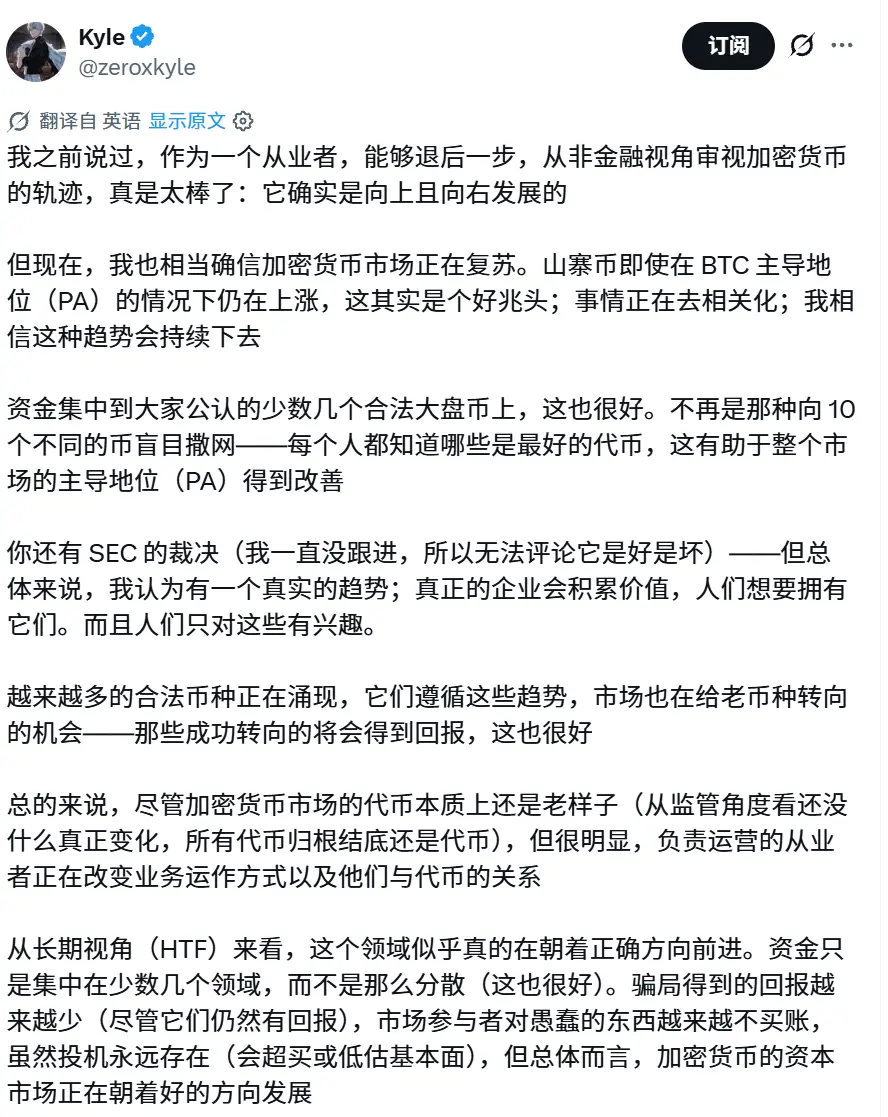
He adds that lessons from the stock market over the past year can help. In his view, the world increasingly resembles a speculative game, with many markets dominated by bubbles in speculative assets. The Benjamin Graham style of value investing focused on fundamentals and undervaluation has moved into the background.
On that point, he strongly recommends 0xSmac’s essay, Let The Bubble Wash Over You.
He also argues that macro headlines now move markets more often. Almost every week, he says, there is a new source of volatility: Trump reaching a deal with Iran, 10-year Treasury yields rising to levels “not seen since 1990,” a currency crisis possibly tied to the yen, arguments over AI pessimism versus accelerationism, and fresh geopolitical uncertainty.
That is why he favors a longer holding period. The point is to reduce the impact of short-term noise. He says markets have always been noisy and will remain that way, but this approach has worked in equities and could become a core strategy for crypto as well. Hyperliquid’s HYPE, in his words, was the first token that genuinely made dollar-cost averaging look viable.
Why most tokens have not worked as long-term holdings
Kyle says asset selection matters more in crypto than almost anywhere else. For years, the default belief in the market was simple: everything is a scam, everything goes to zero, so you need to sell. For most of crypto’s history, he says, that view was largely correct. Hyperliquid opened a different path by showing that some assets may actually be worth accumulating over time.
He sees that as a major change in market structure. Many altcoins have not been appropriate long-term holdings for an obvious reason: few investors want to keep buying an asset that could fall 90%. In the stock market, time can work in the investor’s favor because the underlying business may keep growing. The logic behind regularly buying the S&P is built on that idea.
Once crypto businesses started to show sustained growth, digital assets began to gain a real foundation for long-term ownership. He describes the mechanism as a feedback loop: business growth attracts investment capital, capital pushes price higher, and price strength can help accelerate business growth. That, he says, is how an internet capital market starts to emerge.
He also says crypto has long functioned as a lemons market, where buyers struggle to tell good assets from bad ones and lower-quality projects crowd out better ones. He lists several structural reasons:
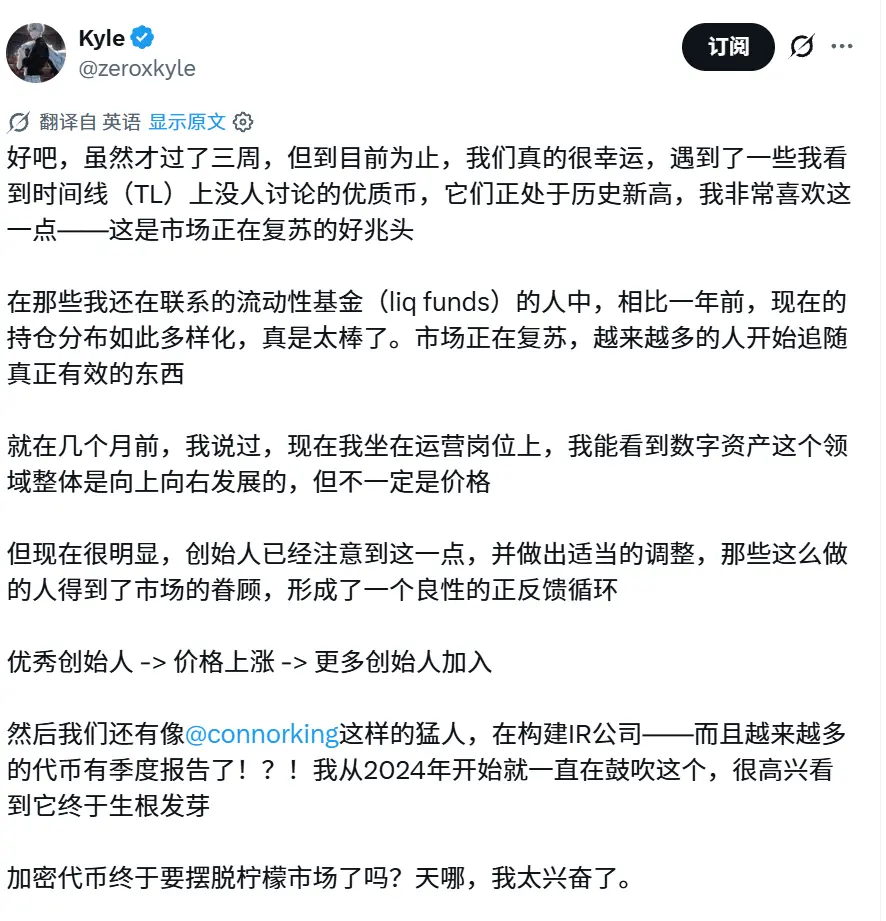
- Low-float, high-FDV tokens often come with large unlock schedules and persistent sell pressure over several years. Even if a project executes well, there is still a line of sellers waiting.
- Many projects cannot generate profits. Their products do not truly meet market demand, so they cannot compound through growth and have to lean on short-lived narratives that fit bubble conditions.
- Tokenholders and company shareholders are often misaligned. Much of the value produced by the business flows to equity holders, while the token functions mostly as a marketing instrument.
- Disclosure is weak and accountability is limited. Public companies must report revenue, insider selling and risks, while false reporting carries consequences. In crypto, insiders, VCs and market makers often know the unlock schedules, OTC deals and real numbers. Teams can sell tokens, fake metrics or disappear, while investors have little recourse.
What makes a good token
Kyle says the market may finally be finding ways to repair that lemons problem. Investors have become more demanding, and that pressure is giving founders and operators a clearer signal on what needs fixing.
He uses Ethena as an example and lists several steps the team has taken:
- Buying back tokens from early investors who had sold.
- Aligning tokenholders with equity by placing the protocol’s intellectual property and the value it creates under the foundation, governed by tokenholders.
- Proposing an automated ENA buyback using protocol revenue.
- Ending monthly VC unlocks after the Ethena Foundation and major investors agreed to release still-unvested tokens and remove the old month-by-month unlock schedule.
The market responded, he notes. ENA rose 95% over the past 14 days, creating the sort of positive feedback loop he is looking for.
From there, his framework is clear: buy projects that have solved the lemons-market problem and avoid the ones that have not. He does not present the list as a set of absolute rules, but he says strong teams should meet most of these standards, ideally all of them.
The first requirement is value sharing. Tokenholders need a path to participate in the value created by the business. He says some projects with both equity and tokens can still work if the economic arrangement is fair, and cites Venice as an example. At a minimum, investors need to see two things: the team genuinely cares about the token, and the team is not shifting value that should belong to the token over to equity holders.
The second requirement is real demand and profitability. A product that meets the market and can keep growing is what attracts capital. He puts the logic in simple terms: people buy assets they think can go up, and that appreciation comes either from multiple expansion or earnings growth. Companies do not control valuation multiples very much; those depend on sentiment, narratives and interest rates. Growing earnings, by contrast, are the base of long-term value creation.
The third area is token supply. Kyle says there is no single answer that works across every project. Some tokens with little overhang still perform poorly, while some with moderate overhang do fine. But large potential sell pressure is generally a negative because it caps upside. The best teams do not just accept that; they try to solve it, as Ethena did by buying back investor-held tokens.
He adds a few bonuses. Buybacks can matter, though he says size only becomes a major factor in cases like Hyperliquid where the program is very large. In many protocols, reinvesting into the business may be the better use of funds. Buybacks are also a signal to the market that founders care about the token, but they need the right scale. Too small and they achieve little; too large and they can take resources away from growth. Buybacks alone do not create much value if the rest of the business does not support them.
Transparency and investor relations are another core consideration. Kyle says this should effectively be a requirement. If a project wants people to hold its token, it should clearly explain what the token does and why it matters. Public companies already do this through quarterly earnings and investor calls. Projects asking the market for capital should offer comparable disclosure and communication.
He acknowledges there may be other factors he has missed, but says these are the first ones he checks. His conclusion is that crypto is repairing itself. Real businesses are appearing, teams are making token economics and supply structures more workable, and the market is starting to reward quality instead of pure hype. For the first time, digital assets are beginning to look like instruments that can be owned for the long run rather than traded only as momentum vehicles. That only applies, he says, if you own the right ones.
There are still many low-quality projects in the market. That is why selection matters more than ever. His strategy is blunt: buy good assets, keep holding through the noise, and let time do the work.
How he looks for opportunities: sector first, team second
Kyle then moves to where he sees the best opportunities. He compares the market to a buffet of sashimi, where one plate may be bluefin tuna cheek and the rest may just be average cuts. The task is to identify the scarce one.
He says the easiest way to approach the market is to rank sectors before ranking individual projects. Only a small number of themes, in his view, have actually proved product-market fit. He also notes that he excludes areas where investors do not currently have a liquid token available in the secondary market, such as prediction markets.
He separately revisits his view on onchain markets. Put simply, he says that aside from a small handful of good tokens, most onchain projects are not worth much time.
His reasoning is tied to AI-assisted software development. AI is well suited to small, niche products that can be built and shipped quickly, but much harder to deploy across large enterprises. That has created an odd split: big companies have not shown dramatic productivity gains yet, while small startup teams are already shipping rapidly with AI, leading to a stronger K-shaped divergence in productivity gains.
Onchain, that makes the lemons problem worse. In the past, investors could at least say a polished website suggested some effort had gone into the project. Now that surface-level polish is nearly free. Every token below a $10 million market cap can look refined on the surface, whether it is backed by a real team or a scam.
Ideas themselves have become cheaper as well. After Orbio reached a new all-time high, he says, 20 different inference-market projects appeared, and 200 more could easily follow because anyone can hand Orbio’s website to AI and ask for a copy.
That changes the source of edge. Onchain investing can no longer depend on the software alone. It has to come from the team: who they are, whether they can execute, and whether they can keep delivering. Founder quality now matters most. For that reason, he says it is easier to invest in tokens that have already reached some scale than to hunt endlessly through microcaps. A project that has grown to a meaningful valuation has already proven something. Studying 100 tokens above a $1 billion market cap and finding the better ones is, in his view, easier than studying 10,000 tokens below $10 million with a new “good idea” appearing every hour.
Six sectors and the tokens he favors
AI inference: real demand from outside crypto
Kyle defines AI inference as the process in which a trained model handles requests and generates outputs. He calls it the only crypto sector with genuine demand that comes from outside the crypto industry. Individuals and businesses pay for AI because they need it, not because a token reward is attached.
As open-weight models improve and costs keep falling, he says, providing AI services becomes cheaper too, giving companies a way to compete with large AI firms on price and privacy.
He also sees it as a theme retail investors can understand quickly. Everyone uses AI. The explosive growth seen in some related assets is, for him, evidence that the products are meeting demand. He says current inference demand reflects Jevons paradox: lower costs drive more usage, which in turn lifts total demand. The data, in his view, points in that direction.
He adds that users appear to be moving away from only the frontier models toward other kinds of AI, including open-source models. Open models may face regulatory scrutiny, but he says many are already good enough for 99% of work. Most users want AI, not necessarily the most advanced branded model available.
That leads him to a sharper conclusion. If an investor wants exposure to a good AI product while also betting directly on rising inference demand, he says investable crypto tokens may be one of the few practical tools. Semiconductors benefit only indirectly, and much of that expectation is already reflected in prices. Anthropic and OpenAI are not public. He says investors can go long Zhipu, but Hong Kong does not offer the same valuation premium. Some tokens, by contrast, provide a more direct way to express the theme.
His top picks here are VVV and ORBIO, with NEAR and CHIP as other options. He also recommends a report from Galaxy.
Tokenized stocks and RWA: a very large runway
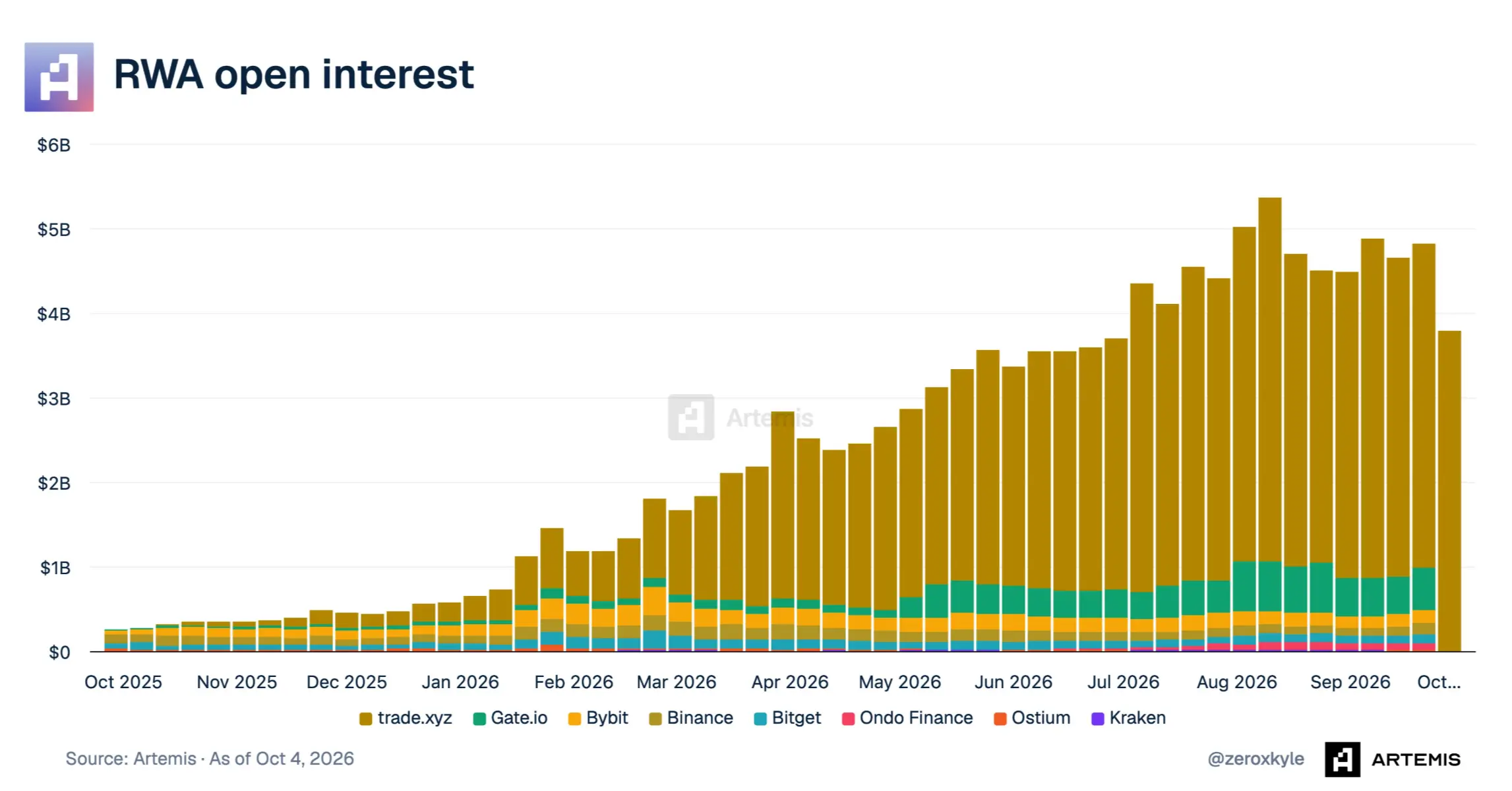
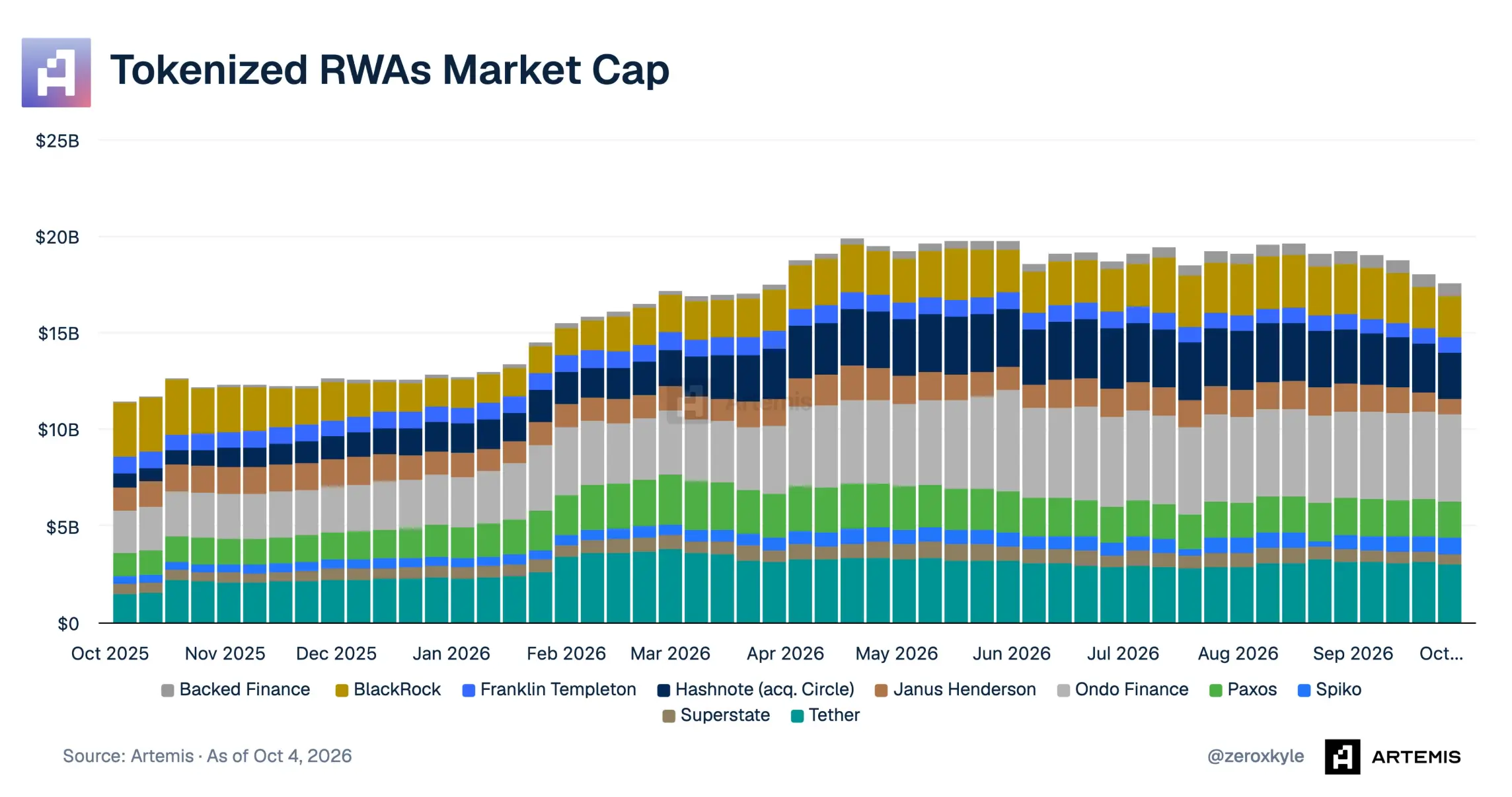
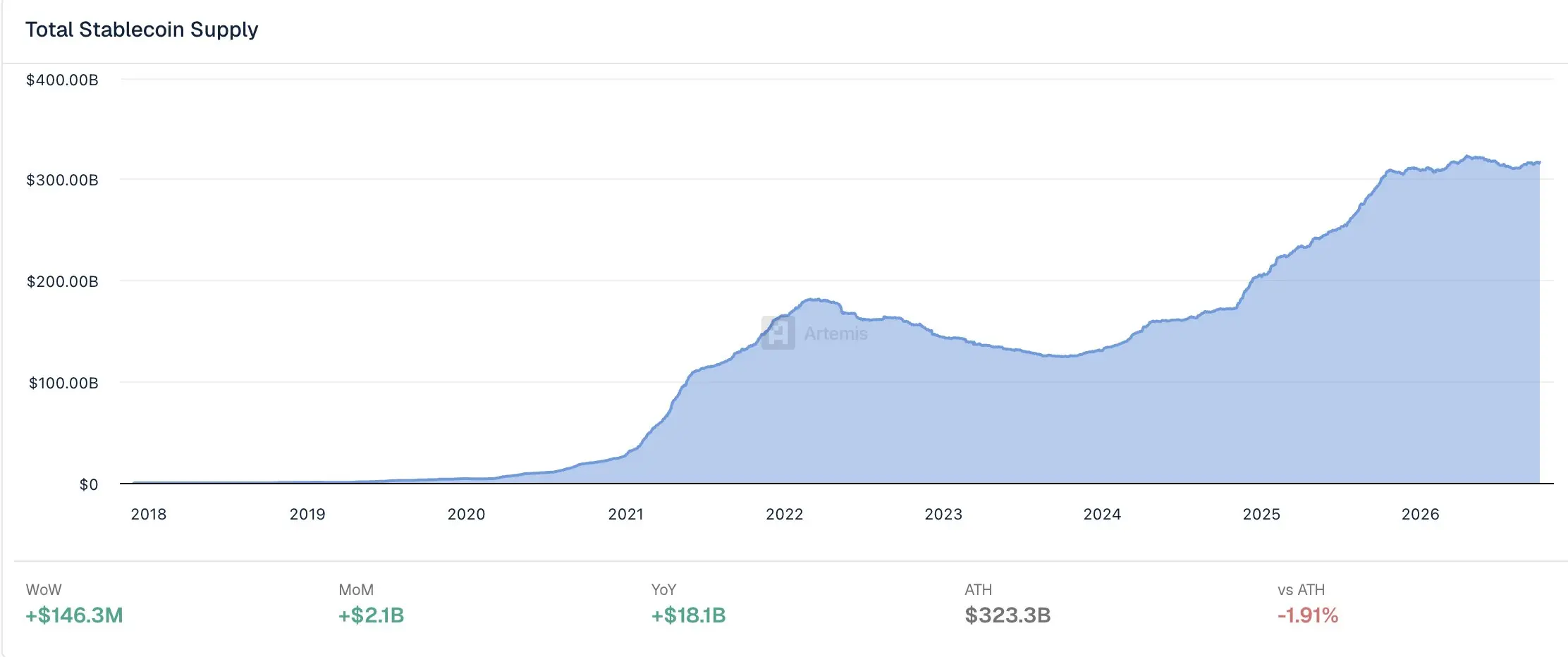
He calls tokenized equities and real-world assets the biggest opportunity on the board for one simple reason: the market is still tiny. Stablecoins have helped extend dollar usage globally and that market has already reached about $300 billion, he writes. Tokenized stocks, by comparison, stand at about $2.5 billion, while the U.S. stock market is worth $69 trillion.
Kyle says regulation is opening the door, large IPOs are on the way, and there is substantial demand in countries where access to U.S. equities is still difficult. His preferred token in this area is BP, and he points readers to a report from frictionless.capital.
DAT: discount plus improving fundamentals
For DATs, Kyle directly quotes Evan’s framework. The kind of opportunity that fits this thesis, Evan argues, tends to share a few traits:
- A steep discount to the value of underlying assets, with mNAV around 0.15x at summer lows.
- Exposure to sectors such as stablecoins and perpetuals, backed by strong teams that keep shipping products even after the relevant token has fallen more than 95% from its peak.
- Improving fundamentals over the next few years as vesting and unlock periods end, including higher USDe supply, a recovery in basis-trade returns, expansion of spot-versus-derivatives hedging and funding-rate capture strategies into equity perpetuals, and more institutional partnerships lifting TVL and protocol revenue.
Applying that framework, Kyle says DAT companies in the Ethena ecosystem fit best. Since then, he notes, a new digital banking product has launched and USDe supply has increased by more than $1 billion.
His preferred exposure in this theme is USDE.
Privacy: watch ZEC
Kyle is explicit that privacy is not his specialty and that he does not hold any ZEC. He does not build out a detailed thesis here. Instead, he flags ZEC as the name to watch and points readers to videos from Taiki.
Perpetual DEXs: growth through mainstream distribution
He describes perpetual decentralized exchanges as one of the clearest product-market-fit segments in crypto. They have real users, real trading volume and real fee revenue.
He ranks the segment in A rather than S not because the setup is weak, but because the market already understands it. Hyperliquid’s success, he says, is already in the valuation, and competition is rising. The next leg of growth should come from perpetuals moving into the mainstream through applications such as Robinhood and Interactive Brokers, or IBKR, expanding the addressable market.
His preferred names are LIT and HYPE.
Stablecoins: how to invest in the growth
Kyle says stablecoins remain the most successful product crypto has created and should keep growing. He keeps the sector in A because the clearest winners, Tether and Circle, do not offer onchain tokens that let investors share directly in their business growth.
Ethena stands out as one of the few exceptions, in his view, because it is a stablecoin issuer with a token structure that allows holders to participate in that growth. His preferred name here is again USDE.
Kyle’s bottom line
Kyle’s conclusion is that crypto assets are starting to look investable again. Low-quality projects are slowly being separated from real businesses, and the market is beginning to reward teams that are actually building. Older participants still carry scars from prior cycles, but he says that is normal at the start of every real bull market.
His advice is straightforward: extend the time horizon, be ready for bigger swings, and screen positions with more discipline. The edge in this cycle does not come from trying to find the next overnight winner among tokens built with AI over a weekend and valued below $10 million. It comes from identifying projects with real revenue, credible teams and token structures that pass business value back to holders, then maintaining conviction when others are shaken out by the latest headline.
Buy good assets. Hold through the noise. Let time do the work.