
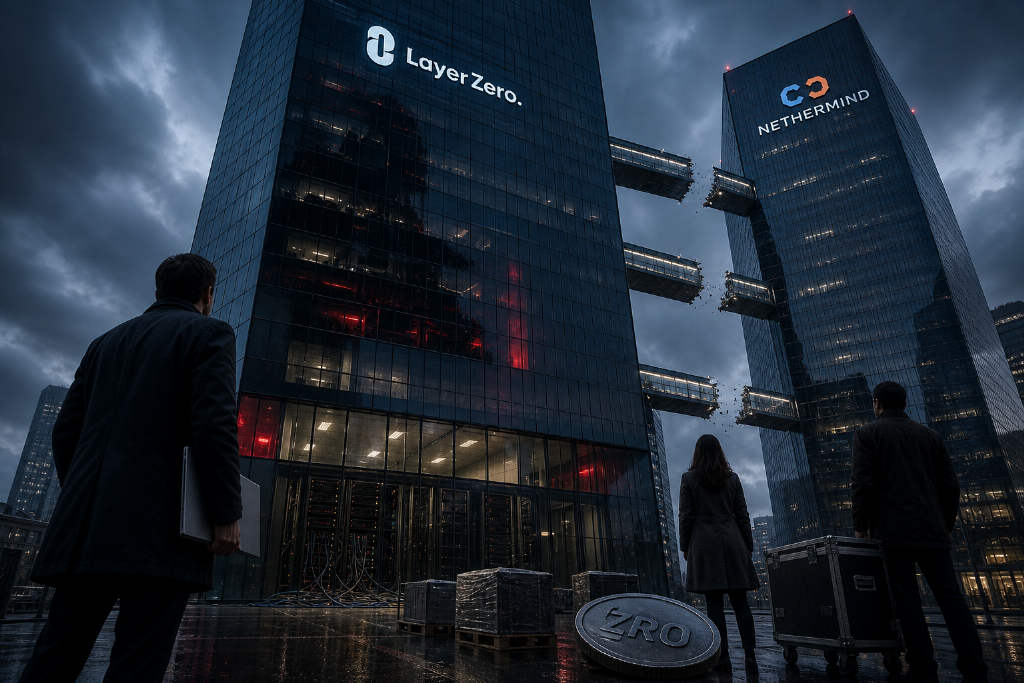
LayerZero has lost 12 partners this year as its ZRO token fell 31% in 2026. The latest to leave is Ethereum node service provider Nethermind, which had operated one of the verifiers LayerZero marketed to enterprise users. Nethermind moved to a competitor and ended its verifier role on Wednesday.
Departures have piled up since May
Kelp DAO exited LayerZero in May after losing $292 million through a bridge secured by a single LayerZero verifier. Two days later, Solv Protocol deprecated its LayerZero bridges, and Re.xyz made the same move.
The following week, Kraken shifted its BTC-linked kBTC token off LayerZero. One day later, Lombard removed more than $1 billion in BTC-backed assets.
Virtuals Protocol left LayerZero in June. Yuzu Money completed its exit in early July, and Mantle replaced its Super Portal a few days later. In August, BitGo pulled $7.7 billion of wrapped BTC out of the LayerZero ecosystem.
Some teams also chose not to keep using the network. Huma Finance declined to use LayerZero for a product launched earlier this year. On Tuesday, the Wyoming Stable Token Commission, the only state government in LayerZero’s partner list, dropped its token bridge as well.
Asset outflows grew from $7 billion to nearly $15 billion
By early July, more than $7 billion in assets had migrated off LayerZero. BitGo’s August exit lifted that figure toward $15 billion.
The retreat began after LayerZero said in April that Lazarus Group hackers had poisoned its internal RPCs. The company wrote, 「We made a mistake by allowing our DVN to act as a 1/1 DVN for high-value transactions.」

According to Protos, the fallout was immediate. Aave paused ETH-pegged token markets from LayerZero as depositors rushed to withdraw.
Pushback from defenders, but the retrenchment continued
LayerZero co-founder and CEO Bryan Pellegrino rejected much of the early criticism as untrue. Another defender argued that the exits amounted to 「about 3% of actual usage in volume and less than 1% of messages.」
Even so, LayerZero kept retreating. ZRO is down 31% this year, 56% over the past 12 months, and 88% from its all-time high in December 2024.
In July, LayerZero said it was 「winding down support for a number of chains with minimal activity across our offchain services and Stargate products.」 The same notice warned Stargate users on those chains: 「Failure to act before chain support is fully deprecated will result in losing access to your funds.」
LayerZero also said teams still using v1 libraries would face an August 3 shutoff.