
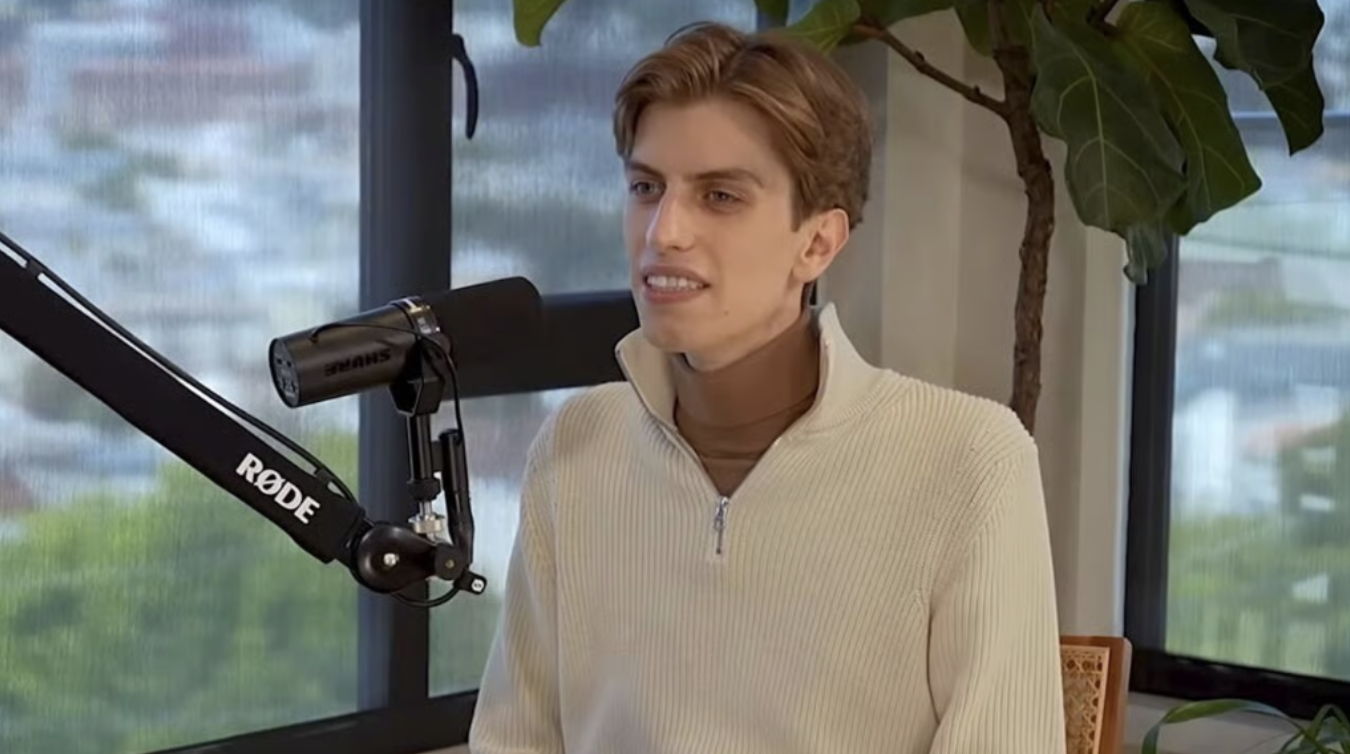
Situational Awareness, the hedge fund founded by Leopold Aschenbrenner, sold about $16 billion of public market stock positions to Citadel after losses in AI-linked trades triggered margin pressure across the portfolio.
The deal surfaced on July 30. According to the report, the fund, which had only eight employees, offloaded its entire public equity book in a single transaction after 36 hours of emergency negotiations. The portfolio included both long and short positions, and the sale was described as one of the largest emergency stock trades in Wall Street history.
From OpenAI researcher to one of the most watched names in AI investing
Aschenbrenner, a 24-year-old German, became well known in Silicon Valley before he became a hedge fund manager. He entered Columbia University at 15, graduated top of his class at 19, and later joined OpenAI’s Superalignment team.
OpenAI dismissed him in 2024 for what it described as improper disclosure of internal information. Aschenbrenner disputed that account. He said he had shared a planning document that was largely non-sensitive with outside researchers for feedback, and argued that the real trigger was an internal memo in which he criticized OpenAI’s safety measures.
After leaving OpenAI, he wrote a 165-page essay titled Situational Awareness. Its central argument was that AI was advancing much faster than most people understood, that AI would be able to conduct AI research by 2027, and that the path toward superintelligence would require massive expansion in chips, memory, data centers, and power infrastructure.
The essay drew major attention in Silicon Valley. The report says some called it the most important article in a decade, while podcaster Tim Ferriss referred to Aschenbrenner as the “Nostradamus of AI.”
A fund that scaled from $225 million to nearly $45 billion
In 2024, Aschenbrenner launched Situational Awareness with about $225 million in seed capital. Backers included Stripe co-founders Patrick Collison and John Collison, former GitHub CEO Nat Friedman, and firms such as Jane Street.
Even without prior asset-management experience, he moved directly into running a multi-billion-dollar fund. SA expanded rapidly and reached nearly $45 billion in assets at its peak in early July 2026. The firm had only eight employees, four of them investment professionals.
The report says SA posted a net return of 439% in the first half of 2026. Since inception, cumulative returns were reported at more than 2,000%, and some early investors were said to be up as much as 200% this year.
A concentrated AI infrastructure trade built with leverage
SA’s investment thesis was direct. If AI required vast amounts of compute and supporting infrastructure, then the fund would concentrate in the companies supplying that buildout.
- Its long book included SK Hynix, Nebius, SanDisk, Micron, CoreWeave, and Bloom Energy.
- Its short book included traditional software names such as Adobe, based on the view that AI would disrupt them.
The fund also used leverage of about four times by borrowing against the positions through total return swaps, or TRS. Under that setup, banks held the physical shares while SA gained the economic exposure and leverage synthetically.
The same structure that amplified gains on the way up also left the fund exposed to margin calls when prices turned lower. Once the stocks dropped, banks required additional collateral and the pressure escalated quickly.
July losses hit both sides of the book
The reversal came in July, when AI stocks started falling and investors began questioning whether valuations in AI infrastructure could hold. Money came out of AI hardware names, and SA’s long positions were hit first.
The report lists a string of declines. Nebius fell about 48% from its June high, wiping out about $35 billion in market value. SanDisk dropped more than 56% in a little over a month. CoreWeave, Micron, and SK Hynix each fell more than 35% during the month.
At the same time, the software stocks SA had shorted, including Adobe, moved higher, leaving the short book under pressure as well. Losses on both sides, combined with roughly 4x leverage, magnified the drawdown and triggered margin calls.
SA’s prime brokers included Bank of America, Goldman Sachs, and JPMorgan. All three were involved in helping the fund respond to the margin pressure or reduce positions in an orderly way.
Even then, Aschenbrenner wrote in a July 24 letter to investors: “Sometimes we make a special point of noting that now is a good time to add if you’ve been waiting.” The postscript invited investors to add capital on Aug. 1.
36 hours of talks ended with Citadel winning the trade
The situation deteriorated fast. Late on July 29, SA reached out to multiple potential buyers in an effort to sell more than $10 billion in stock positions and stabilize the fund. The report says the process was widely covered by the Financial Times and Bloomberg.
Bidders included Millennium Management and Jane Street. Millennium made an offer but judged the positions too risky to pay a higher price. Citadel eventually prevailed.
By the morning of July 30, the transaction had been completed. Citadel bought SA’s entire public stock portfolio, both longs and shorts, for about $16 billion at a steep discount. After news of the deal spread, the Nasdaq 100 rose more than 3% that day, as the market took relief from the idea that SA would not need to keep dumping positions into the market.
The report notes that Citadel has done similar trades before, including buying distressed assets during past crises. It quotes founder Ken Griffin as saying one reason for Citadel’s long-term success is “experience. Wisdom bought through loss and pain. My leadership team, we’ve been through many of the hardest moments in markets together, and we learned many painful lessons. But that makes us more effective investors in periods of turmoil and crisis.”
Citadel was founded in 1990. SA was founded in 2024.
What remains after the liquidation of public positions
After the sale, SA’s assets under management dropped from a peak of about $45 billion to about $10 billion, a decline of more than half.
Aschenbrenner was not fully wiped out. The fund retained all of its private positions, worth about $10 billion, with the biggest piece being an Anthropic stake valued at about $5 billion. SA is expected to continue operating as a private investment firm.
Whether those private holdings can ultimately be monetized will depend on the future listing valuations of Anthropic and other companies. The report also notes that Aschenbrenner’s fiancée, Avital Balwit, is chief of staff to Anthropic CEO Dario Amodei. Rumors had circulated that SA planned to sell its Anthropic stake, but an SA spokesperson denied that claim.
The call on AI may not have been wrong, but the structure was
The report frames the broader question this way: was Aschenbrenner actually wrong about AI? Its answer is not necessarily.
The long-term demand case for AI infrastructure still has support from many institutions. The more immediate problem was portfolio construction. According to the report, a post on X cited Ken Griffin’s earlier description of why fund managers fail: “Your portfolio is highly concentrated, your positions are huge, and you cannot clearly explain where your competitive advantage lies in owning them.”
That criticism fits SA’s setup. The fund concentrated on a single theme, used roughly 4x leverage, and built both long and short books around different sides of the same AI narrative. When market direction changed, there was little cushion.
The same structure that generated a 439% gain in the upswing was able to blow through the public portfolio in a matter of weeks on the way down. The report sums it up with one line: Aschenbrenner may not have been wrong on AI, but he was wrong in how he built the trade.
His rise and reversal now stand as one of the most extreme episodes of this AI bull market: one essay, one narrative, eight employees, $45 billion in assets, a 439% return, and then margin calls that broke the public book within a month. The report does not present it as the end of AI or the end of Aschenbrenner. It presents it as a reminder that calling the direction correctly does not guarantee survival long enough to see that view play out.