
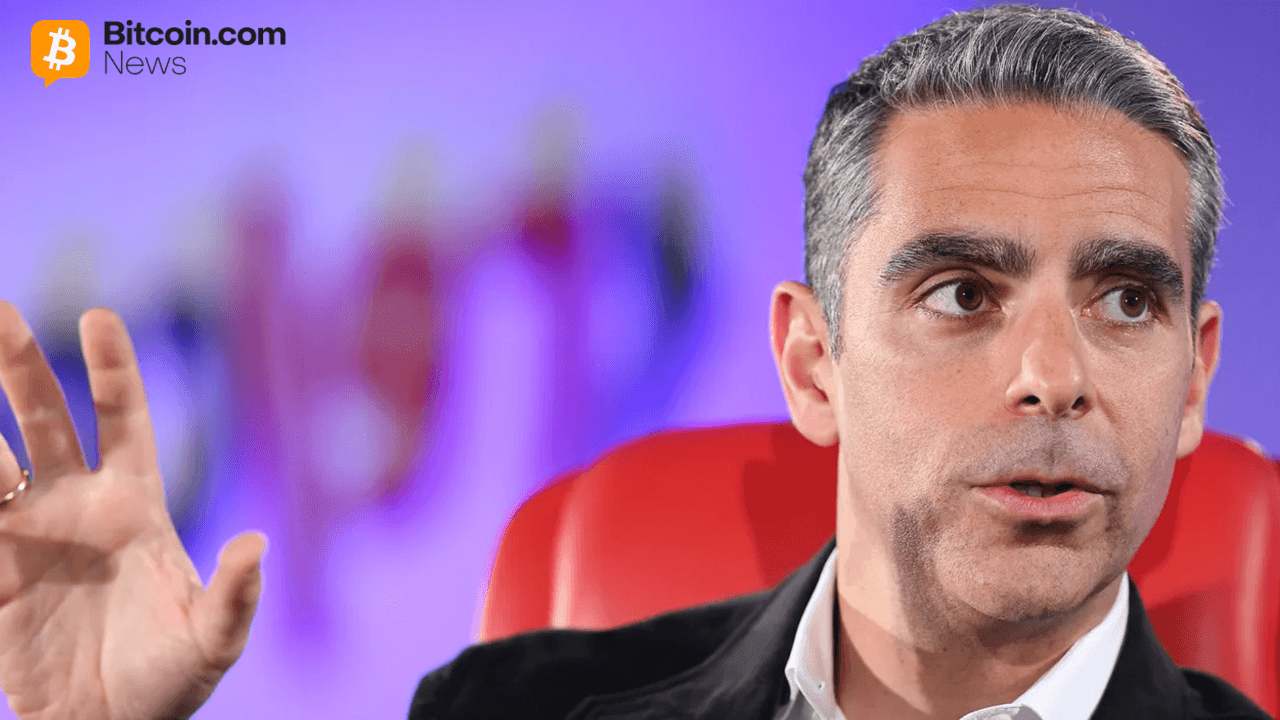
Lightspark CEO and former PayPal president David Marcus used the stage at Bitcoin 2026 in Las Vegas to introduce Grid Global Accounts, a dollar-denominated payment layer built on Bitcoin. The product is aimed at platforms and developers rather than a standalone consumer app. Marcus said the system connects to 175 million Visa merchants, spans 33 countries, and supports real-time reach across 65 nations.
A Bitcoin-based account layer built for platforms
Marcus framed the launch as an answer to a gap in financial infrastructure. In his presentation, he contrasted the scale of digital communication with the state of payments, saying that 400 billion emails are sent each day while about 10 billion payments worth roughly $5.5 trillion move daily, yet the tooling for money movement still lags behind. Grid Global Accounts, he said, let platforms keep the customer relationship while Lightspark handles the underlying payment stack out of view.
He pointed to four conditions that made the launch possible now: regulatory clarity from the GENIUS Act in the United States and MiCA in Europe, smoother wallet login flows through Google, Apple, and passkey integrations, the maturation of Spark as a Bitcoin layer capable of supporting stablecoins, and the rise of globally issuable stablecoin-backed cards over the past 12 to 18 months.
Visa partnership expands spending and cross-network transfers
The centerpiece was Lightspark’s partnership with Visa. Marcus said Lightspark is becoming a principal member of the Visa network, giving Grid account holders spending access anywhere on Visa’s global merchant rails. Coverage starts at 33 countries, and he said the company is targeting 100 Visa markets by the end of 2026.
To show how the account works, Marcus walked through an example of a creator in Mexico named Barbara receiving a $5,000 payment from a U.S. platform. In the demo, she spent at Visa merchants, converted funds into Mexican pesos in real time, and sent money within seconds to a friend’s Brazilian Pix account. The same account could also hold bitcoin natively alongside dollars and stablecoins under one wallet address.
Marcus added that interoperability is built into the model. A dollar held in a Grid Global Account can move across networks, including conversion to USDC on Solana or USDT on Optimism. Because Grid runs on Spark, Bitcoin support is native from the beginning.
Agent delegation lets AI execute wallet actions
Marcus also introduced agent delegation, a feature that allows AI agents to carry out financial tasks from a user’s wallet under preset permissions. He demonstrated the feature through an integration with Bread, a bitcoin wallet that is launching in the Apple App Store. Using a WhatsApp-based agent, the system generated a limited-scope card to buy coffee and sent $500 to a contact in Brazil.
Marcus described the setup in simple terms: the agent plans, policy makes the decision, and the account enforces it, while the user retains control. He ended the presentation by pushing back on a long-standing claim in the industry that this kind of system could not be built on Bitcoin.