

On crypto social platforms, the narrative that "Ethereum is dead" has been spreading for quite some time. Bearish sentiment toward Ethereum has hit rock bottom, with many former peers gradually stepping away from the Ethereum ecosystem, some even leaving the crypto industry altogether. Most no longer hold ETH. Yet former Bankless analyst Lucas is bucking the trend, publicly stating that he is more bullish on Ethereum and ETH than ever before. According to him, this isn't blind faith but a deep conviction grounded in on-chain ecosystem data, the tokenization wave, and historical parallels.
The Real Picture Behind the Price Slump
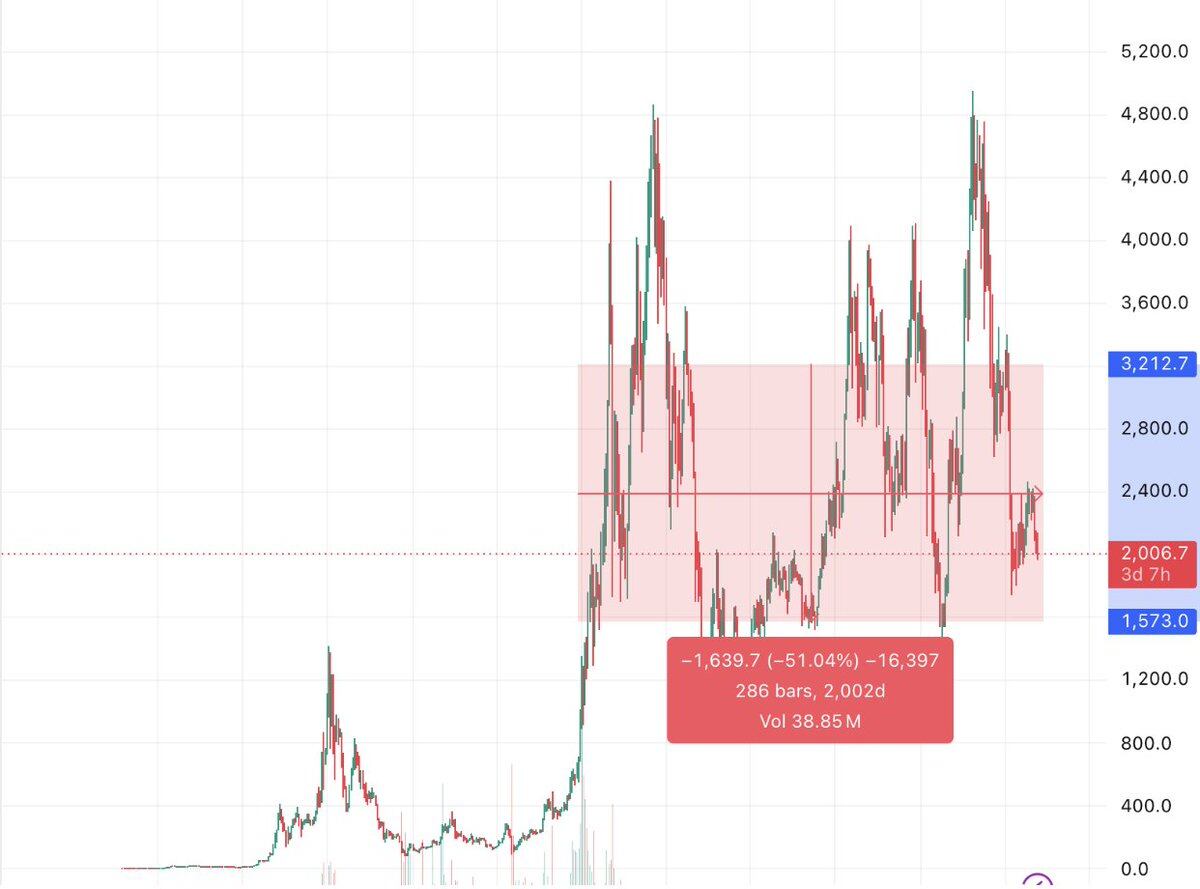
Over the past five years, ETH's price performance has indeed disappointed. Investors who entered in 2021 are at best break-even, with most stuck in deep unrealized losses. Even amid recent broader market pullbacks, Bitcoin has held above its 2021 bull market highs, and its 2025 peak doubled the previous all-time high. In contrast, ETH currently trades around 60% below its last ATH, failed to set a new record in 2025, and couldn't even breach the $5,000 mark. Meanwhile, the S&P 500 has been hitting all-time highs almost daily, with AI, semiconductor, and other hot Wall Street sectors soaring, making ETH's performance look even darker.
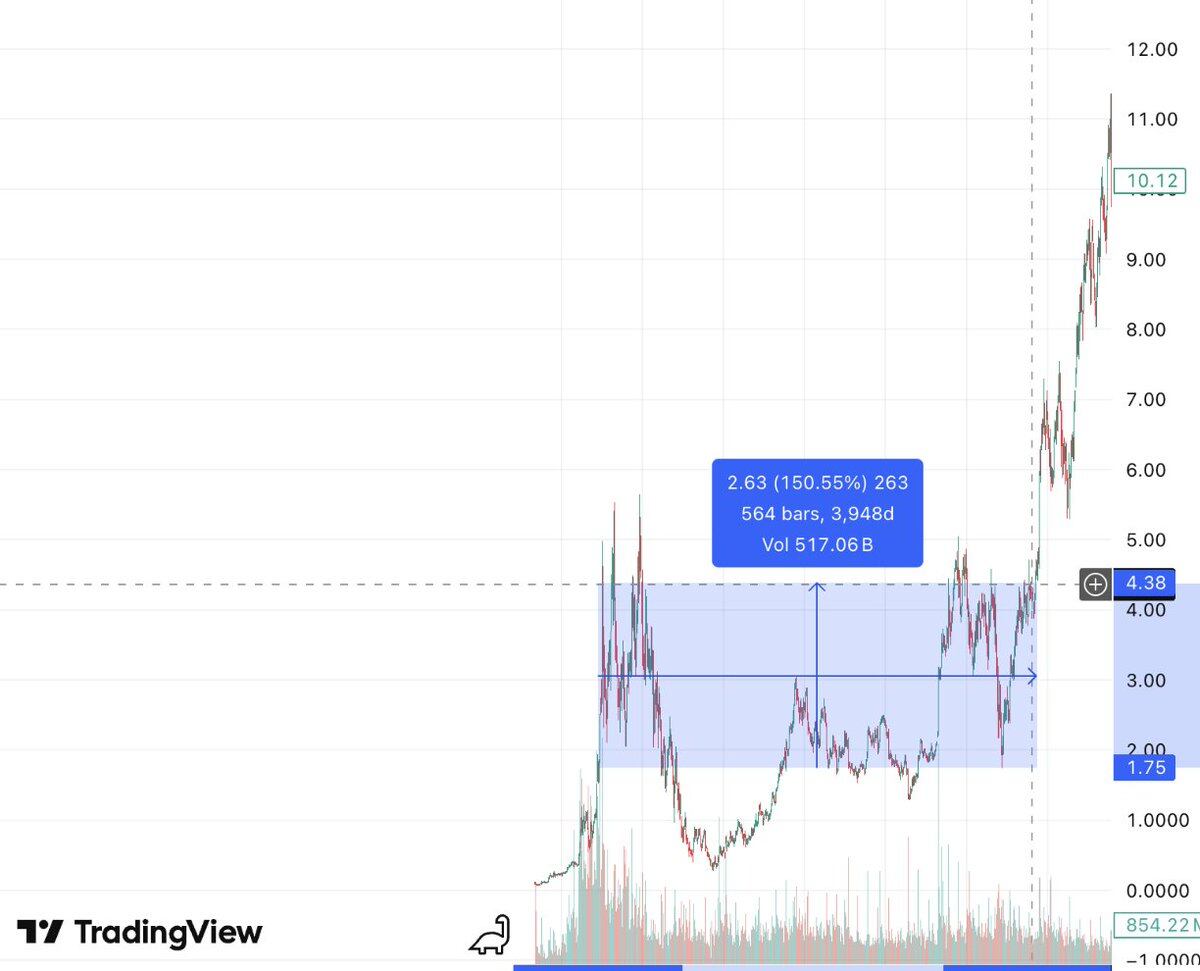
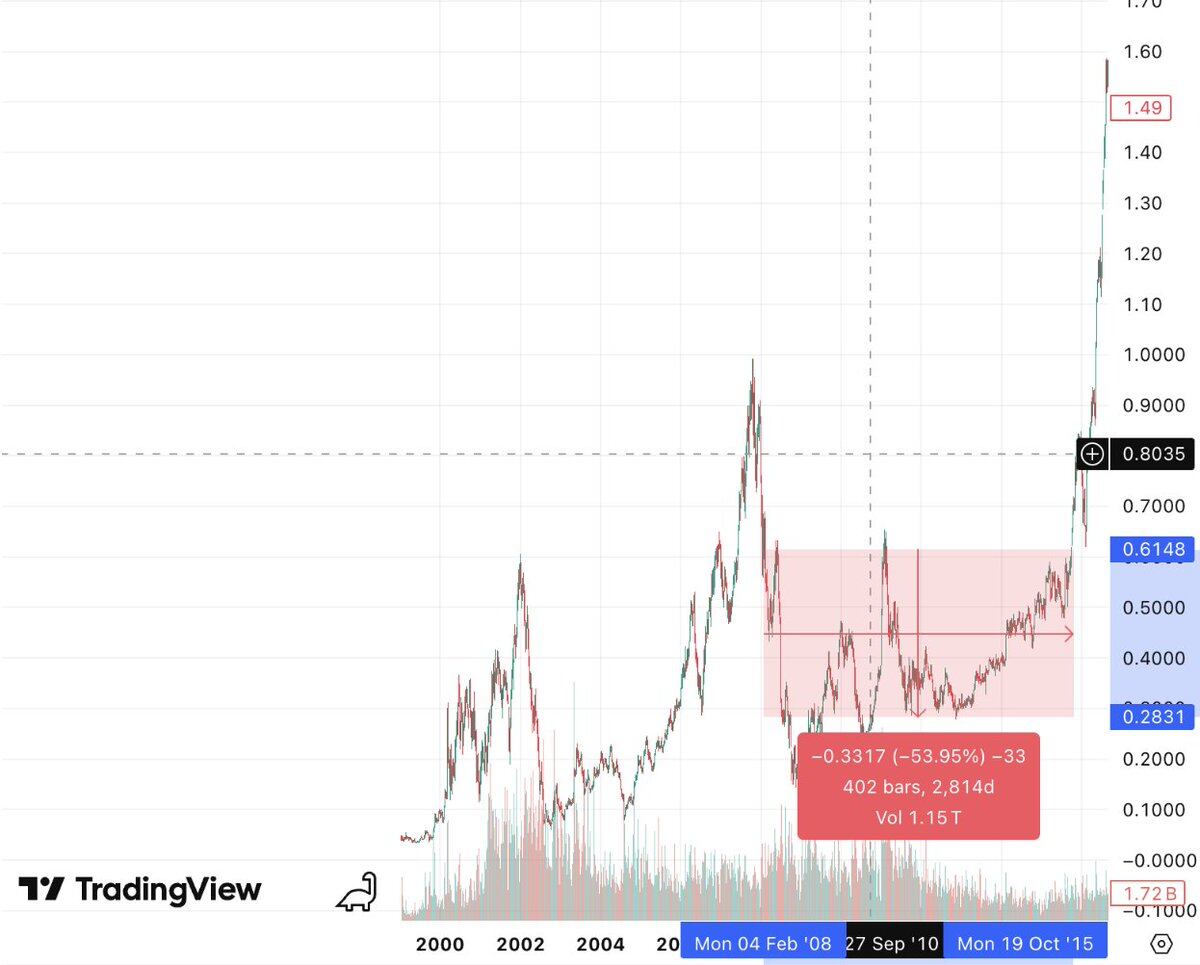
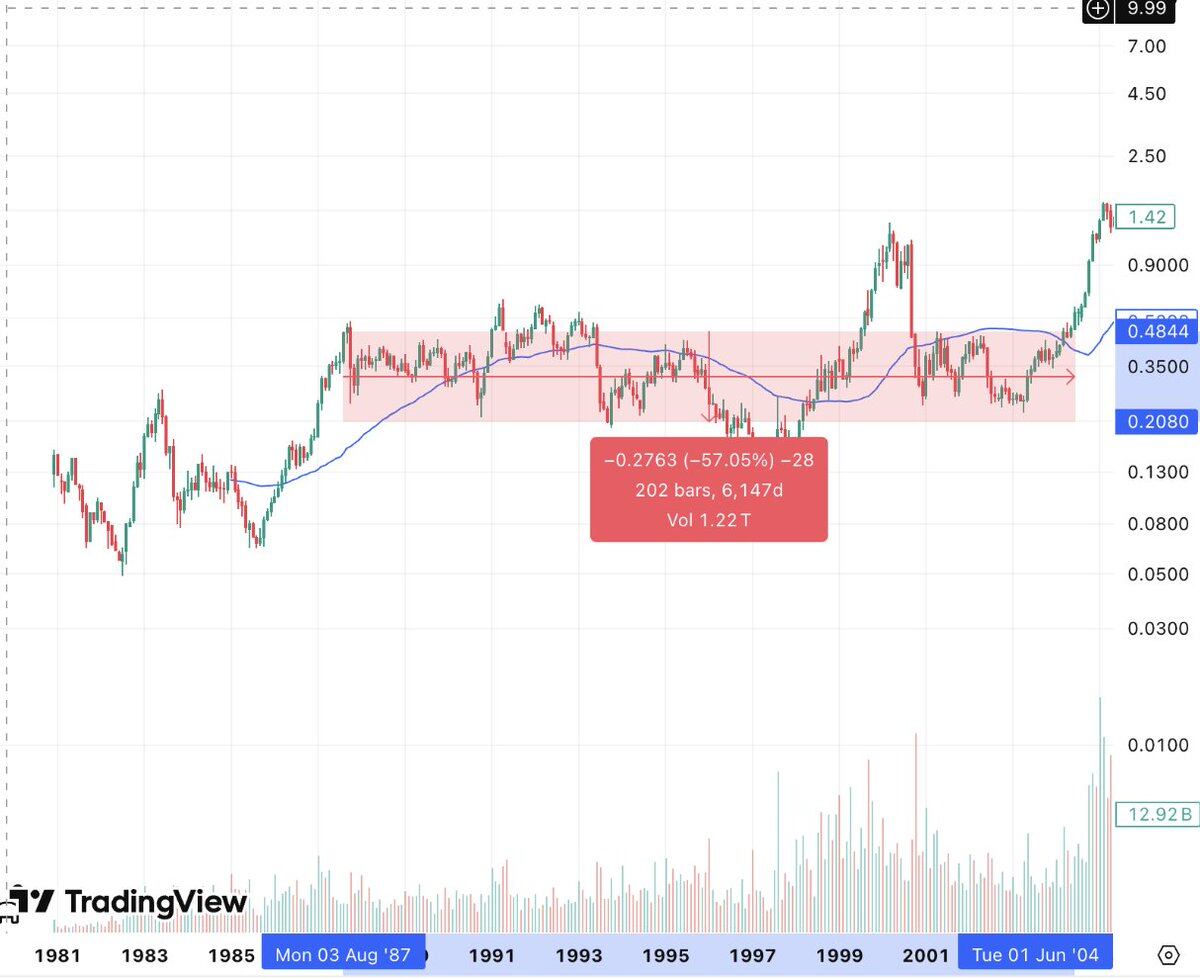
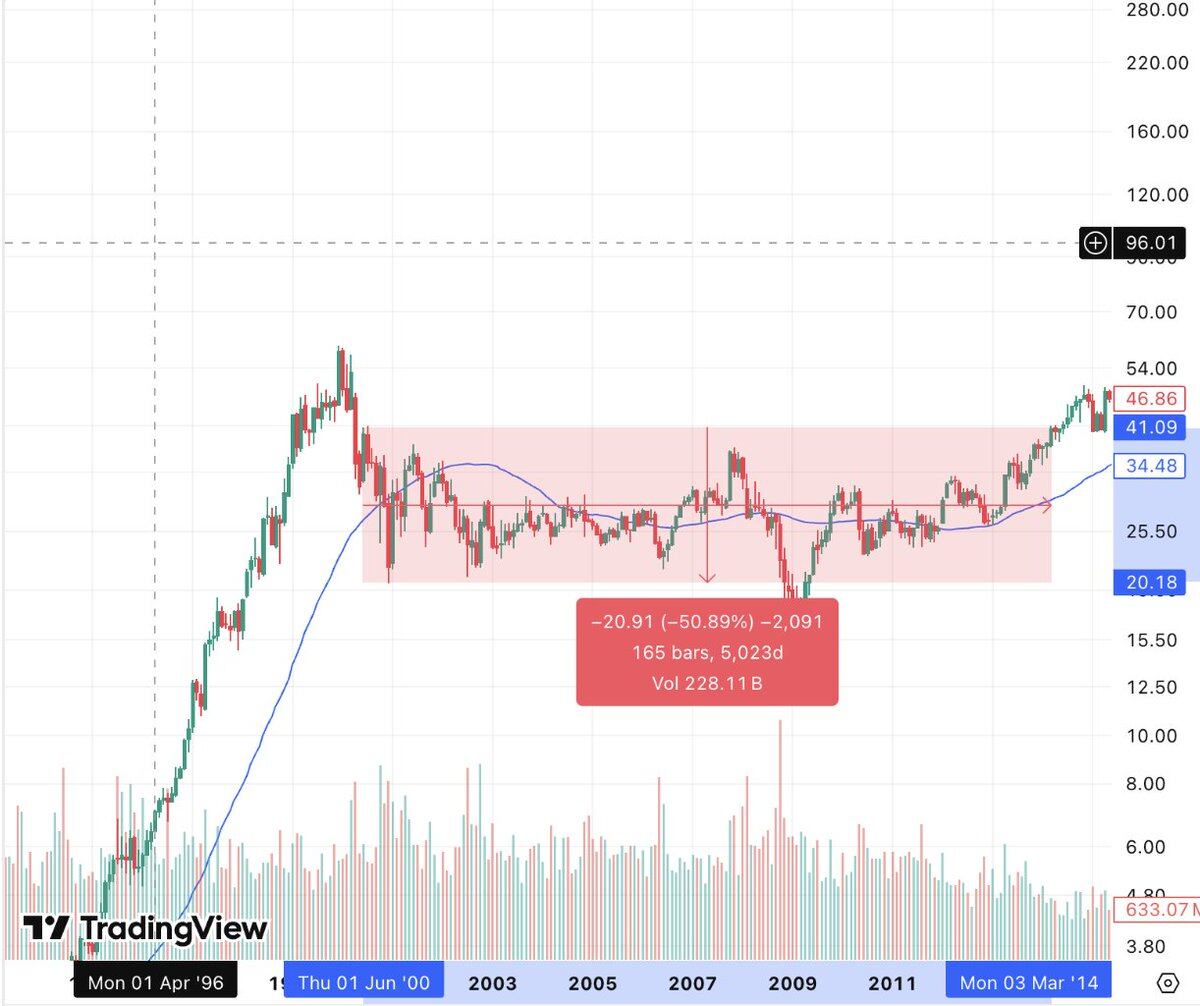
However, zooming out, ETH's chart is simply stuck in a multi-year box consolidation. Ethereum's market cap still exceeds $200 billion, with price firmly holding above $2,000, comfortably ranking among the top 100 global assets. The history of capital markets shows time and again that high-quality growth assets often go through years of sideways grinding before embarking on long bull runs. Most top global companies endure prolonged choppy consolidations; some briefly spike to new highs before falling back, waiting for an industry catalyst to launch the next bull market — and during that consolidation phase, the broader stock market often keeps making new highs. In that context, ETH's five-year underperformance is not unusual in financial history.
On-Chain Fundamentals Keep Improving
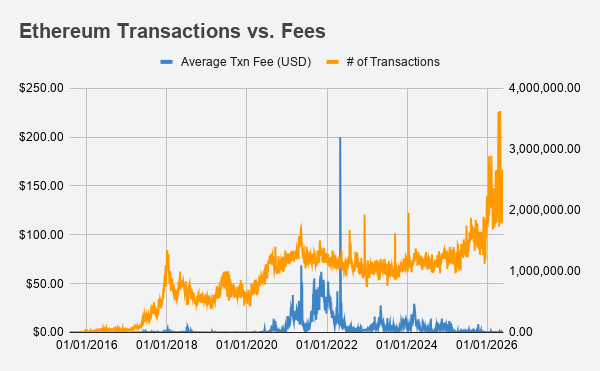
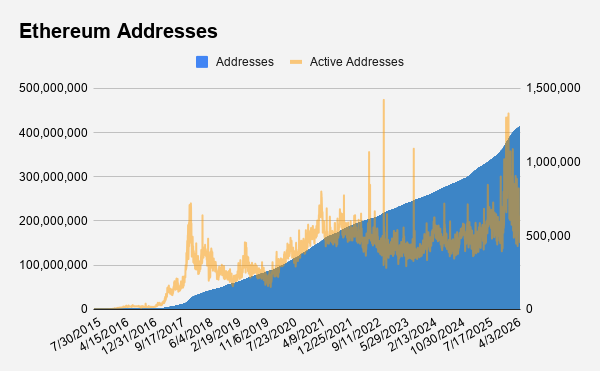
The bearish narrative typically assumes that weak price action must be accompanied by declining on-chain activity: falling transaction volumes, high fees, and stagnant applications. But Etherscan data tells the opposite story. In May 2026, Ethereum averaged 2.27 million daily transactions, an all-time high. The average transaction fee was just $0.27, a far cry from the $50–100 gas fees seen during the 2021 bull market — a massive cost reduction despite doubled transaction volumes. Total addresses have surpassed 400 million, with a daily growth rate of about 0.08% in 2026, and daily active users have been steadily above 1 million in recent months. At this pace, without any major catalyst, Ethereum could cross 1 billion addresses by mid-2029.
The staking front is also setting records: over 32% of all ETH is now staked, continuously anchoring network security. Throughout its decade-plus history, Ethereum has never experienced a network-wide outage. With its extremely neutral, secure, and programmable block space, it has secured the core ticket to compete as the underlying infrastructure of global finance. Since entering the industry in 2017, Lucas has held an unwavering thesis: all valuable assets will eventually be tokenized, Ethereum will become the unified settlement layer for all tokenized asset classes, and ETH will capture the full value generated by settlement layer activities.
The Tokenization Wave: Ethereum's Next Chapter
Ethereum's first decade primarily served as an experimental ground for crypto-native assets, where DeFi, NFTs, meme coins, and other applications were born and matured, solidifying the foundational ecosystem. The next phase will see Ethereum embark on a journey toward trillion-dollar market caps. The vast majority of the world's roughly $700 trillion in traditional real-world assets will eventually be tokenized on-chain, and Ethereum is poised to become the preferred hosting network. This is not empty rhetoric. On-the-ground data confirms that traditional financial institutions are connecting to Ethereum en masse. Banks, asset managers, and clearing houses seek certainty: they want to capture tokenization dividends while avoiding career risk from poor strategic decisions. As a result, stability-oriented institutions are prioritizing Ethereum when deploying RWA.
Stablecoins represent the first tokenized real-world asset to achieve product-market fit, with total circulating market cap surpassing $300 billion. Tom Lee has called stablecoins the “ChatGPT moment” for crypto. Ethereum commands 54% of the stablecoin market cap. As of June 1, 2026, the total tokenized real-world asset (RWA) volume has exceeded $30 billion, with over 53% deployed on Ethereum. Even as other chains like Hyperliquid and Solana vie for non-stablecoin RWA share, Ethereum remains dominant.
Historical Parallels: RWA Mirrors Early DeFi
The current stage of the RWA sector strongly resembles the early DeFi phase of 2019–2020. Back then, DeFi’s total value locked exploded exponentially, but ETH’s price remained in a prolonged sideways chop. Once DeFi’s asset base reached about 20% of Ethereum’s total market cap, ETH took off from $300 and surged to $4,000 by year-end. Compare that to today: excluding stablecoins, non-stablecoin RWA on Ethereum totals about $16 billion, representing only 7% of ETH’s market cap — a position almost identical to early DeFi. Yet the overall scale is ten times larger: early DeFi started with around $3 billion in TVL, now RWA starts at $30 billion; early ETH bottomed at $200, now at $2,000; early competition was BNB Chain, now it’s Hyperliquid.
Another key difference: early DeFi relied on collateral demand to drive ETH buying, and NFTs reinforced the “ETH as digital gold” narrative, but Ethereum had not yet implemented PoS staking or EIP-1559 burning. Today, both mechanisms are fully live, meaning every on-chain transaction directly contributes to deflationary pressure and value accrual for ETH. Extrapolating by a 10x trajectory, this cycle’s non-stablecoin RWA total could surpass $1 trillion.
Policy Catalysts and the Multi-Trillion Dollar Track
The U.S. CLARITY Act is a pivotal catalyst. According to Polymarket data, the probability of the act being signed into law in 2026 is around 55%. If enacted, it would open a compliant on-chain channel for all U.S. financial assets, serving as a massive tailwind for Ethereum. Stocks, bonds, commodities, real estate, art, intellectual property — everything of value will eventually be tokenized. This represents the next major revolution in global finance. The first two decades of crypto focused on the issuance and innovation of crypto-native assets; the next two decades will shift the industry’s center of gravity to bringing traditional real-world assets on-chain.
Even as the prevailing crypto narrative overwhelmingly bears on Ethereum, Lucas remains resolute: Ethereum will become the settlement layer for the vast majority of tokenized assets worldwide. Backed by years of accumulated security, reliability, and liquidity moats, Ethereum’s advantages cannot be replicated in the short term. Once a massive wave of global assets settles on Ethereum, the market will ultimately reprice ETH, repeating the explosive valuation rallies of the past.