

Ignas of DeFi Research argues that the current meme-coin wave may be rewarding liquidity providers more reliably than the traders chasing it.
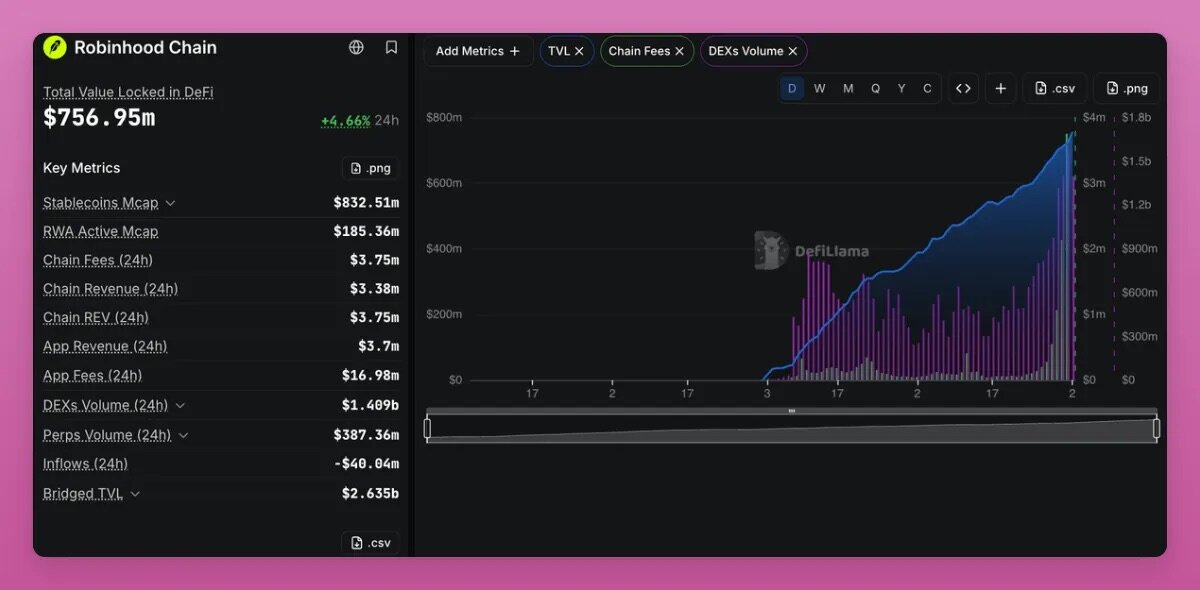
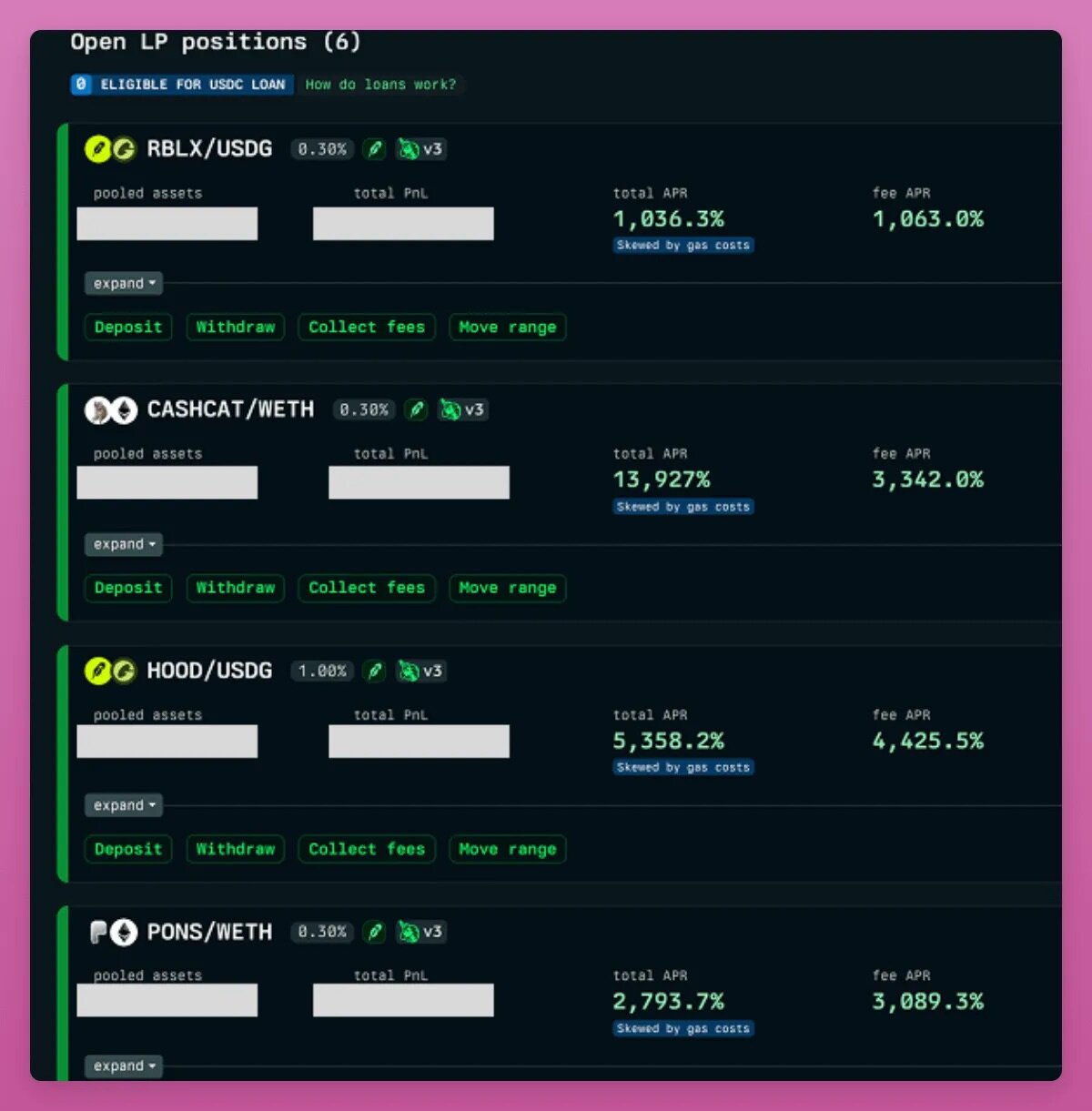
His point is straightforward: speculators pile into meme tokens through FOMO, generate millions of dollars in daily trading fees, and usually do not become LPs themselves. For users who do not want direct exposure to that trading, he says the setup can still be attractive.
He also points to Pons launchpad, which has helped spur meme tokens tied directly to tokenized stock issuance, including AI/NVDA, BONER/HIMS and MOO/MU. In his view, those pairs create heavy arbitrage between the meme-token pools and standard stock/USDG pools, and that arbitrage keeps fee generation going.
Robinhood Chain data after its July launch
According to the article, Robinhood Chain went live in July and has already posted strong on-chain figures.
- Total value locked: $757 million
- DEX volume: $1.66 billion, second only to Solana at $2.1 billion and above Ethereum at $1.37 billion
- 24-hour app fees: $16.98 million
- Stablecoin supply: $833 million, with cross-chain TVL at $2.6 billion
- Perpetuals volume: $387 million
Using the figures cited in the piece, $757 million in TVL and roughly $17 million in daily app fees translate to an 819% APR, or 2.243% per day. On a compounded basis, the headline APY would reach 328000%. The article adds an explicit caveat: that 328000% figure is a theoretical compounding result drawn from an extreme single-day fee share in a small pool. It reflects a historical snapshot and is not presented as sustainable.
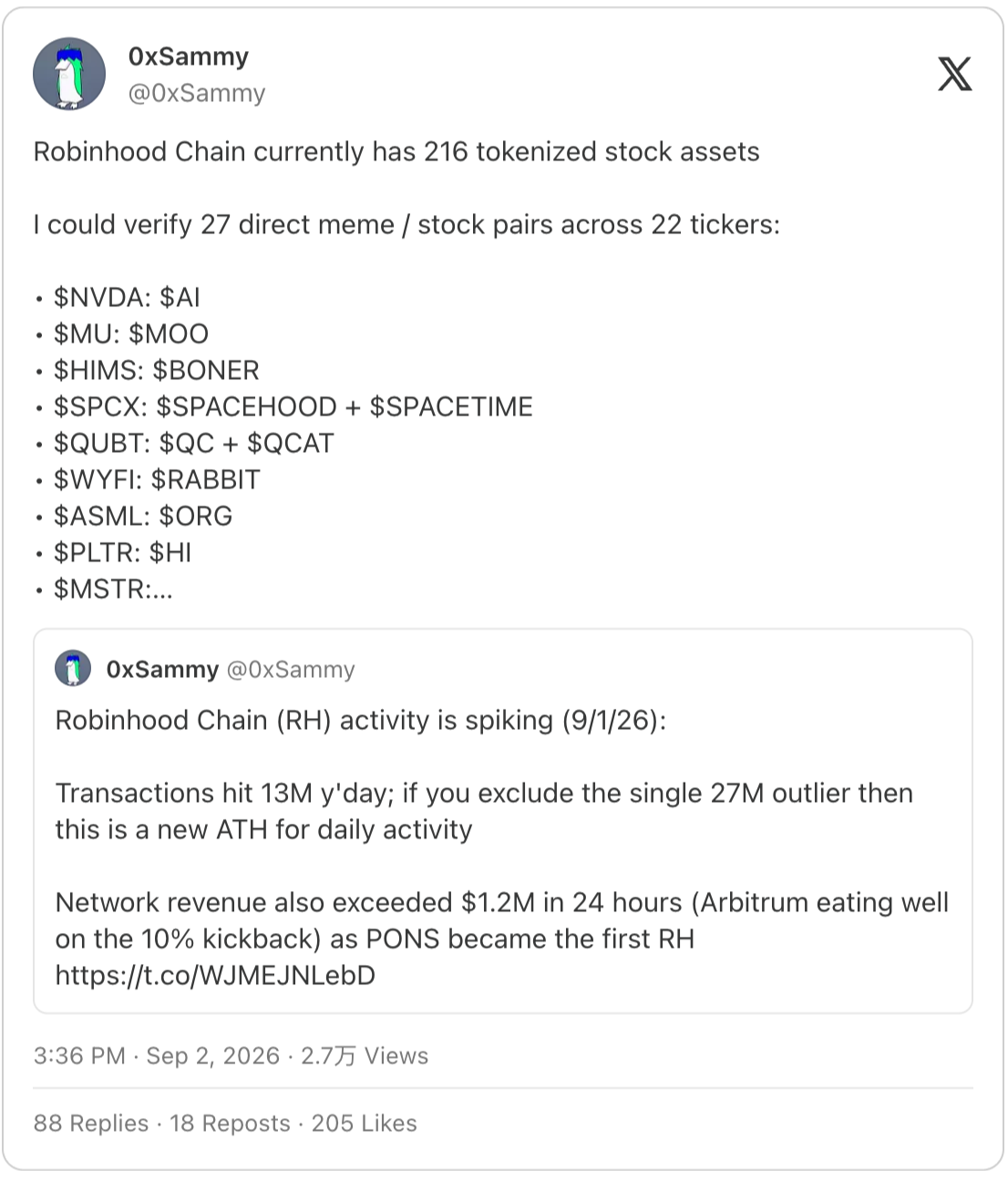
Crypto participant @0xSammy shared another data set cited in the article: tokenized stocks generated 13 million transactions in a single day, and wallets holding tokenized stocks reached 203,000, up 46% over three days.
Why the fee yields look unusually high
Ignas gives two main reasons.
First, few users are willing to provide liquidity. The article says Fomo integrated Robinhood Chain in July. It is described as a meme-coin trading application that does not include liquidity-pool functionality on its own.
Robinhood Wallet and Fomo also let users buy meme coins directly with credit cards. The Block previously reported that JPMorgan had asked Visa to investigate the setup. In the article's framing, that volume comes from users who were never likely to become LPs.
Second, pool sizes are still too small for institutional money. Ignas says that when he entered the RBLX/USDG pool, TVL was only $168,000 while trading volume had reached $6.2 million. Daily fees equaled 11% of TVL.
He adds that an institution is unlikely to place $5 million into a pool with only $168,000 locked, leaving this niche primarily to smaller market participants.
MemeFi and tokenized-stock pools
Based on figures attributed to @0xSammy, there are now 22 underlying assets on the chain and 27 meme-token/tokenized-stock pairs, including AI/NVDA, MOO/MU, BONER/HIMS, NUDES/SNAP and LIGMA/FIG.
The article says BONER alone accounts for 81% of the on-chain HIMS supply. It describes trader attempts there as a short squeeze in form, but says the underlying dynamic is really a squeeze on circulating supply.
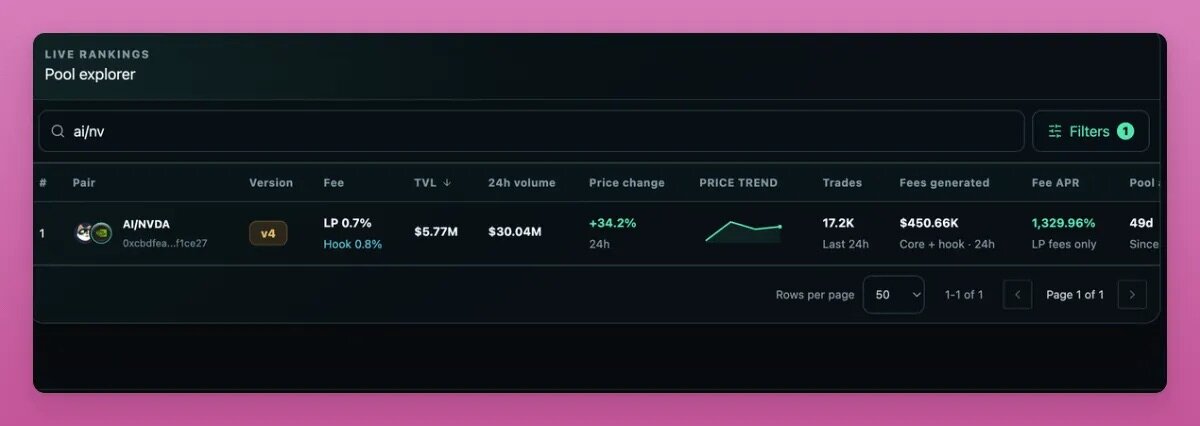
Data from scopl.live, as cited in the piece, shows that several meme-stock pools rank among the highest fee generators on the chain over a 24-hour period:
- AI/NVDA: $447,000
- AI/WETH: $340,000
- UBIK/GLD: $321,000
On fees alone, the annualized return can reach 1329%, according to the article.
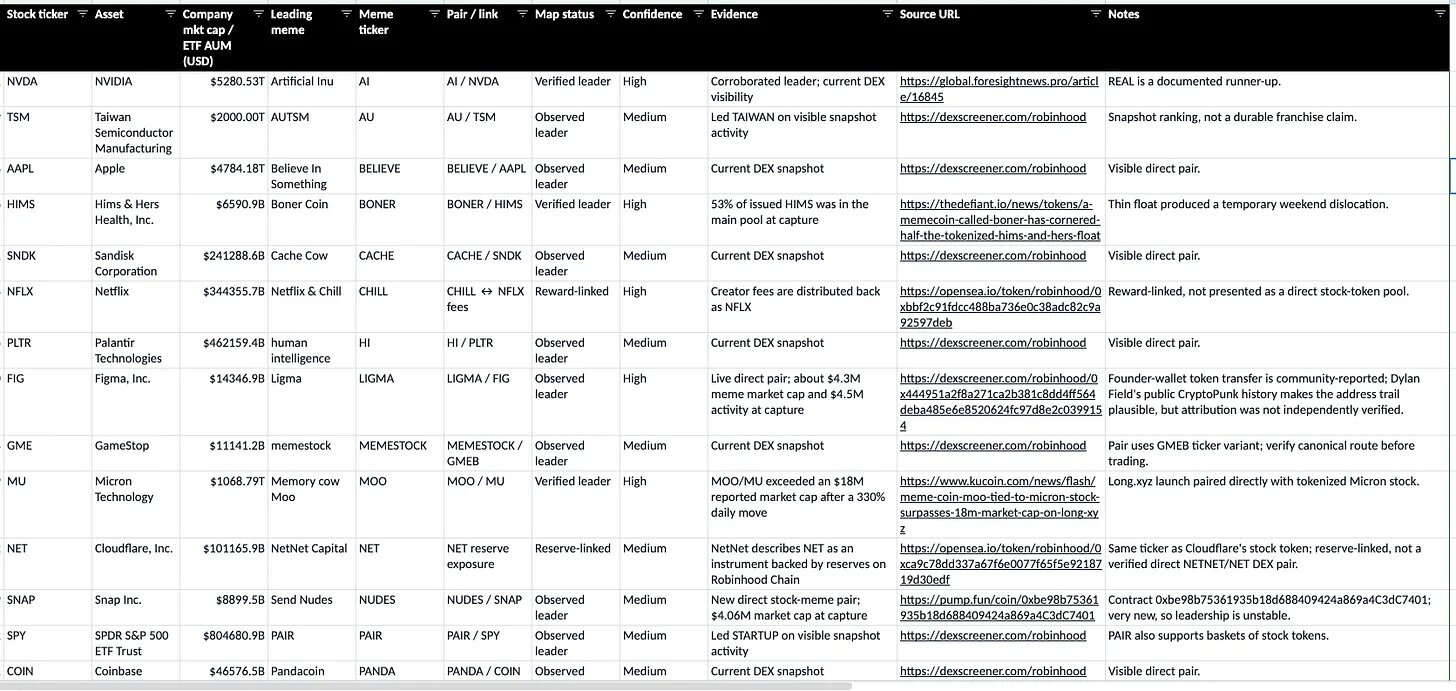
Ignas argues that LPs do not need to hold the meme coins themselves to capture these flows. He says every AI buy routed through NVDA and every BONER-driven repricing of HIMS sends arbitrage bots into the stock/USDG pools, where they correct prices and keep fees coming.
His current preferred pools are HOOD/USDG, NVDA/USDG, RBLX/USDG and DJT/USDG. He notes that the full list of meme-token pairs is available through the table link in the original post.
Tools listed for LPs and yield farmers
The article also includes a shortlist of tools Ignas says he uses for LP activity and yield farming.
Revert
He describes Revert as his preferred LP tool. Rather than copying meme traders, users can follow stronger liquidity providers directly and filter positions by APR, profit and loss, and creation time. He also says users still need their own screening framework and should test repeatedly.
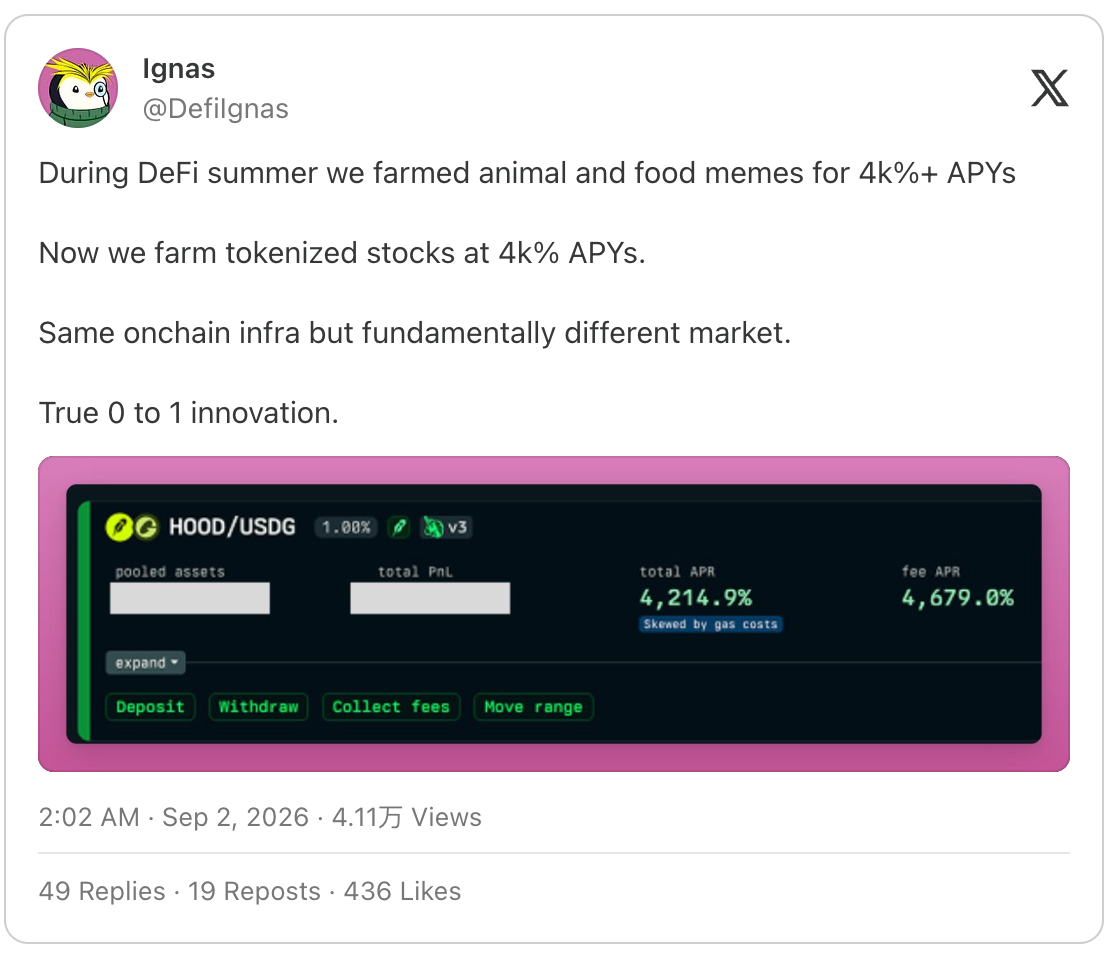
Ignas adds that Revert supports single-sided liquidity provision and automatic rebalancing, though he notes the platform appears to add a small fee.
scopl.live
He describes scopl.live as a pool-discovery tool for checking live fee APR. He says he is unsure about the project's development quality, but finds it useful for spotting new pools and sees it as an alternative to Revert.
vfat.tools
The article calls vfat.tools a long-running rewards-farming tool better suited to token-incentive mining. For Uniswap-style LP farming, its role is described as more limited.
Merkl
Ignas refers to Merkl as a "2026 version of vfat" built for incentivized Uniswap positions. By selecting Robinhood as the chain filter, users can find tokenized-stock Uniswap v4 order books that, according to the article, offer more than 100% in additional annualized incentives on top of fee income.
Using AI for yield farming
In the final section, Ignas says AI tools are lowering the barrier to yield farming. He names Claude, Grok and ChatGPT as examples that can help track accounts, calculate total ROI, discover new pools and build a unified dashboard for positions across platforms.
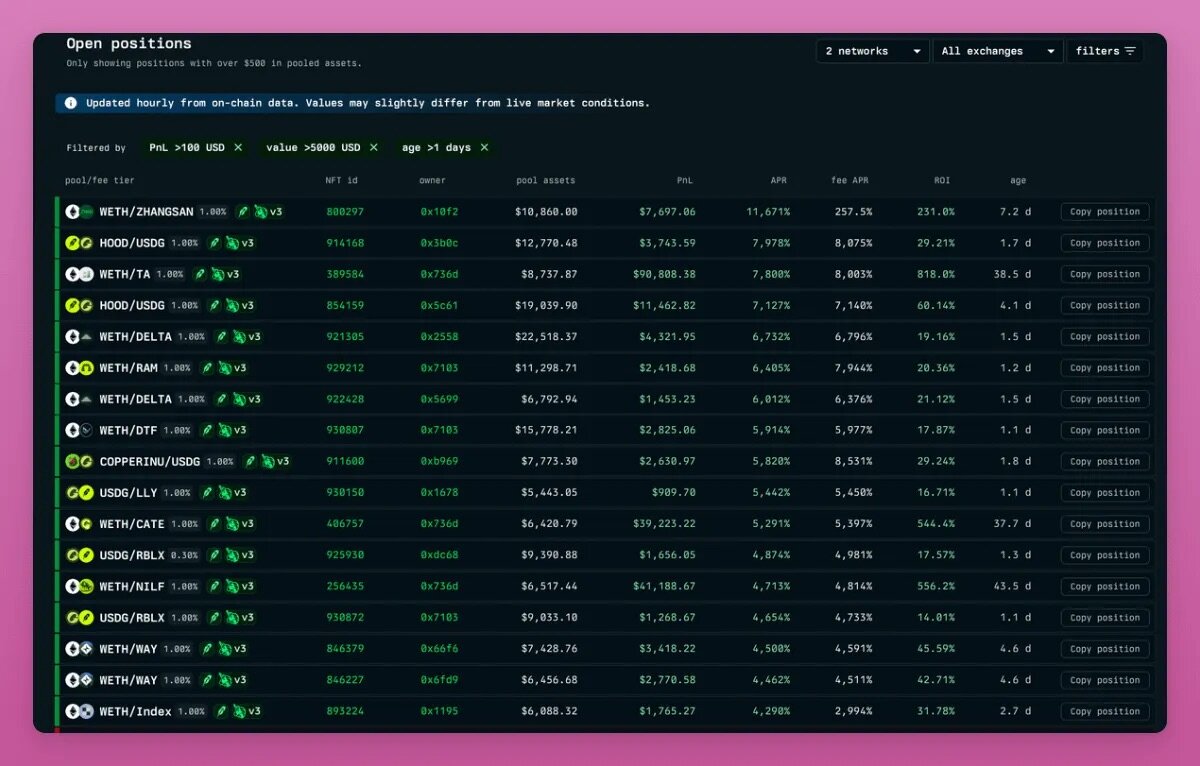
At the time of publication, he adds, HOOD was only 1.5% away from his cost floor.
His broader argument is that experience from the 2020 DeFi summer still matters, but the target has changed. Rather than farming meme coins with no practical value, he says users can use the growth of tokenized stocks to collect income from the trading and arbitrage generated by meme speculation.