
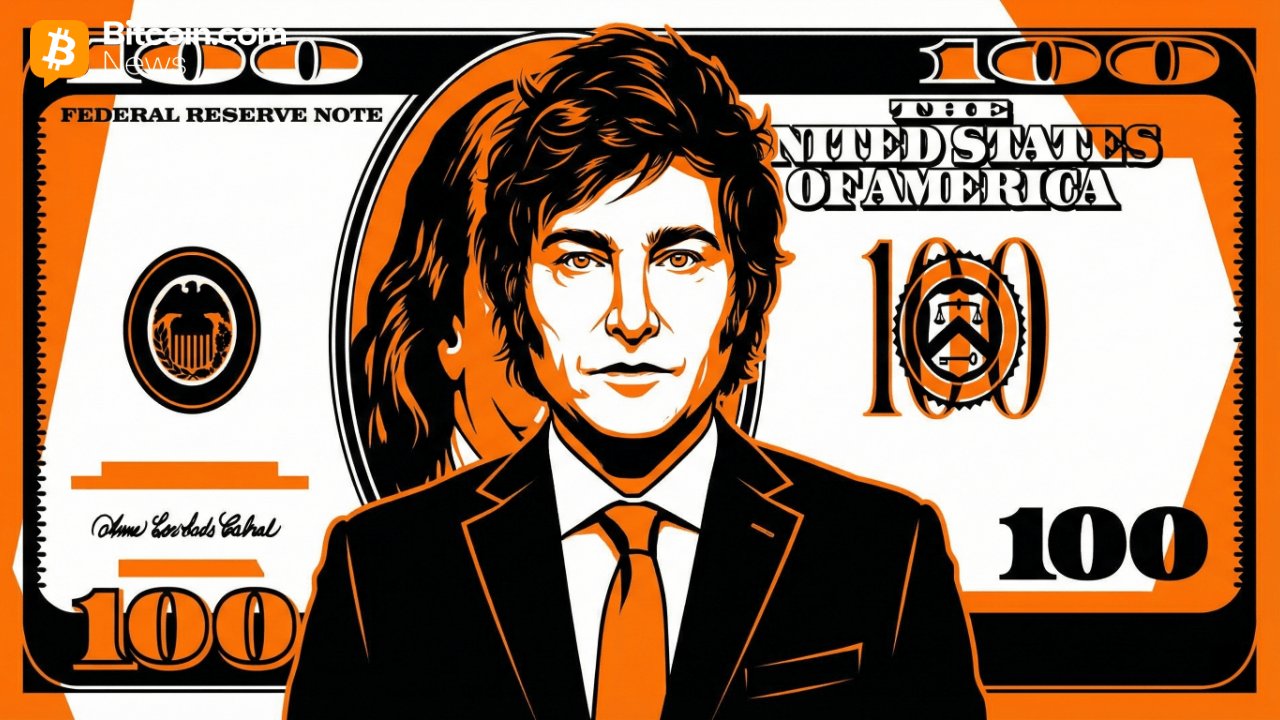
Argentina President Javier Milei said the biggest barrier to dollarization is not legal approval but public behavior: people are still choosing the peso. In a recent TV interview, Milei said plainly, “People don’t want it.” He was referring to the use of the U.S. dollar in place of the Argentine peso, even though the government has already approved the use of dollars for financial transactions.
The remark marks a notable shift from the message that helped define his presidential campaign. Milei ran on a plan to adopt the U.S. dollar as fiat currency, end the peso, and dismantle the central bank. He now says the transition is proving far more difficult than expected because Argentines have not embraced the greenback in practice. The policy may be available. Daily use is another matter.
Milei points to weak public uptake under “endogenous dollarization”
In the interview, Milei described the government’s approach as “endogenous dollarization.” His argument was that citizens are already free to transact in dollars if they want to, yet they are not doing so. He also said the administration enacted a tax amnesty, but people have not taken advantage of that measure either.
Milei added, “strictly speaking, you can’t force things on people.” That comment places the focus on adoption rather than decree. Even with room for dollar use, the peso remains the default currency, showing that regulatory change alone has not altered how most transactions are carried out.
Currency competition included bitcoin, but the peso stayed dominant
The report notes that in 2024 Milei said Argentina would implement a system of currency competition, allowing citizens to use the currency of their choice for financial transactions, including bitcoin. The idea was to open the field rather than impose a single replacement from day one.
So far, that framework has not delivered a broad migration away from the peso. Dollar access was expanded, but the peso kept its central role in ordinary use. Milei’s comments drew criticism on social media, where some argued that dollarization had been used as a campaign promise and later softened once he took office.
Currency controls were eased, then Washington stepped in
The article also says Milei partially lifted currency controls and set up a floating system under which the dollar could move within a fixed price band. That move did not hold as intended, and Milei had to seek help from the Trump administration to rein in the dollar exchange rate. In October, U.S. Treasury Secretary Scott Bessent said, “Argentina is a beacon in Latin America. This isn’t a ; it’s buying low and selling high. The peso is undervalued.”
Placed together, those developments show that Argentina’s path has not naturally led to dollarization. The mix of peso stability concerns, exchange-rate management, and consumer preference has kept the process stuck. Milei’s latest explanation strips the issue down to its core: the government opened the option, but the public has not chosen to leave the peso behind.