
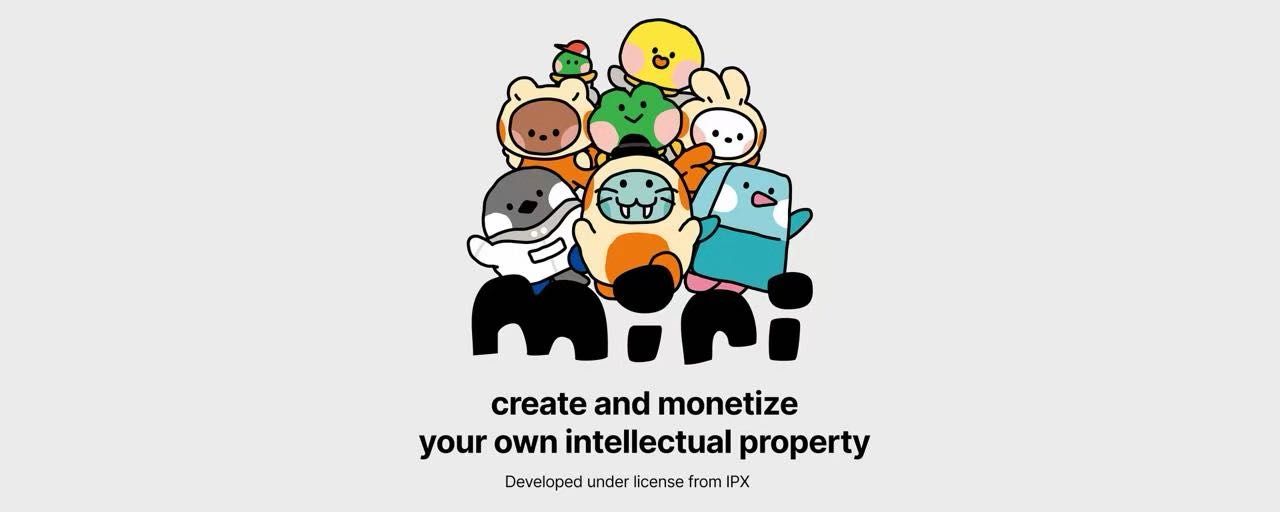
Minicoin, an intellectual property real-world asset network built on the Creditcoin blockchain, said its native token $MINI will be the first project to go live on PenguinSwap Launchpad through a public sale.
The team said the token sale is structured as a fair and open offering with no insider discount. Pricing will be discovered in the open market, with the stated goal of creating broader and more distributed token ownership.
Mini Labs, the company developing Minicoin, also said it has obtained official authorization from IPX to legally use the minini IP. IPX owns the LINE FRIENDS IP portfolio, which the article says reaches more than 210 million LINE users worldwide and has more than 31 million official LINE FRIENDS followers. Minicoin is being developed under that authorization.
Why Minicoin is targeting intellectual property
The project frames intellectual property as the next asset class that could move on-chain as RWA adoption expands beyond stablecoins, U.S. Treasuries, real estate and private credit.
According to the article, IP has long functioned as an asset but has remained illiquid. In the traditional system, ownership is typically recorded through national registries or private contracts. Licensing depends on lawyers and intermediaries, creators can wait months before receiving proceeds, and multiple layers of fees can be charged along the way.
The piece argues that generative AI has sharply exposed those bottlenecks. AI is creating new intellectual property at a pace that manual copyright systems, including rights enforcement, manual licensing and rights administration, cannot keep up with. It says the number of new IP assets created each year already exceeds the number that can be registered, licensed and monetized, and that gap is still widening.
One token, one complete IP
Minicoin’s answer is to treat each intellectual property right as a redeemable claim, in a structure the article compares to the fiat backing behind a stablecoin.
Each IP asset would be minted as an IP NFT that represents one complete and unique intellectual property right. The NFT holder would own that IP in full. Holders can keep it, trade it, or burn the NFT and restore the corresponding right to full off-chain ownership, allowing it to continue being used outside the platform.
The project says this is meant to give creators a way to establish ownership, circulate original IP and commercialize it on-chain.
How the on-chain IP system is designed
Minicoin said the network is built around four core components.
On-chain IP registry
All intellectual property assets and their ownership records can be registered on-chain in a way that is public, transparent and verifiable.
Smart contract settlement
When an IP asset generates revenue, the proceeds would be settled automatically in $MINI through smart contracts and distributed directly to the IP holder, without involving a copyright management organization.
Creator and fan rewards
The platform also plans to use on-chain micro-transactions so that even very small royalty payments can be made automatically, something the article says is difficult to achieve in traditional licensing systems.
AI creator tools
Minicoin said it will provide AI creation tools so individual creators can quickly make and publish original IP without relying on large studios.
For creators, the article lays out the process as:
- creating original characters,
- tokenizing the work,
- retaining full ownership of the intellectual property, and
- receiving revenue automatically when the market uses that IP.
The article says this can be done without a publisher, licensing agency or other third-party approval.
No fractional ownership model
Minicoin also stresses a separate principle: one token will always correspond to one complete IP asset. The platform said it will not use fractional ownership and will not offer fractionalized IP products.
Roadmap: stickers, music rights and virtual IP
Minicoin plans to build a broader IP marketplace around three content categories so that ordinary users can create original works and earn from them.
Phase one: stickers
Stickers are the first target because they are relatively simple visual works and ownership is easier to define, making them suitable for tokenization. The article adds that this is also one of the areas most heavily affected by AI-generated content.
It cites the following market figures for major messaging platforms in Asia:
- LINE generates more than $170 million a year from stickers.
- KakaoTalk had cumulative emoticon sales of about $870 million as of 2024.
Phase two: music IP
Music rights are the second area on the roadmap. The article cites industry data showing about $13.6 billion in global songwriter and publishing revenue in 2024 and a recorded music market of about $29.6 billion worldwide.
Because music rights involve more rights holders, Minicoin said it will initially support on-chain settlement for only part of those royalty streams.
Phase three: virtual IP
The third phase focuses on virtual IP. The article says the global virtual influencer market exceeded $6 billion in 2024 and was growing at roughly 38% annually.
Whether in the form of virtual models or VTubers, these assets are still digital intellectual property. The article says that creates a natural need for on-chain ownership records, source verification for characters and contribution tracking for creators.
ROOM game tied to future $MINI Launchpad eligibility
Minicoin said users can already see a live use case for the licensed minini IP. The project has launched the full version of the survival adventure game "minini universe: ROOM" on PenguinBase, using officially licensed minini characters.
According to the article, the campaign is designed to help players understand the world of IP while also serving as an entry path for the future $MINI Launchpad sale. Users can qualify for the upcoming public offering by:
- playing "ROOM,"
- raising their in-game level, and
- minting a Soulbound Token, or SBT.
The original article ends with a risk reminder saying the market carries risk, investment should be approached with caution, and the article does not constitute investment advice.