
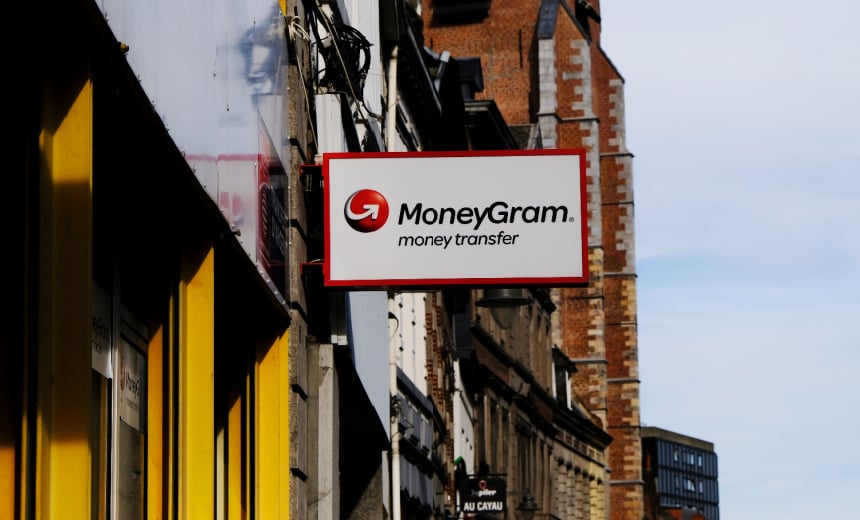
MoneyGram said on Aug. 11 that MoneyGram Ramps, its crypto cash-in and cash-out service, is now live on Solana. The rollout gives developers a single API that connects their apps to MoneyGram’s retail cash network, allowing users to redeem USDC for local currency cash at MoneyGram agent locations or use cash to top up a wallet and purchase USDC.
The company said the network spans nearly 500,000 cash access locations. Cash-out is available across more than 170 countries and territories, while cash deposits are available in more than 25 countries. Rift is the first Solana wallet to integrate the service. MoneyGram is also running a validator node on the Solana network. CEO Anthony Soohoo said in the announcement, 「The future of payments is built on ubiquity.」
Connecting stablecoins to physical cash infrastructure
The article frames the launch as an attempt to solve a basic problem that stablecoins have not fully addressed: how recipients turn digital dollars into usable cash once funds arrive. Stablecoins can lower the cost and speed up cross-border transfers, but that does not remove the need for physical cash in many parts of the world.
MoneyGram Ramps is designed to handle that conversion layer. A wallet or exchange developer does not need to negotiate bank partnerships, build a compliance framework, or set up a cash distribution network on its own. By integrating one API, developers can offer users a way to move between crypto and cash across multiple markets.
According to the article, MoneyGram handles KYC, compliance review, and fiat settlement. Developers only need to complete the technical integration inside their own products.
MoneyGram’s scale and business shift
MoneyGram’s roots go back to 1940, when a group of investors founded Travelers Express in Minneapolis to provide money order services through grocery stores and pharmacies, targeting people without bank accounts. The company was renamed MoneyGram in 1998 and went public on the New York Stock Exchange in 2004.
In the global cross-border remittance market, MoneyGram has long ranked behind Western Union. The article says its annual transaction volume exceeds $200 billion. By 2026, the company reported about 60 million active customers and nearly 500,000 retail agent locations across more than 200 countries and territories. More than 70% of transactions were already being completed through digital channels.
In June 2023, Chicago private equity firm Madison Dearborn Partners completed a take-private acquisition of MoneyGram for about $1.8 billion, leading to its delisting from Nasdaq. The article says that after going private, MoneyGram accelerated its shift toward a fintech platform model. Instead of operating only as a remittance provider, it began opening its compliance capabilities, cash network, and settlement infrastructure to outside developers as a service.
Its crypto work predates the Solana launch
MoneyGram’s relationship with crypto did not begin with this announcement. In 2019, it worked with Ripple to explore blockchain-based settlement. In 2022, it partnered with the Stellar Development Foundation and Circle to let users convert between USDC and cash through its retail network. In June 2026, MoneyGram issued its own dollar stablecoin, MGUSD, on Stellar.
The article says the company had already tested this model on Stellar. Expanding to Solana marks a move toward a multi-chain strategy for MoneyGram Ramps.
Why Solana
The reasons given in the article are practical. Solana’s transaction costs are typically under one cent, and its confirmation speed is fast, with sub-second finality. That makes it a fit for small-value, high-frequency remittance flows. The article gives a simple example: if a $50 cross-border transfer carries several dollars in on-chain fees, the economics break down. Solana reduces that friction substantially.
The developer ecosystem is another factor. MoneyGram Ramps has been embedded directly into the payments module of the Solana Developer Platform, which means teams building payment products, wallets, or DeFi applications on Solana can call MoneyGram’s infrastructure from there.
The article also notes that Western Union has joined the Solana Developer Platform as well. It describes the presence of the two largest global remittance companies on the same public blockchain as something that would have been hard to imagine two years ago.
The missing piece in stablecoin remittances
The article argues that the real bottleneck for stablecoins in everyday remittances is not the speed of on-chain transfer. It is the off-chain cash conversion network. In many parts of sub-Saharan Africa, Southeast Asia, and Latin America, bank account penetration remains far below mobile phone ownership, and cash is still a basic medium of daily economic activity.
That is where MoneyGram’s physical network matters. Its roughly 500,000 agent locations, spread across grocery stores, communications shops, and foreign exchange points, serve as a bridge between on-chain dollars and the offline economy. The article says no crypto-native company can replicate that physical footprint in the short term.
With banking channels often resistant to crypto assets and many jurisdictions still lacking clear stablecoin on-and-off-ramp rules, the article presents traditional remittance networks such as MoneyGram as a compliant and scalable route. In that setup, users do not need to understand blockchain or hold a bank account. They only need to visit a store they already trust and complete a process that looks much like a standard remittance transaction, while the settlement rail in the background shifts from SWIFT to Solana.
The article’s conclusion is direct: the last mile for stablecoins is being built not by a new crypto-native cash network, but by an 85-year-old remittance company turning its existing physical footprint into blockchain infrastructure.