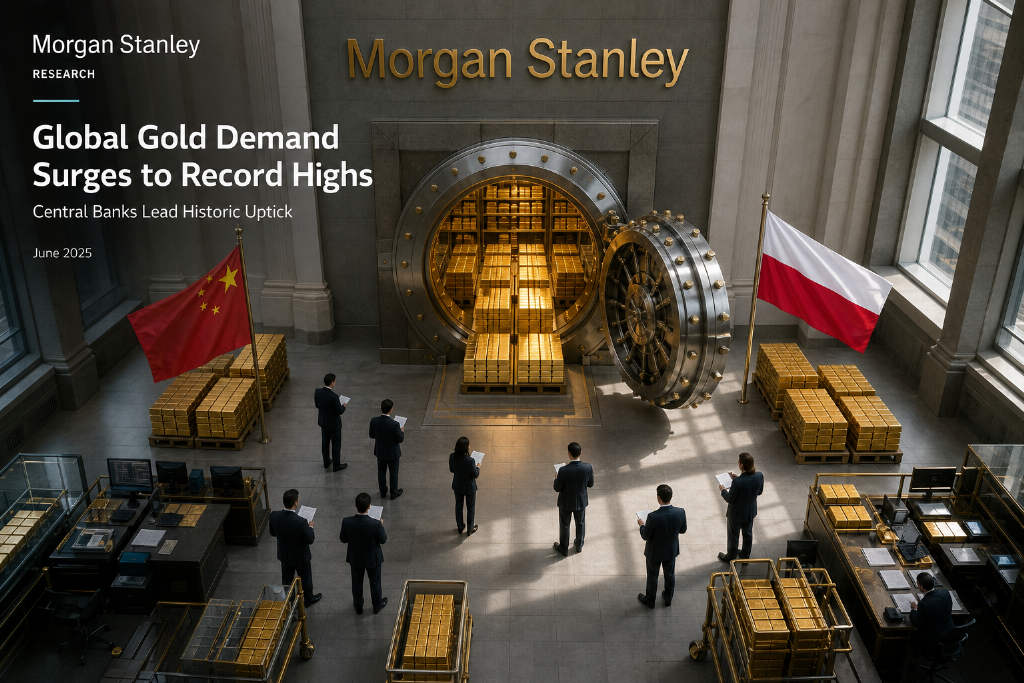
Morgan Stanley said in a commodity note on Aug. 20 that gold has already reached its fourth-quarter target of $4,450 per ounce, earlier than expected. The bank pointed to 70 metric tons of ETF inflows in July and August, reversing 93 tons of outflows in May and June as the odds of a Fed rate hike fell. It also noted that China’s central bank bought 60 tons year to date, the most since 2023, while Poland added 82 tons to reach 632 tons. Morgan Stanley said gold could move above $5,000 per ounce by 2027, though the path higher will remain volatile. The bank argued that gold is increasingly trading on fiscal concerns tied to rising long-end yields, not just on real rates, and said the Fed’s policy path, central-bank demand and fiscal worries will keep lifting the price floor.
Morgan Stanley said gold has already hit its fourth-quarter target of $4,450 per ounce, and it got there sooner than expected.
In a commodity note published on Aug. 20, the bank said lower odds of another Federal Reserve rate hike helped drive 70 metric tons of net inflows into gold ETFs in July and August. That reversed 93 tons of net outflows in May and June.
Central banks are buying too. Morgan Stanley said the People’s Bank of China has purchased 60 tons so far this year, the most since 2023. Poland added 82 tons, lifting its total holdings to 632 tons and putting it close to a 700-ton target.
The bank still sees room for more upside. It said gold could break above $5,000 per ounce in 2027, though the path would not be smooth.
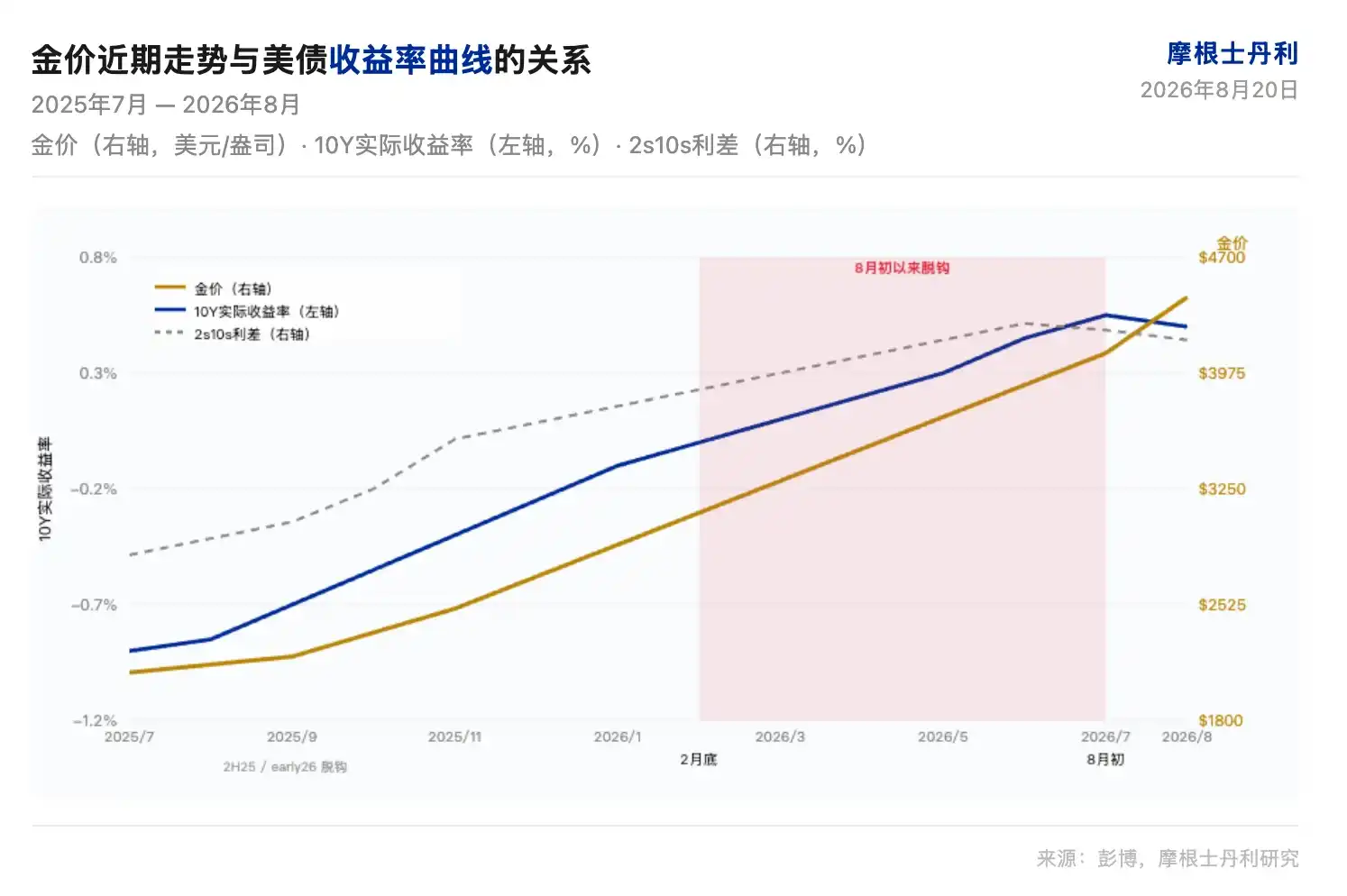
Morgan Stanley argued that gold is starting to move away from a simple real-rate framework. From late February to early August, gold kept a stable negative correlation with 10-year real yields. Since early August, however, gold has kept rising even as long-end yields were flat.
The bank said a similar disconnect appeared in the second half of 2025 and in early 2026. Back then, Fed rate cuts pushed down short-term yields, while rising government debt, worries about currency debasement and inflation expectations supported long-term yields. The curve steepened, and gold moved higher with it.
This time, Morgan Stanley said, long-end yields are being pushed higher mainly by oil prices and corporate debt issuance in the technology sector, while concern over government debt is also returning. In its view, gold is pricing in fiscal concerns behind rising yields rather than the yields themselves.
The Fed still matters most for ETF flows. Upcoming U.S. inflation data and comments from Fed officials will help shape rate-hike expectations. Morgan Stanley’s U.S. economists expect the Fed to stay on hold for all of 2026, which would limit pressure from rates.
The bank also pointed to three structural supports for gold: central-bank buying remains strong, with global central banks buying a net 345 tons in the first half of 2026, in line with Morgan Stanley’s full-year forecast of 700 tons; COMEX gold futures short positions have dropped to their lowest level since April 2020, leaving less room for short-covering-driven gains, even though bearish positioning has already been largely worked off; and fiscal concerns tied to a steeper yield curve are becoming an implicit catalyst for prices.
Near term, U.S. inflation data remains the biggest source of volatility. If inflation comes in hotter than expected, markets could reprice the Fed path and gold could pull back. With COMEX shorts already near historic lows, there is also less room for a sharp squeeze higher. Morgan Stanley said ETF inflows are reacting more to lower odds of hikes than to expectations for rate cuts, which is different from a typical easing cycle and leaves the durability of inflows uncertain.
Its base case remains unchanged: a Fed that stays on hold, continued central-bank buying and deeper fiscal worries should push gold’s price floor higher. Short-term swings, it said, will not alter that direction.
This article was originally published by Bit.Fan. For more cryptocurrency news and market insights, visit www.bit.fan. Disclaimer:
The market information, project data, and third-party content displayed on this platform are for industry information sharing only and do not constitute any form of investment advice or return commitment.
Cryptocurrency trading carries high risks. Users should fully assess their risk tolerance and make independent decisions. All profits, losses, and legal responsibilities are borne by the users themselves.